Louis H. Van Dinter
1893
St. Charles Borromeo Roman Catholic Church
58 W. 5th Street
Peru, IN, US
19 Ranks - 1,000 Pipes
EXPLORE IMAGESVIEW STOPLISTSomething not quite correct?Suggest an Edit
🤝 Instrument entries in Indiana sponsored by:
We are grateful for the generous support of our sponsors, who make it possible for us to continue our mission of preserving and promoting the rich history of pipe organs across the globe.

IMAGES
Something missing or not quite correct?Add ImageorSuggest an Edit
STOPLISTS
Something missing or not quite correct?Add Stoplist
CONSOLES
Builder: Unknown
Position: Keydesk Attached
Design: Unknown
Pedalboard Type: Unknown
Features:
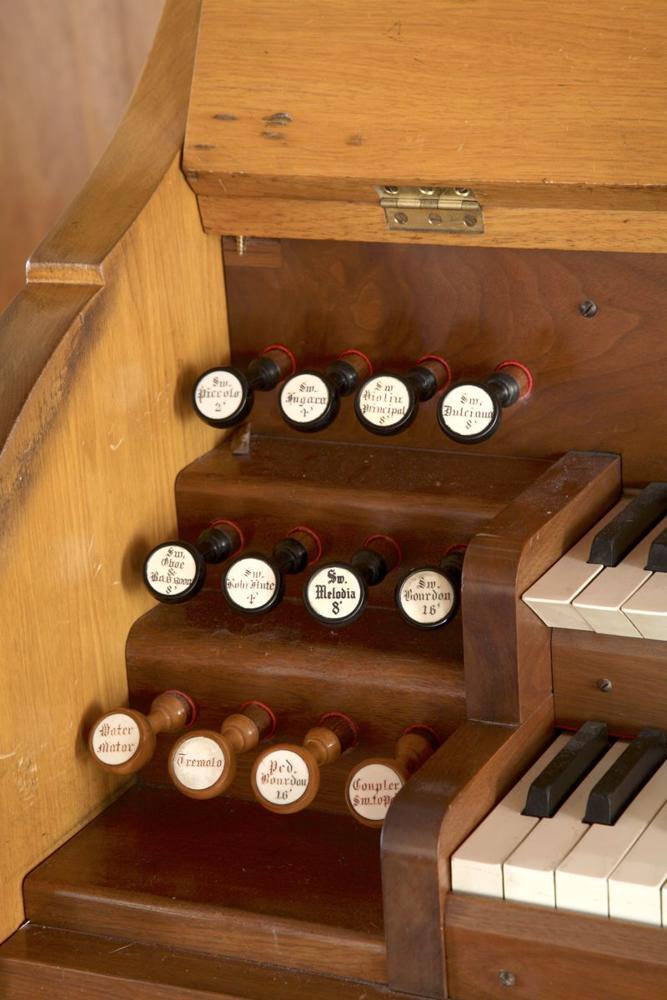
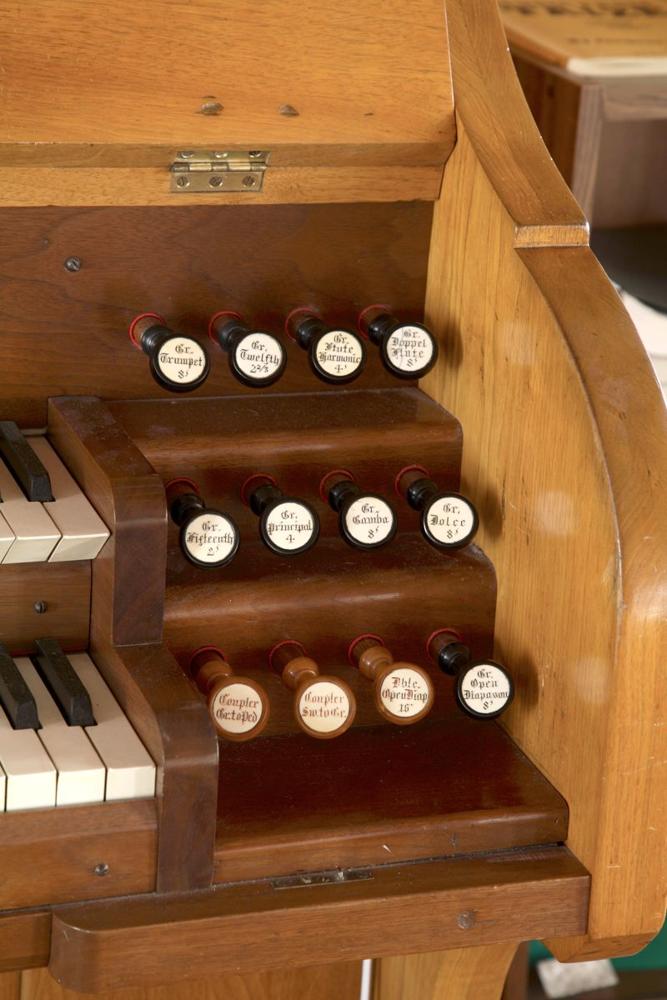
2 Manuals (58 Notes)25 Note Pedal19 StopsMechanical (Unknown) Key ActionMechanical Stop ActionStop Layout: Drawknobs in Horizontal Rows on Terraced/Stepped Jambs
Expression Type: Unknown
Combination Action: Unknown
Control System: Unknown or N/A
Something missing or not quite correct?Add ConsoleorSuggest an Edit
DETAILS
Exhibited in the 2007 OHS convention(s)
This instrument is: Extant and Playable in this location
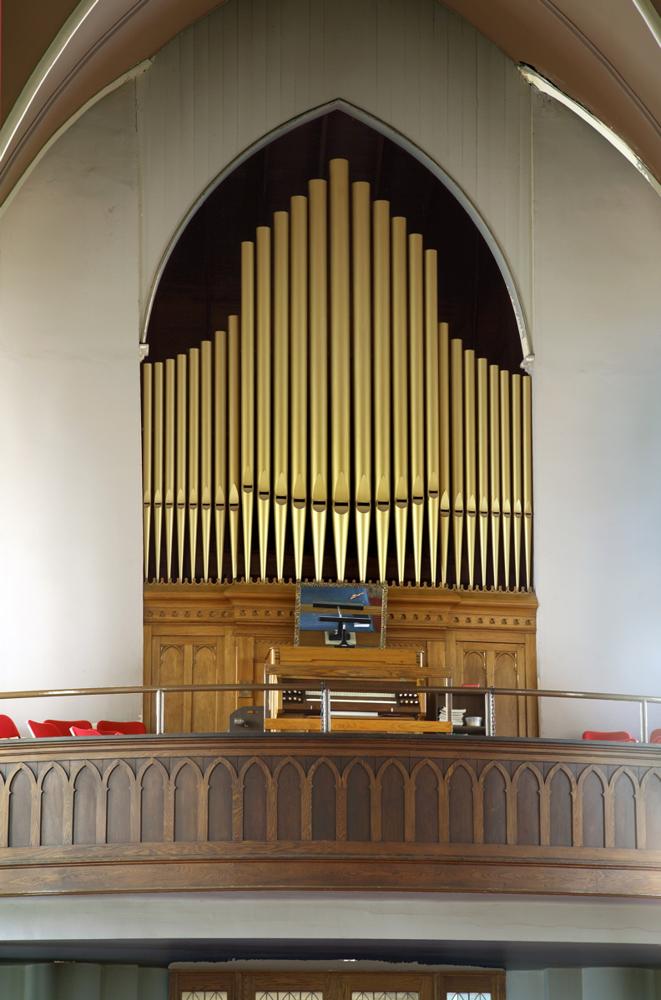
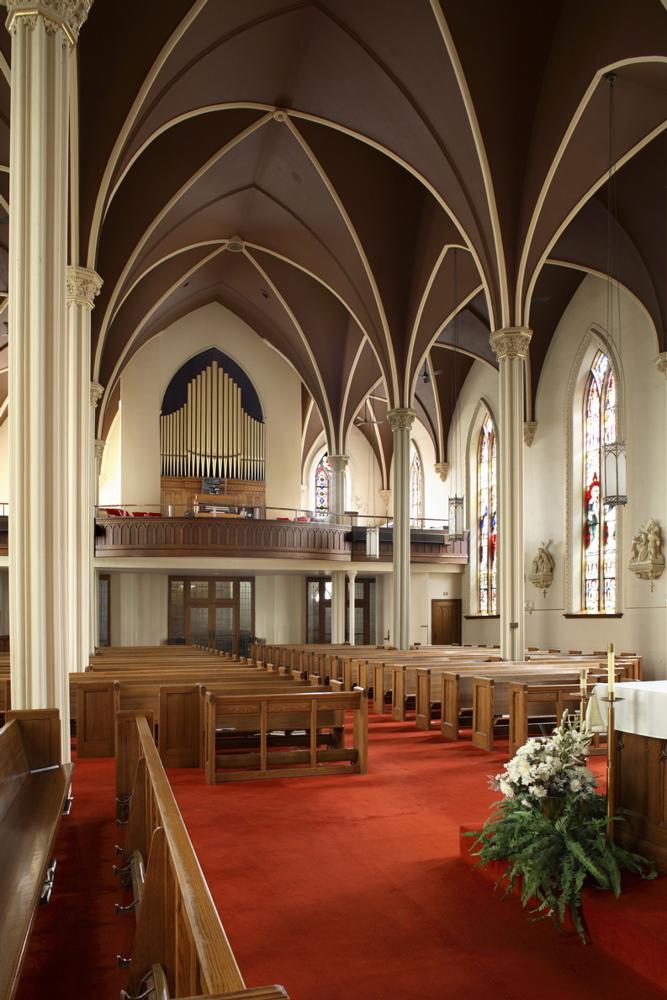
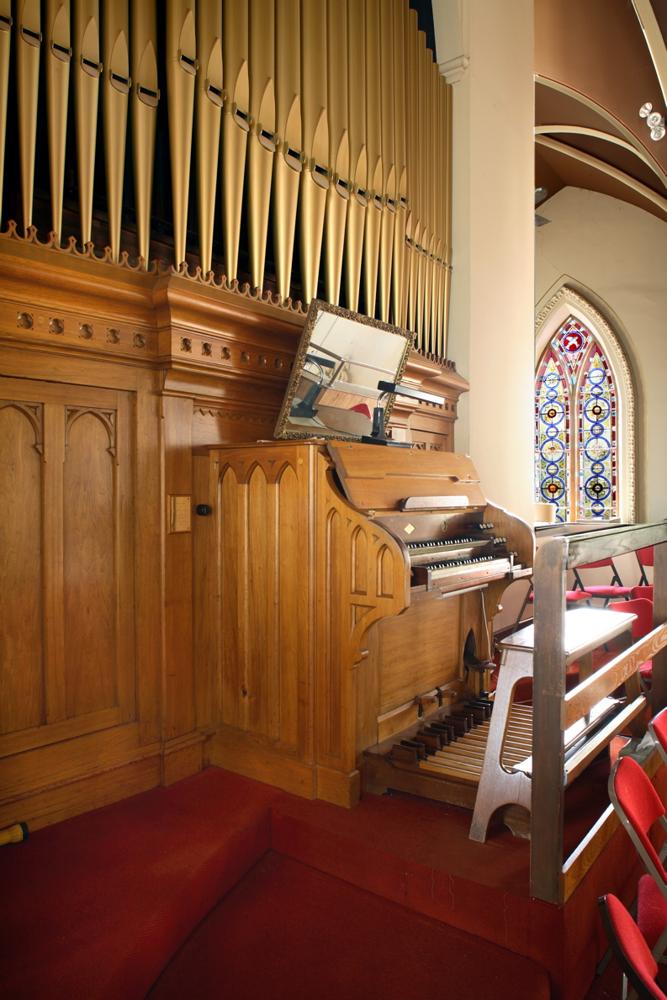
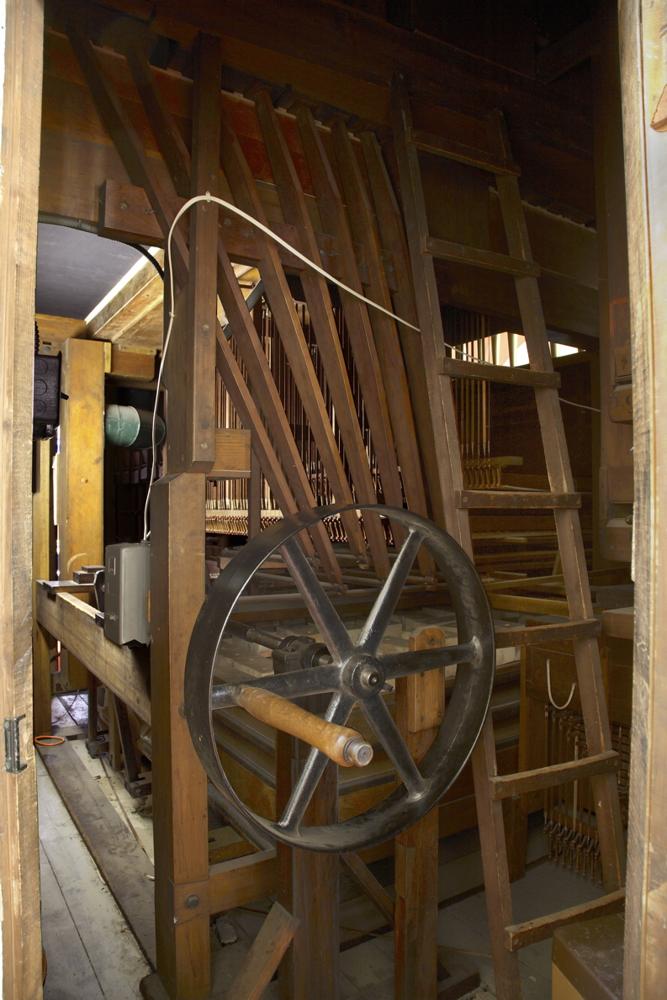
Another improvement made during Meissner's pastorate was the acquisition of the present pipe organ in the rear gallery, supplanting a melodeon. The instrument was installed in 1893 by Louis H. Van Dinter of Mishawaka, Indiana, at a cost of $3,000. The oak facade of Gothic ornament includes twenty-seven stenciled pipes, of which eighteen speak and nine are dummies. The organ is situated beneath an arch that forms the sides of the organ proper. The organ's platform is twelve feet wide at the front, though behind the pillars it is twenty-nine feet wide. A water motor originally provided wind to the organ, and parts of this apparatus were still within the case in the early 1980s. The water-motor knob has since been nude to operate an electric blower. Manual compass is fifty-eight notes (CC-a3); pedal compass (flat pedalboard) is twenty-five notes (CC-c1) . The organ's diamond-shape nameplate has been missing for decades; however, "Louis H. Van Dinter/Builder/Mishawaka, Ind." has been found stenciled on the back board of the very large manual chest. The manual divisions are on one level, the Swell behind tlie Great, enclosed in one box. -- 2007 OHS Atlas
Database Manager on July 15th, 2007:
OHS 2007 Convention venue
Database Manager on October 30th, 2004:
Builder's Nameplate is not present, but the chest is stenciled with the name of the builder.
Database Manager on October 30th, 2004:
Indianapolis booklet, p. 40.
Something missing or not quite correct?Add NoteorAdd WebpageorAdd Cross ReferenceorSuggest an Edit