E. & G.G. Hook & Hastings
Opus 998, 1880
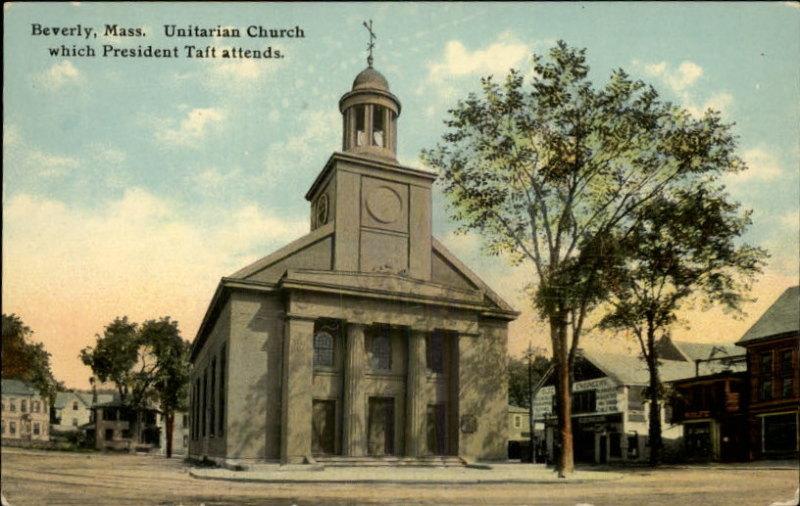
First Parish, Unitarian
225 Cabot Street
Beverly, MA, US
Something not quite correct?Suggest an Edit
🤝 Instrument entries in Massachusetts sponsored by:
We are grateful for the generous support of our sponsors, who make it possible for us to continue our mission of preserving and promoting the rich history of pipe organs across the globe.

IMAGES
Something missing or not quite correct?Add ImageorSuggest an Edit
STOPLISTS
No stoplist details are available. If you have stoplists, please consider sharing them with us.
Something missing?Add Stoplist
CONSOLES
Builder: Unknown
Position: Unknown
Design: Unknown
Pedalboard Type: Unknown
Features:
2 Manuals 25 RegistersStop Layout: Unknown
Expression Type: Unknown
Combination Action: Unknown
Control System: Unknown or N/A
Something missing or not quite correct?Add ConsoleorSuggest an Edit
DETAILS
This instrument is: Extant and Playable in this location
From "First Parish and Its Music*," accessed 2025-07-11 from church website:
"At the March 1880 Parish meeting, a petition was presented by the Music Committee requesting that funds be secured for a new organ for the sanctuary. There was substantial support for this idea, and a subscription was established that raised $3669 towards it. The Parish voted unanimously that it should be placed at the front of the Church, and that there should be seats added behind the chancel for the choir. As a result, the whole front of the sanctuary was extended forward, and the first two rows of pews were moved to the balcony, where they remain today. The organ was the 998th built by the Hook and Hastings Company of Weston Massachusetts. The bellows was powered by a water wheel driven from the Town’s new underground public water supply originating at Wenham Lake. This novel mode of operation was employed successfully until the late 1920s, when the bellows was electrified. In case you were wondering, all the used water went into a large underground pit and wasted. Reportedly this made it difficult to run the organ for long periods of time as the pit would overflow and needed time to drain. The pipes of the organ were described as “richly detailed” in a contemporary news article in the Beverly Citizen and can be seen in in the earliest photo we have of the sanctuary, taken in 1889, but by 1902, the church had grown tired of their ornate design. They engaged the Hook and Hastings Company to rebuild the organ and redecorate the front pipes. The pipes were gilded in an attempt to represent a more stately church character. In 1987 the original paint etchings on the pipes were rediscovered and the church had them repainted as close as possible to their original design, as you can see behind me. In 1957 the Church decided to modernize the organ and installed the electric console you see on my left. The original console can still be seen behind the choir seats, although it no longer functions."
*The address was delivered by Charles E. Wainwright, chair of First Parish’s Historical Committee, on March 17, 2013.
Database Manager on February 22nd, 2005:
Identified from company publications as edited and expanded in The Hook Opus List 1829-1935, ed. William T. Van Pelt (Organ Historical Society, 1991).
Something missing or not quite correct?Add NoteorAdd WebpageorAdd Cross ReferenceorSuggest an Edit