Henry Pilcher's Sons
Opus 1086, 1921
Grace Episcopal Church
102 E Live Oak St.
Cuero, TX, US
9 Ranks - 530 Pipes
Something not quite correct?Suggest an Edit
🤝 Instrument entries in Texas sponsored by:
We are grateful for the generous support of our sponsors, who make it possible for us to continue our mission of preserving and promoting the rich history of pipe organs across the globe.

IMAGES
Something missing or not quite correct?Add ImageorSuggest an Edit
STOPLISTS
Something missing or not quite correct?Add Stoplist
CONSOLES
Builder: Unknown
Position: Unknown
Design: Unknown
Pedalboard Type: Unknown
Features:
2 Manuals (61 Notes)30 Note Pedal3 Divisions9 Stops10 RegistersCrescendoCombination Thumb Piston(s)Stop Layout: Unknown
Expression Type: Balanced Expression Shoes/Pedals (Not Meeting AGO Standards)
Combination Action: Unknown
Control System: Unknown or N/A
Something missing or not quite correct?Add ConsoleorSuggest an Edit
DETAILS
This instrument is: Not Extant and Not Playable in this location
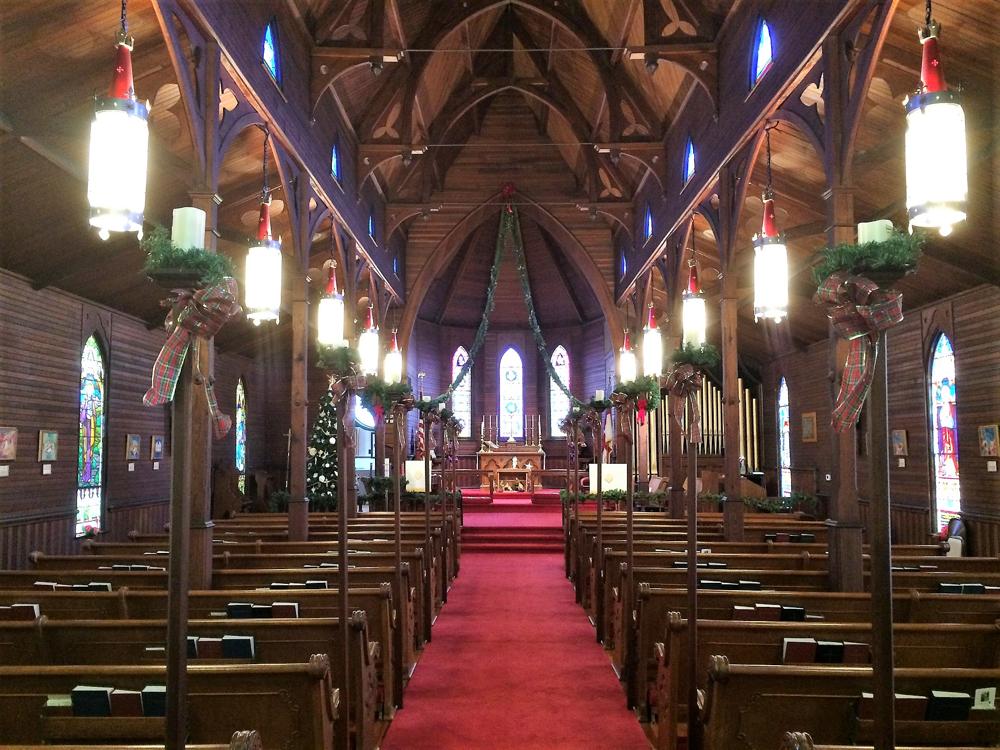
From the organ page of the church website: Remnants of [the Pilcher] are a chest of 16’ Bourdon pipes and a gold painted façade with 21 speaking pipes. In 1967 the organ from the original location of Trinity Episcopal Church in Victoria was being replaced. Their 1949 Kilgen #7413 was then installed here at Grace in place of most of the Pilcher previously mentioned, bringing the organ to 7.5 ranks. In 1984 a new blower, a 4’ Octave and 3-rank Mixture from Organ Supply were added. Franklin Pipe Organs assumed the service and care of the organ in 1987 and in 2002 rebuilt the main Kilgen chest with new playing action. In 2007 FPO added a new Ahlborn-Galanti AG2100 console, with its digital-pipe samples, along with a new digital relay to drive all the existing pipes. A Moeller 8’ Trumpet from the UMC Student Chapel at Texas A&M was added by swapping out certain whole ranks. Adding several other missing octaves, the end result was to make all of the stops on the Great “real”. The Swell shades and organ casework installed in 1967 were removed and an earlier panel facing the Altar area was opened up to better distribute the sound of the pipes into the whole church. Wind pressures were increased, articulation tweaked, and chiff on flutes was maximized to give the organ a crisp resounding presence in this historic wooden church.
Database Manager on April 7th, 2005:
Identified through information in Vol VI of the Pilcher factory ledgers and a list of Pilcher organs typed by William E. Pilcher of Louisville. For more information see the document referenced below.
Database Manager on April 7th, 2005:
Original price: $3975
Something missing or not quite correct?Add NoteorAdd WebpageorAdd Cross ReferenceorSuggest an Edit