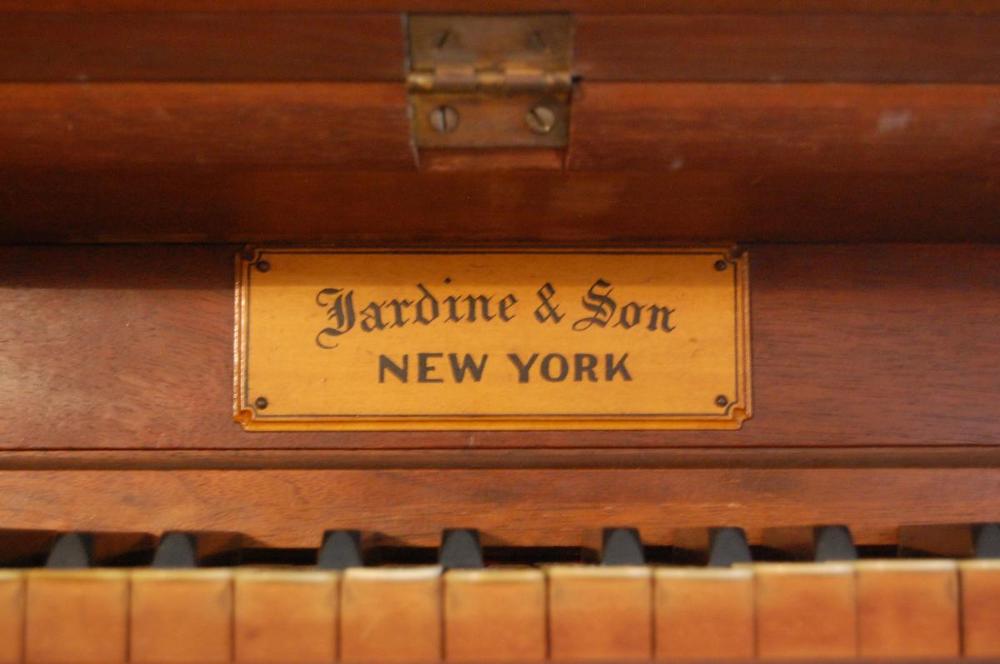
George Jardine & Son
1860ca.
St. Peter Episcopal Church
Oxford, CT, US
13 Ranks
EXPLORE IMAGESVIEW STOPLISTSomething not quite correct?Suggest an Edit
🤝 Instrument entries in Connecticut sponsored by:
We are grateful for the generous support of our sponsors, who make it possible for us to continue our mission of preserving and promoting the rich history of pipe organs across the globe.

IMAGES
Something missing or not quite correct?Add ImageorSuggest an Edit
STOPLISTS
Something missing or not quite correct?Add Stoplist
CONSOLES
Builder: Unknown
Position: Keydesk Attached
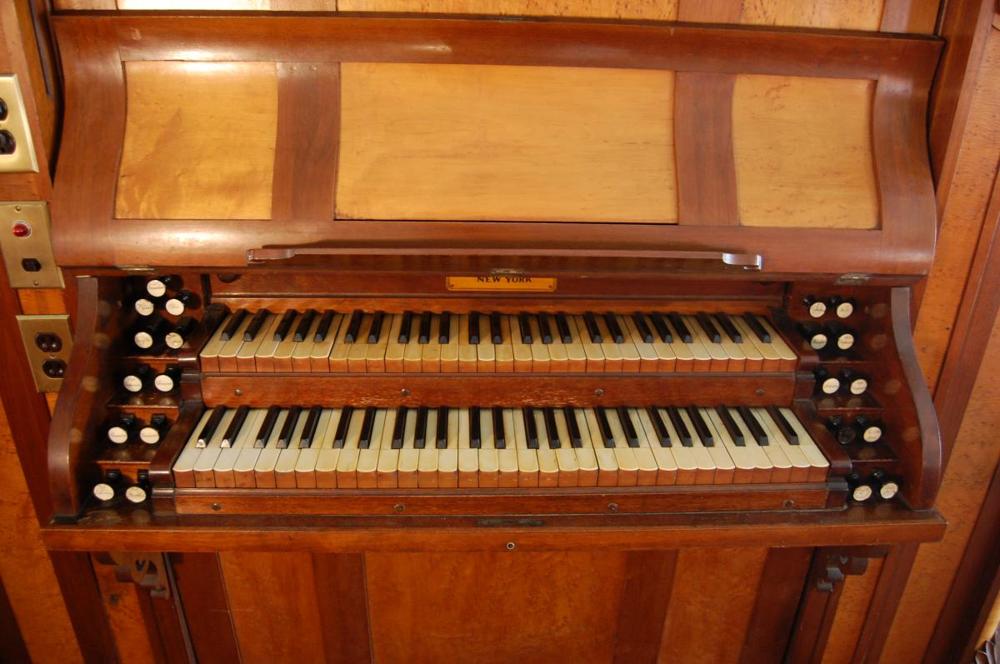
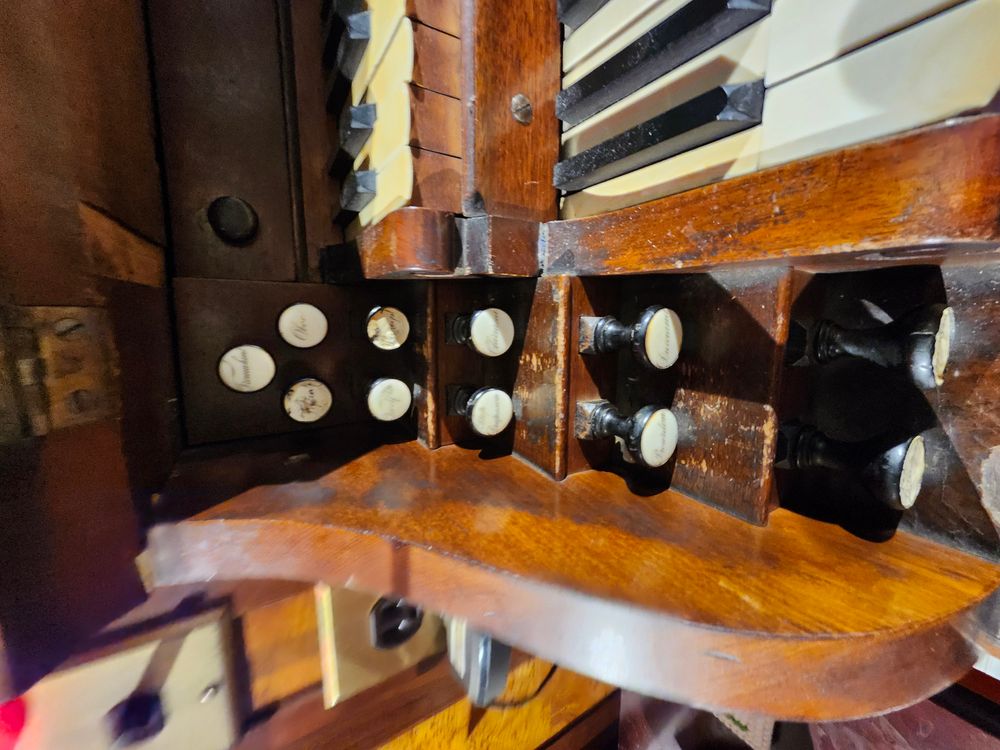
Design: Traditional With a Keyboard Cover That Can Be Lifted To Form a Music Rack
Pedalboard Type: Concave Radiating (Not Meeting AGO Standards)
Features:
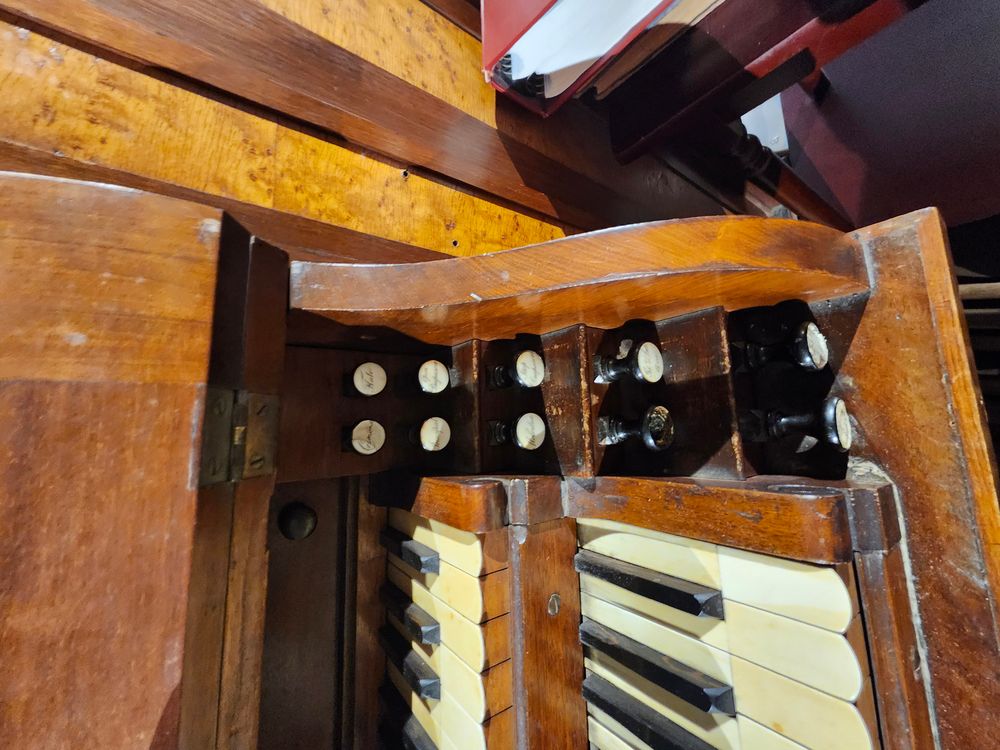
2 Manuals 16 RegistersMechanical (Unknown) Key ActionMechanical Stop ActionStop Layout: Drawknobs in Horizontal Rows on Terraced/Stepped Jambs
Expression Type: Trigger/Hitch-Down Expression
Combination Action: None
Control System: Unknown or N/A
Something missing or not quite correct?Add ConsoleorSuggest an Edit
DETAILS
This instrument is: Extant and Playable in this location
Restoration/reconstruction of the Swell oboe completed in 2022 by Taylor & Boody of Staunton, VA. and re-installed in the organ in the same year by A. Thompson-Allen Company of New Haven, CT.
Scot Huntington on December 14th, 2021:
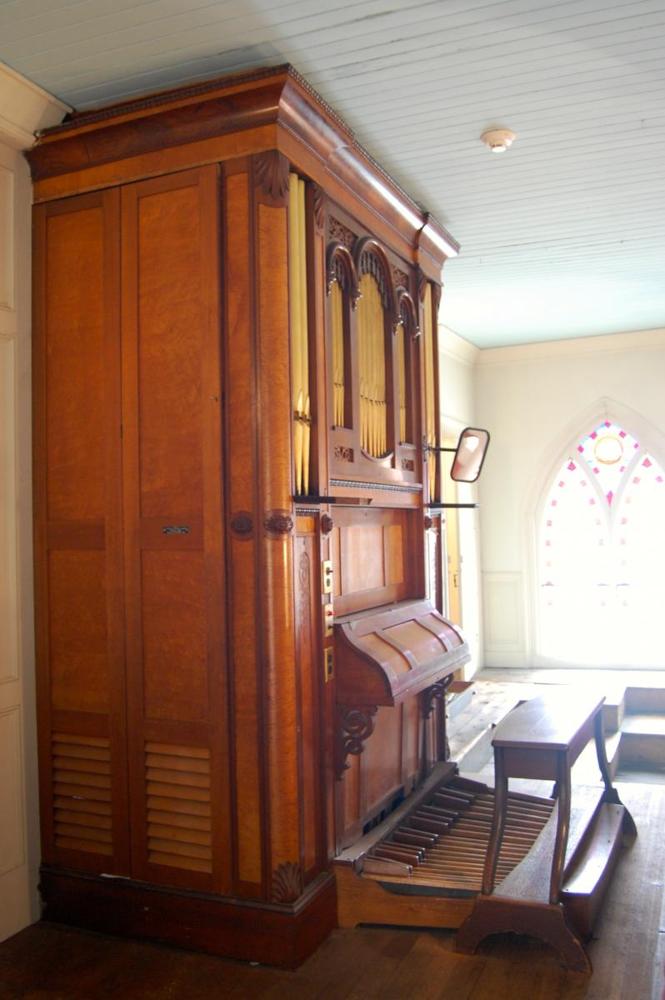
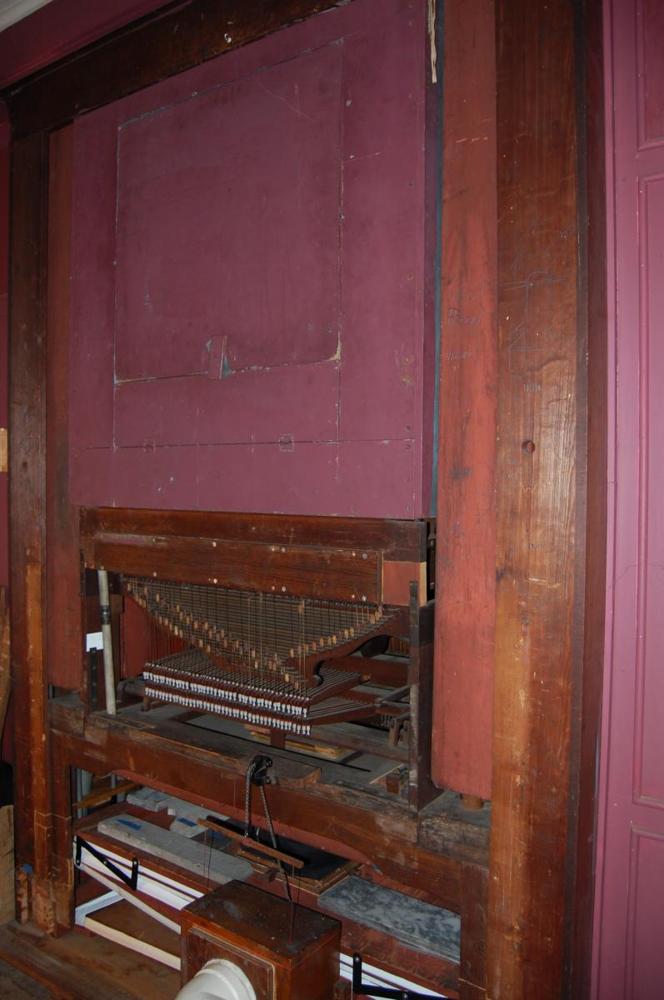
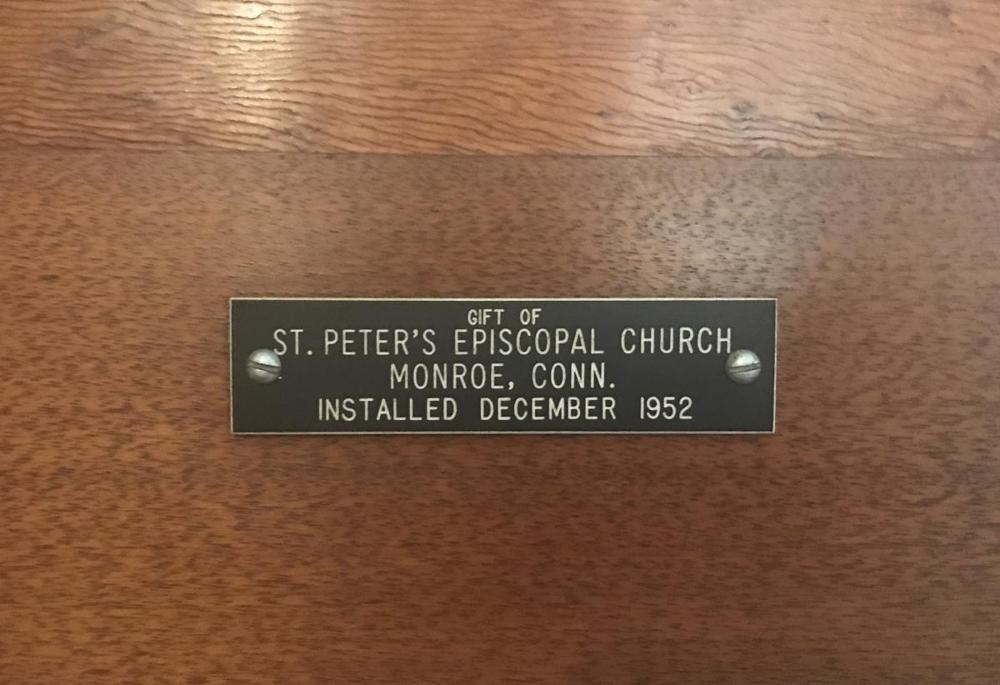
The organ came Monroe to Oxford about 1952. The original 18-note pedal board was replaced with an AGO 30-note pedalboard at that time, which was ineptly installed and hacked up the lower case, removing the hitchdown and pumping pedals along with their mechanisms in the process. The Swell shades must now be propped open from the inside or left closed. The original pedal couplers are still only 18 notes, and pedal pipes only for the bottom octave, so there was no musical gain as a result of the savagery involved with making this mess fit. The pedal stops are divided on either side of the manual chests, C and C# 6-note chests. There are louvres in the side panels in front of the Cello mouths to let the pedal sound out of the case. The Oboe was replaced with a Vox Humana after the installation here, and 15 Oboe pipes were mangled and piled in a heap in the tower. The Vox Humana is now missing as well-- extant in another heap in 2001 and missing by 2008.
The Great Cremona was once a reed, but is now bell gamba pipes, younger than the rest of the organ but still 19th-century pipework, and smaller scale than the corresponding string in the Swell.
The Great Flute 4' is mounted on a jump slide at the front of the Great windchest (which would have been the optimal place to put the reed instead of buried amongst the Great pipework), suggesting the chest was recycled from something older, was modified during construction, or was an after-market addition.
The double-rise reservoir was in poor condition in 2001, but has subsequently been releathered professionally, including the inoperative feeder. The pipework has been fitted with slide tuners which makes tuning the instrument even more of a challenge than it was with cone tuning, and needs to occur with far great frequency.
A noisy Spencer OrgoBlo Jr. [3/4 hp, 3.5" static] was installed with the 1952 move to Oxford. When I first saw the organ in 2001, the w.p. was 65 mm, (and is suspect for being too low), and the pipework was anemic and spoke poorly-- perhaps an attempt to lower the pitch. I raised the pressure to 70 mm, and the pitch then sharpened to roughly A445. Due to inexpert trimming of the pipes to accommodate the slide tuners and the wind pressure alterations, the original pressure and pitch are now a matter of conjecture, with the soldered cap flutes and ear-tuned bell gambas the best source of original information, (which want to go sharper or play on higher pressure, or both). Curiously, the Melodia pipes have had their tops savagely cut and hacked, and that stop is now too sharp to be in tune without raising the pitch of the whole organ even further, or raising the pressure. Closer examination is required to determine if this Melodia is original or not. The rack board would suggest it is.
The voicing is currently extremely ragged and uneven, and careful restoration of the pipework is in order to correct the voicing and settle the questions of pitch and pressure.
Scot Huntington on December 13th, 2021:
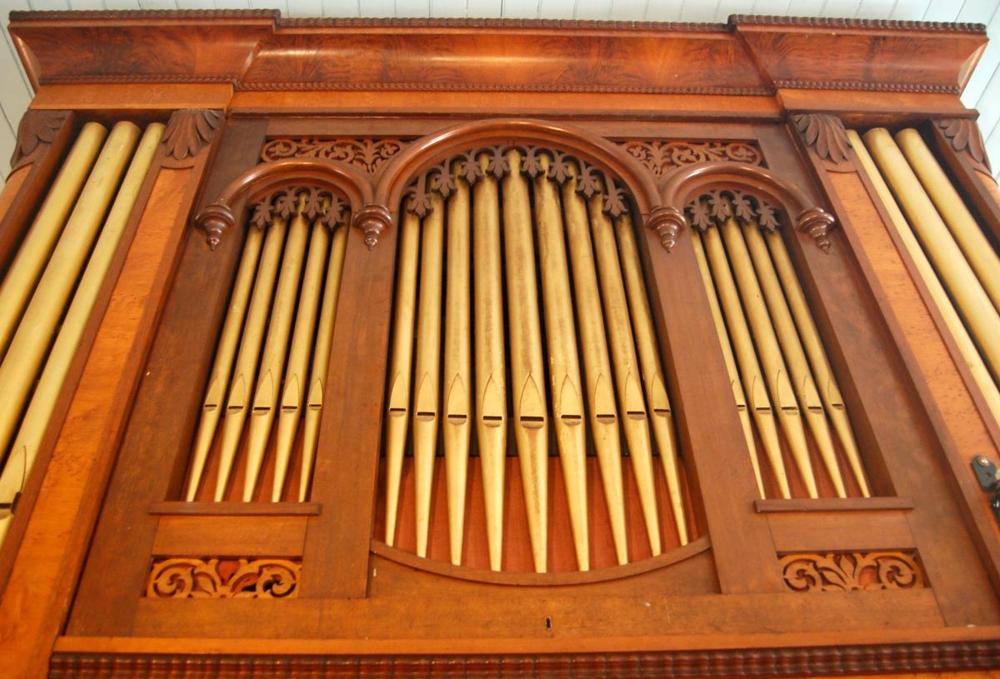
There is an oral tradition that has followed this organ from owner to owner, that it was originally built as the house organ for the home of the builder, George Jardine. Comparison with the work of Jardine's contemporaries, there are a larger proportion of Jardine parlor organs surviving than any other 19th c. builder, suggesting Jardine made such instruments more affordable and thus sold them in larger numbers. The quality of Jardine parlor organs varies from modest to elaborate. Of the builder's surviving residential instruments, this is certainly the most sumptuous with exquisite veneer work. There is a substantial amount of organ packed densely into a small area, making tuning and servicing a considerable challenge.
Database Manager on July 15th, 2018:
Updated by Adam Kowal, who has heard or played the organ.
Database Manager on October 30th, 2004:
Built for a residence? 2 pedal extensions. Came via St. Peter's, Monroe.
Something missing or not quite correct?Add NoteorAdd WebpageorAdd Cross ReferenceorSuggest an Edit