Ernest M. Skinner Company
Opus 188, 1911
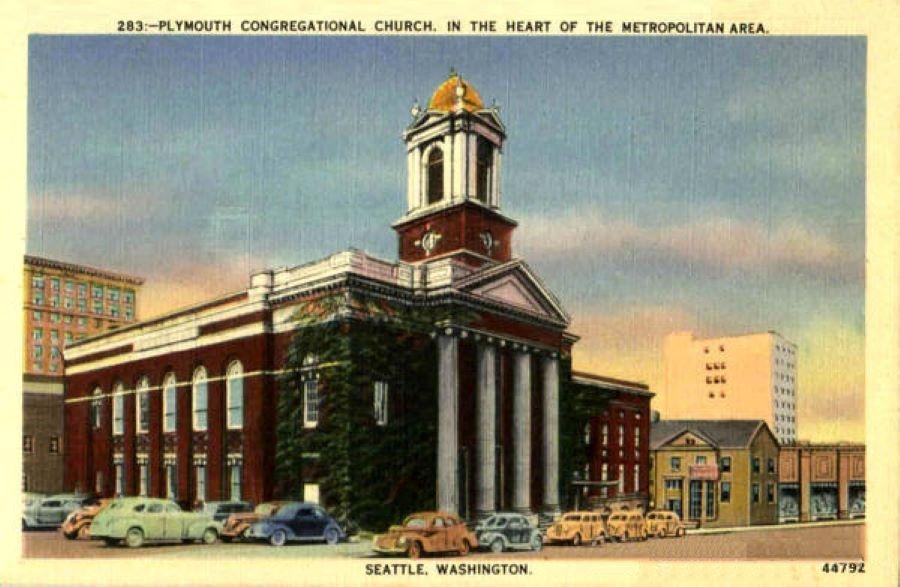
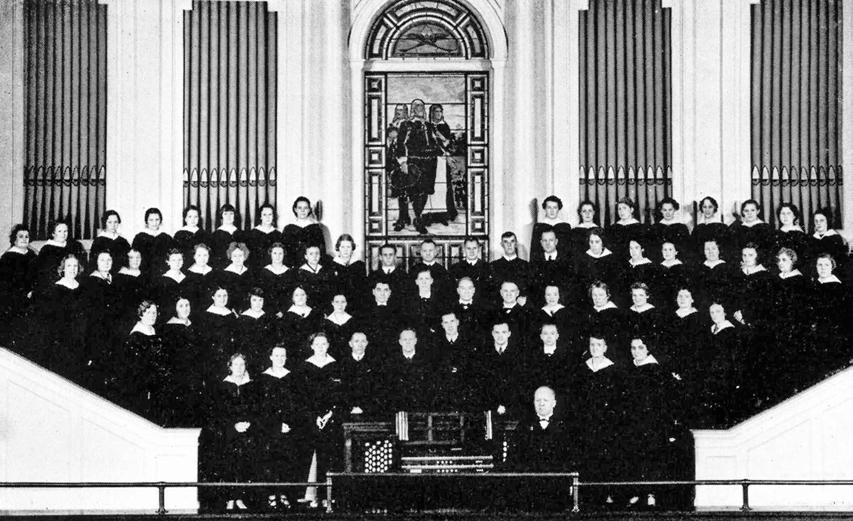
Plymouth Congregational Church
4th Avenue & University Street
Seattle, WA, US
38 Ranks - 2,378 Pipes
EXPLORE IMAGESVIEW STOPLISTSomething not quite correct?Suggest an Edit
IMAGES
Something missing or not quite correct?Add ImageorSuggest an Edit
STOPLISTS
Something missing or not quite correct?Add Stoplist
CONSOLES
Builder: Unknown
Position: Unknown
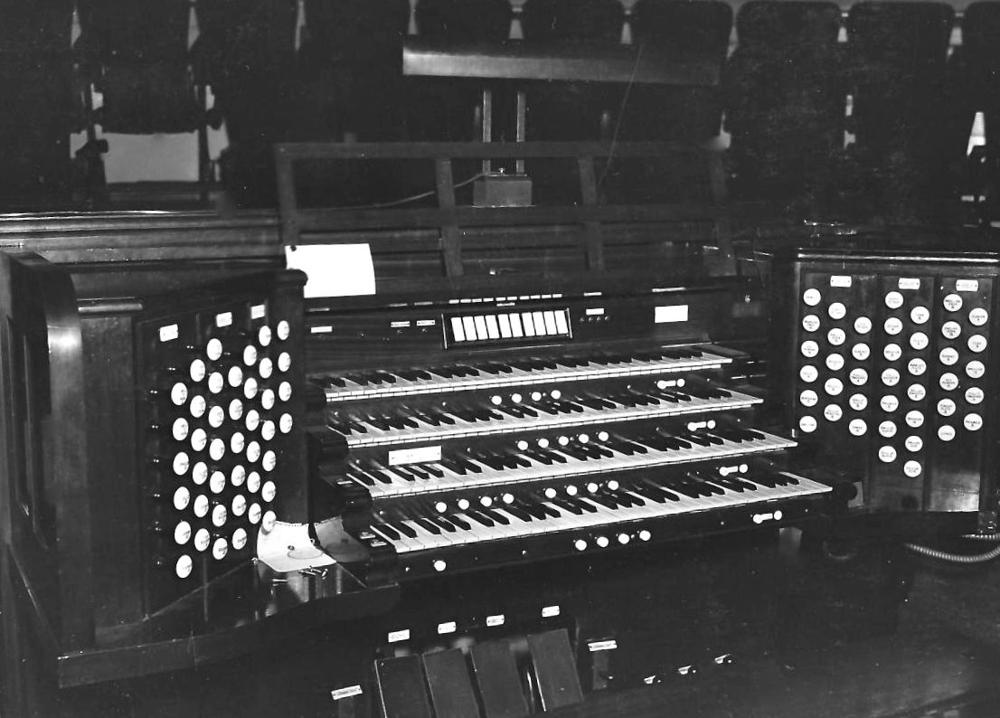
Design: Traditional With Roll Top
Pedalboard Type: Concave Radiating (Details Unknown)
Features:
4 Manuals (61 Notes)32 Note Pedal5 Divisions35 Stops59 RegistersElectrical Key ActionElectrical Stop ActionCrescendoCombination Thumb Piston(s)Coupler Toe Piston(s)Stop Layout: Drawknobs in Vertical Rows on Angled Jambs
Expression Type: Balanced Expression Shoes/Pedals (Details Unknown)
Combination Action: Adjustable Combination Pistons
Control System: Unknown or N/A
Something missing or not quite correct?Add ConsoleorSuggest an Edit
DETAILS
This instrument is: Not ExtantandNot Playable in this location
This organ was dedicated on November 8, 1912 and cost in excess of $30,000.00. The Eugene Nye notebooks and original Skinner contract supply
some important details about the organ, including the scale diameters of the following stops:
Swell 16ʹ Posaune: CC 5½ʺ; 8’ (c0) 5ʺ
Swell 8ʹ Oboe: CC 3 ½ʺ; c0 2½ʺ
Choir 8ʹ Vox Humana: CC 1⅞ʺ
Swell 4ʹ Clairon: CC 3¾ʺ
Choir 16ʹ English Horn: 4ʺ (bell), 2ʺ opening
Pedal 16ʹ Diapason : 13½ʺ x 14½ʺ
-- from 2008 OHS Atlas
Paul R. Marchesano on February 15th, 2022:
The organ was contracted in 1911, but not installed until 1912.
The December 1912 issue of The Diapason gives the stoplist and
some details, including, "The organ has 15 couplers, twenty-four
combination pistons, and three reversibles." It goes on to
indicate that the Swell, Choir, and Solo were enclosed in cement
swellboxes. It also goes-on to specifically tout the expression
mechanism:
"The organ has electro-pneumatic swell actions.
These swells are a great recent improvement in the modern organ,
giving the organist a command of crescendo effects never before
possible with any form of mechanism."
Wind pressures were 5", 7-1/2", 10", and 15".
There are some enticing mysteries involving this organ. The
Aeolian-Skinner website lists the stoplist but does not include
an 8' Vox Humana on the Solo. But this stop was recorded in the
December 1912 issue of The Diapason, and in the stoplist by
Seattle resident and former Balcom and Vaughan President,
William J. Bunch. Additionally, the Bunch specification lists
the Swell 16' reed register as a Contra Posaune, and the 8'
"Trumpet" register as Posaune. But both the Aeolian-Skinner
website and Diapason listings give them as 16' Trumpet and 8'
Cornopean.
Of greatest curiosity is the presence on Mr. Bunch's stoplist of
a 4-register, 7-stop (inc. chimes), 4-rank, 256-pipe expressive
Echo division...which is not listed on the Aeolian-Skinner
website nor by The Diapason article. The Balcom and Vaughan
Master Opus List has a 1956 entry for the Skinner at Plymouth
for repairs and cleaning. It also lists the size as "4-45" and
includes an "E" which usually meant elecrification, but may
have indicated "Enlarged.". So it seems likely that the organ
may have been enlarged and tonally altered or re-voiced.
In support of this, an extant photo of the console by William J.
Bunch does show six nameplates above the drawknobs in the angled
jambs. And Mr. Bunch goes on to state that the wind was supplied
to the Main organ by a 10 h.p. Spencer "Orogoblo" blower; and
the Echo was winded by a 1 h.p. Kinetic. Sadly, the organ was
broken-up for parts when the church built yet another new
edifice in 1967-68 and installed a 3-manual Schlicker.
The Skinner bench and several ranks survived in a three-manual,
20-rank organ in the N. Seattle residence of Richard Anderson,
but were again dispersed after his passing ca. 2004.
[Received on line from James R. Stettner May 8, 2007.]
[Transferred from old text file to this field, Paul R Marchesano, 2021-02-15]
Database Manager on May 9th, 2007:
Updated through online information from James R. Stettner.
Database Manager on December 1st, 2005:
Identified through information adapted from E. M. Skinner/Aeolian-Skinner Opus List, by Sand Lawn and Allen Kinzey (Organ Historical Society, 1997), and included here through the kind permission of Sand Lawn:
Dedication recital played by Judson W. Mather on November 8, 1912; replaced by Schlicker in new building in 1968; broken up for parts.
Webpage Links: Opus 188: Plymouth Congregational Church
Something missing or not quite correct?Add NoteorAdd WebpageorAdd Cross ReferenceorSuggest an Edit