Noack
Opus 128, 1995
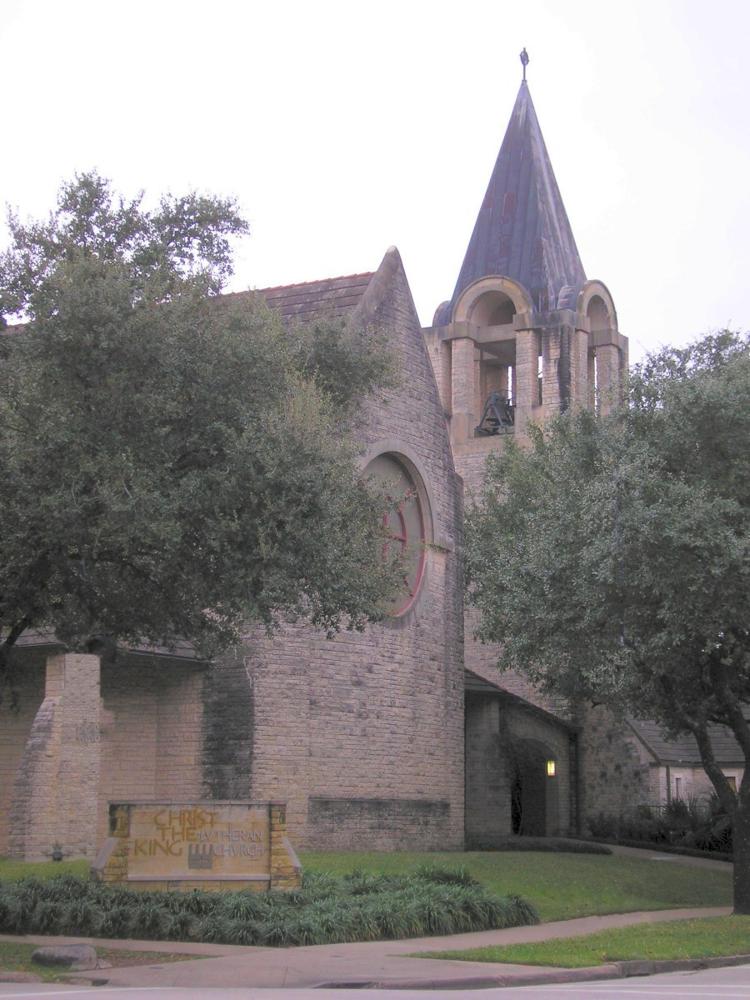
Christ the King Lutheran Church
Nave
2353 Rice Boulevard
Houston, TX, US
35 Ranks
Something not quite correct?Suggest an Edit
🤝 Instrument entries in Texas sponsored by:
We are grateful for the generous support of our sponsors, who make it possible for us to continue our mission of preserving and promoting the rich history of pipe organs across the globe.
IMAGES
Something missing or not quite correct?Add ImageorSuggest an Edit
STOPLISTS
Something missing or not quite correct?Add Stoplist
CONSOLES
Builder: Unknown
Position: Keydesk Attached, Manuals Set Into Case
Design: Traditional With Hinged Doors That Enclose Keyboards
Pedalboard Type: Flat Straight
Features:
2 Manuals (54 Notes)30 Note Pedal3 Divisions30 StopsMechanical (Unknown) Key ActionMechanical Stop ActionStop Layout: Drawknobs in Vertical Rows on Flat Jambs
Expression Type: No Enclosed Divisions
Combination Action: None
Control System: Unknown or N/A
Something missing or not quite correct?Add ConsoleorSuggest an Edit
DETAILS
This instrument is: Extant and Playable in this location
Updated through online information from Chris Holman.
Database Manager on April 11th, 2012:
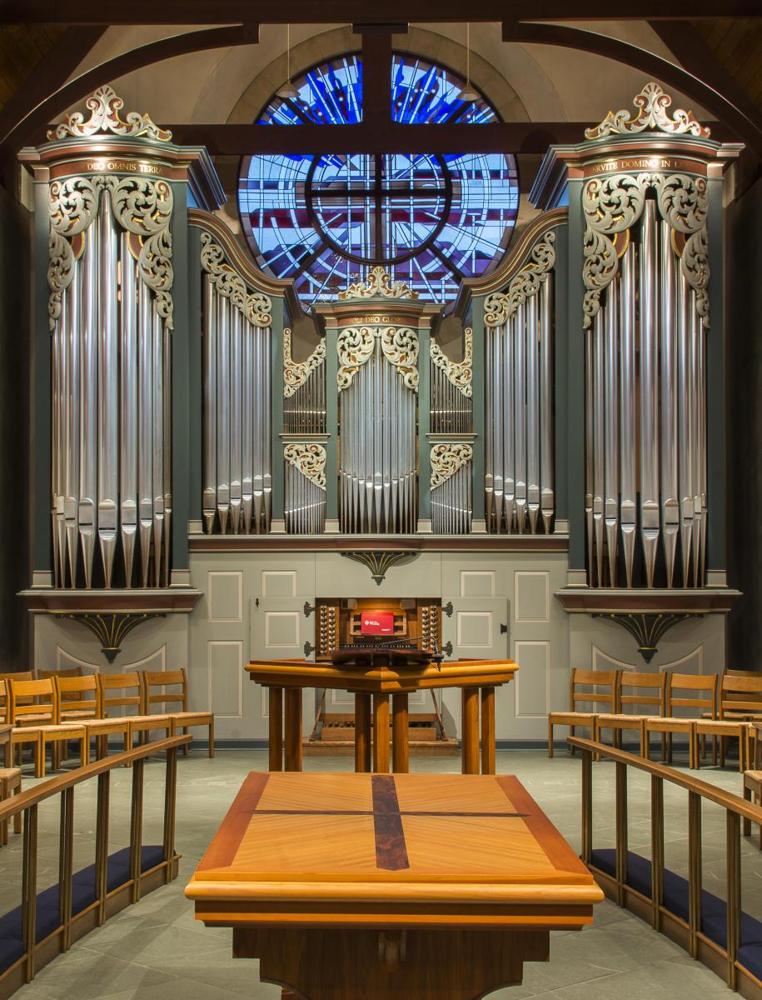
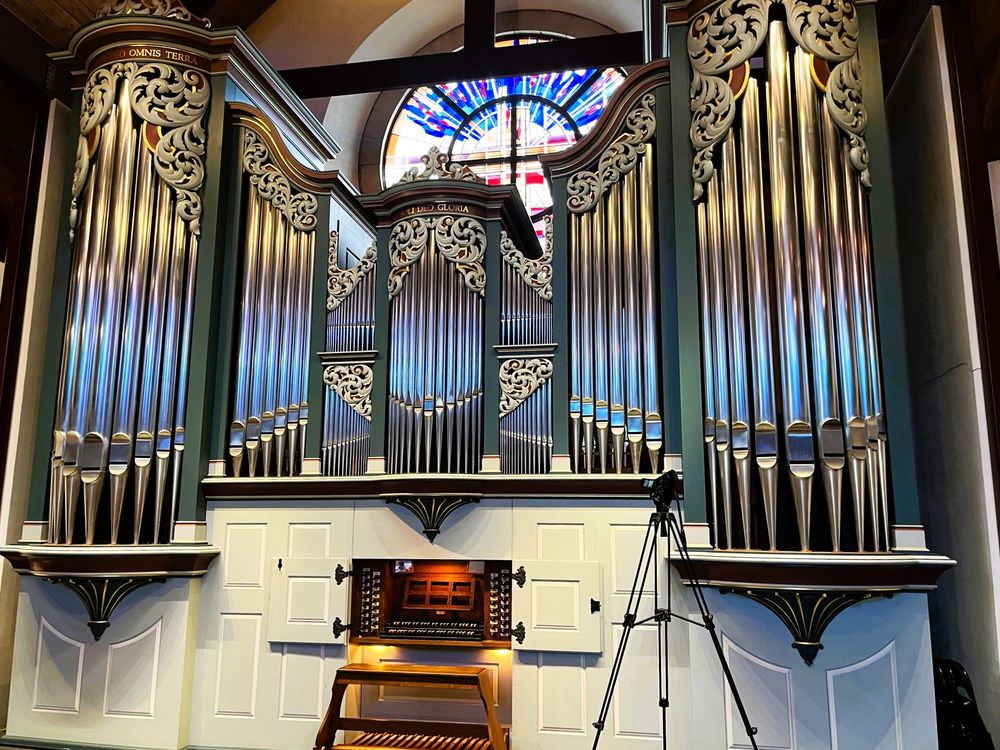
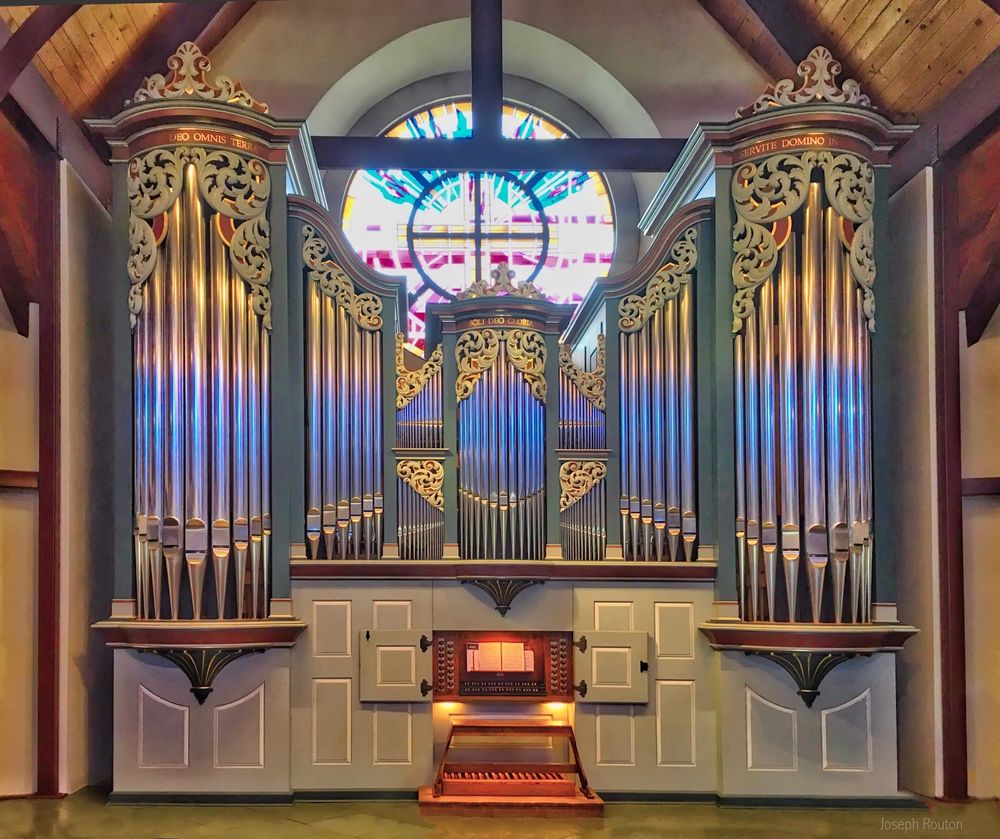
Updated through online information from T. Daniel Hancock. -- From "The Diapason," May 2009, "The organ at Christ the King Lutheran Church follows the example of Hildebrandt, thus adding a Bach organ of a new dimension on the North American continent....Noack is an American builder born and trained in Germany...Kristian Wegscheider of Dresden, restorer of improtant Silbermann organs, accepted appointment as a design consultant.; Reinhard Schaebitz of Dresden, voicer in the restorations, assisted in the voicing; and most of the metal pipes were built near Dresden in the workshop of Gunter Lau. The result is a wonderful instrument which not surprisingly, but quite remarkably, evokes the look, feel, and sound of an 18th-century Saxon organ. "This Bach organ possesses attributes commonly found in organs built today in historical style--tracker action; mechanical stop action; keys suspended below the pipe chests; a flexible wind supply provided by bellows; flat rather than radiating pedalboard, narrower, shorter manual keys; no pistons or combinations; and tuning in a historical temperament. The Saxon style imposes a series of additional design characteristics. The entire organ is housed in one case, rather than in compartments for each division according to the Werkprinzip; the case design and beautifully executed carvings employ 18th-century Saxon conventions; and the case is built of pine and pained (blue-green, red, and gold-leaf). The Oberwerk to Hauptwerk coupler is activated by shoving the Oberwerk manual forward, and the Oberwerk does not couple to Pedal. The pipe scalings are taken from Hildebrandt's, and the principal pipes have a high tin content rather than lead."
Database Manager on October 30th, 2004:
Status Note: There 1995.
Database Manager on October 30th, 2004:
In the style of (Z.?) Hildebrandt.
Webpage Links: Bach Society Houston | Bach Organ
Something missing or not quite correct?Add NoteorAdd WebpageorAdd Cross ReferenceorSuggest an Edit