Chester A. Raymond
1949
Originally Aeolian-Skinner Organ Co. (Opus 1027, 1941)
Plymouth Congregational Church
501 West Berry Street
Fort Wayne, IN, US
71 Ranks
EXPLORE IMAGESVIEW STOPLISTSomething not quite correct?Suggest an Edit
🤝 Instrument entries in Indiana sponsored by:
We are grateful for the generous support of our sponsors, who make it possible for us to continue our mission of preserving and promoting the rich history of pipe organs across the globe.

IMAGES
Something missing or not quite correct?Add ImageorSuggest an Edit
STOPLISTS
Something missing or not quite correct?Add Stoplist
CONSOLES
Builder: Unknown
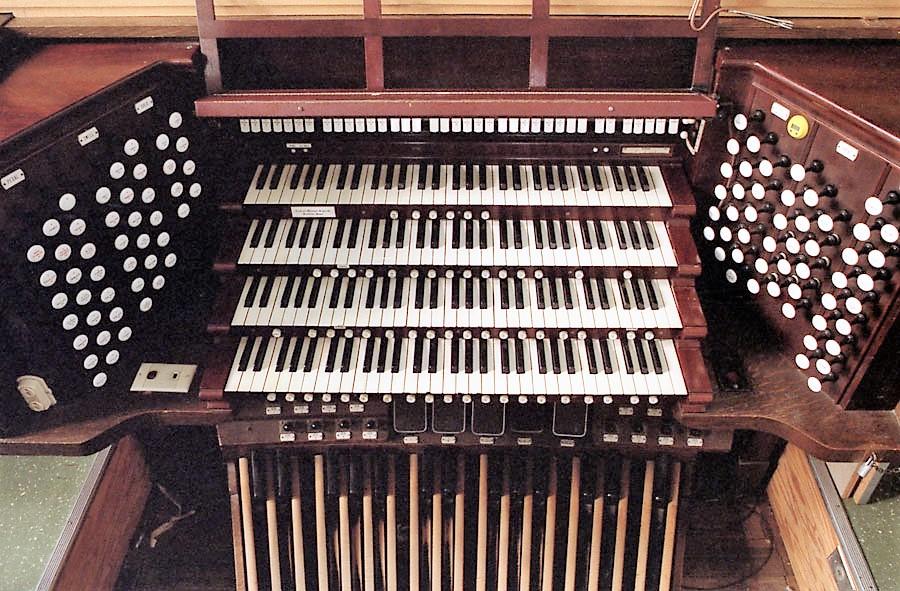
Position: Console in Fixed Position, Center
Design: Traditional With Roll Top
Pedalboard Type: Concave Radiating (Meeting AGO Standards)
Features:
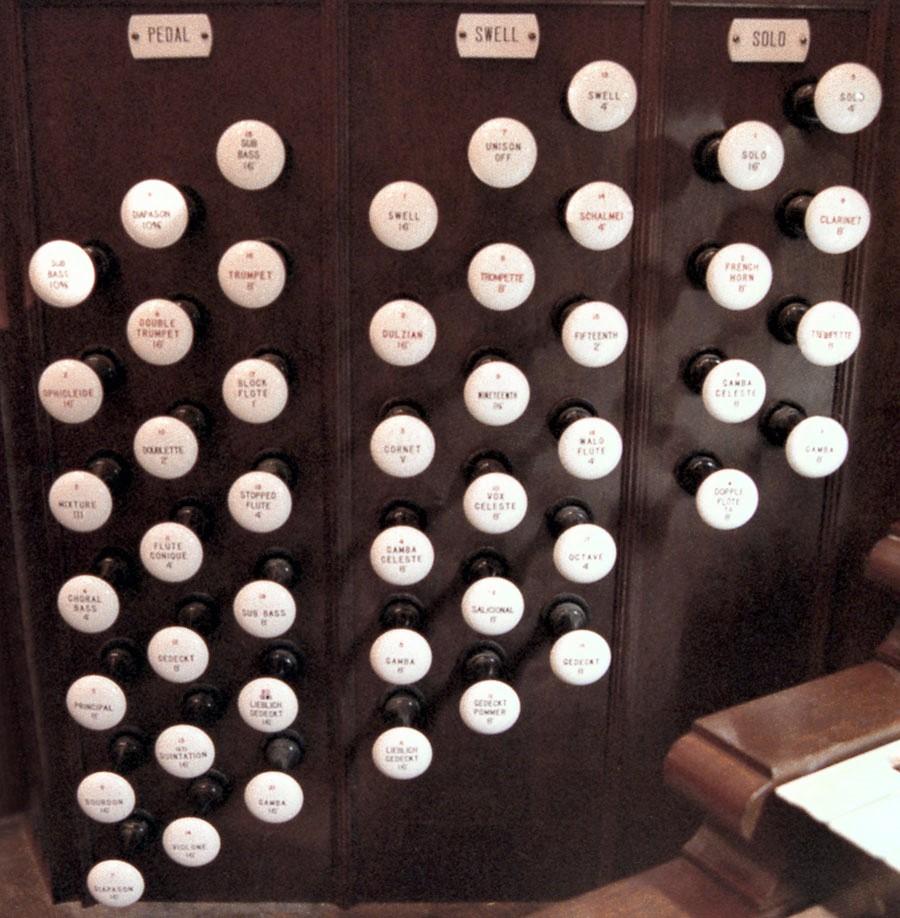
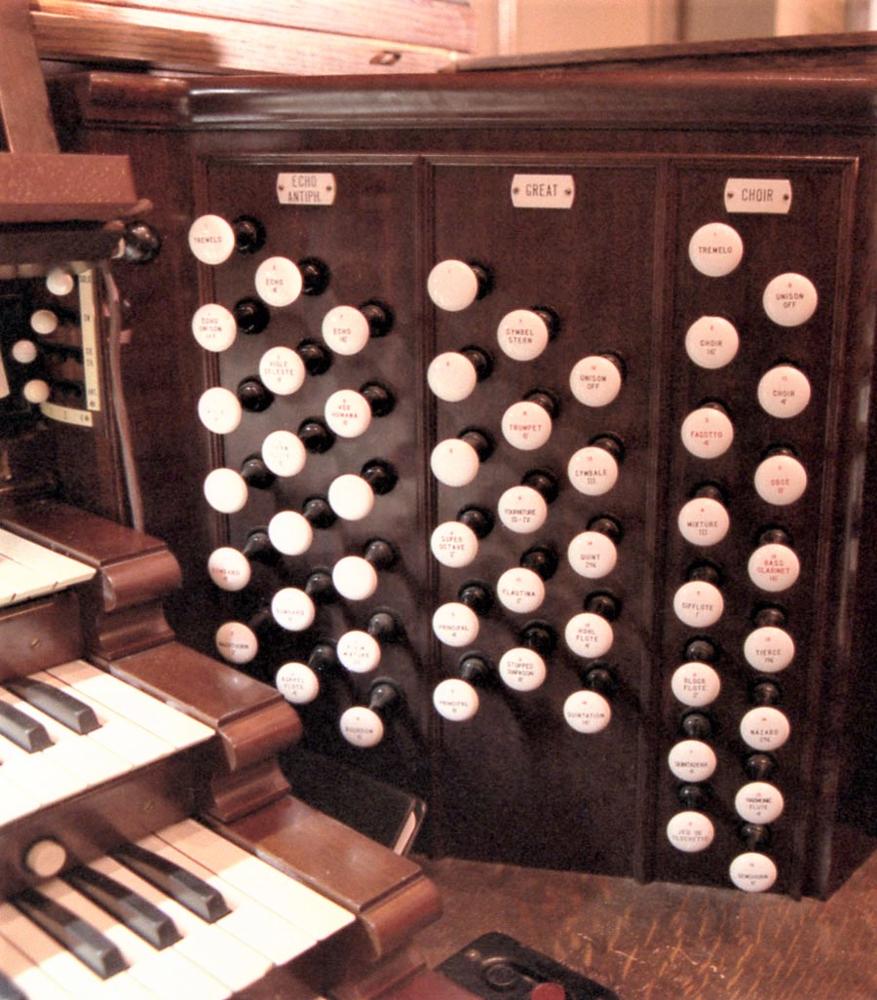
4 Manuals (61 Notes)32 Note Pedal6 Divisions65 RegistersElectrical Key ActionElectrical Stop Action✓ Crescendo✓ Combination Thumb Piston(s)✓ Combination Toe Piston(s)✓ Coupler Thumb Piston(s)✓ Coupler Toe Piston(s)✓ Sforzando Thumb Piston(s)✓ Sforzando Toe Piston(s)Stop Layout: Drawknobs in Vertical Rows on Angled Jambs
Expression Type: Balanced Expression Shoes/Pedals (Details Unknown)
Combination Action: Computerized/Digital
Control System: Unknown or N/A
Something missing or not quite correct?Add ConsoleorSuggest an Edit
DETAILS
This instrument is: Not Extant and Not Playable in this location
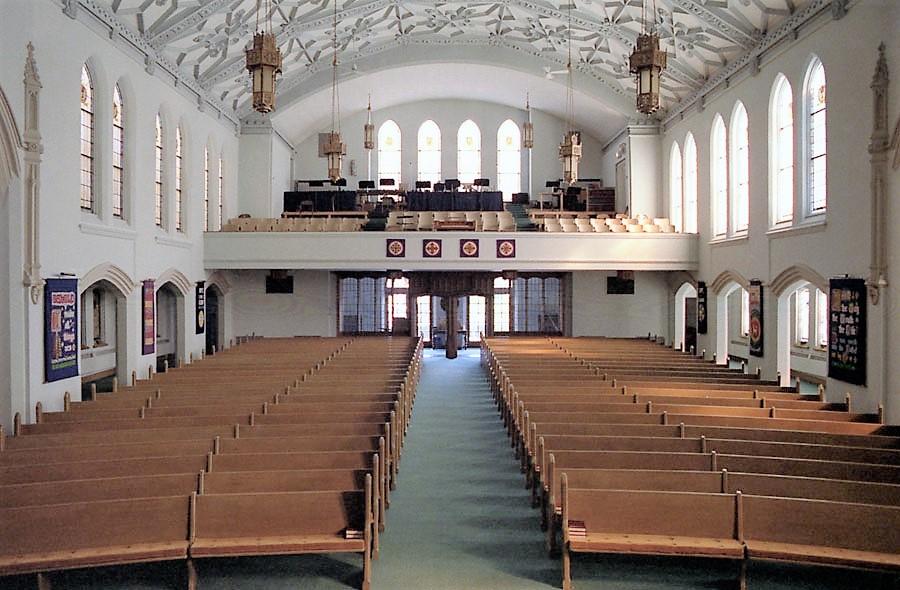
From Ken Stein at photographybystein.com: I served as Organist, then later, Director of Music/Organist from 1983 to 1999. I played many services and recitals on this instrument. The church had an afternoon recital series, which meant I usually played at least two 1/2 hour solo organ recitals a year. I also played "Dueling Organ Recital" with my friend and colleague Michael Hollman, who usually held forth at the balcony instrument, a 96-equivalent-rank Allen ADC 8000.
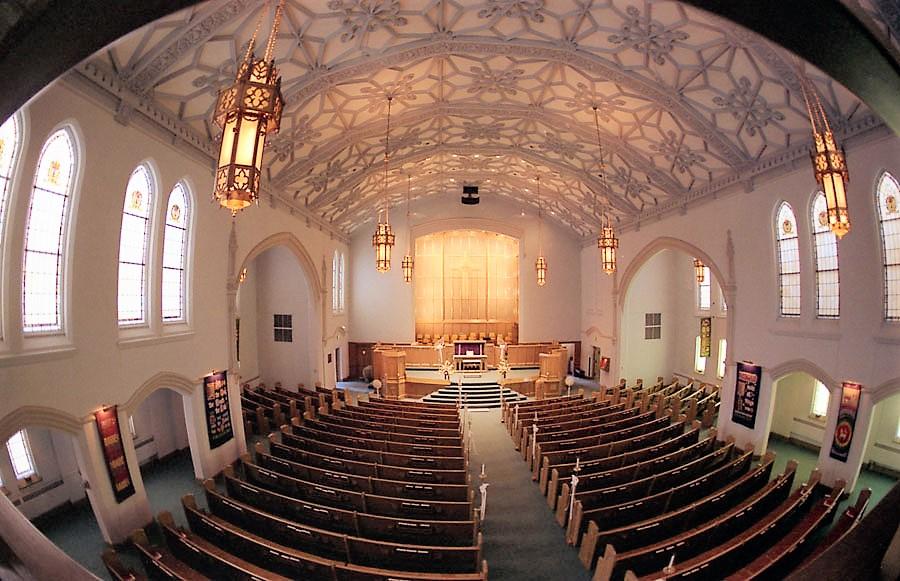
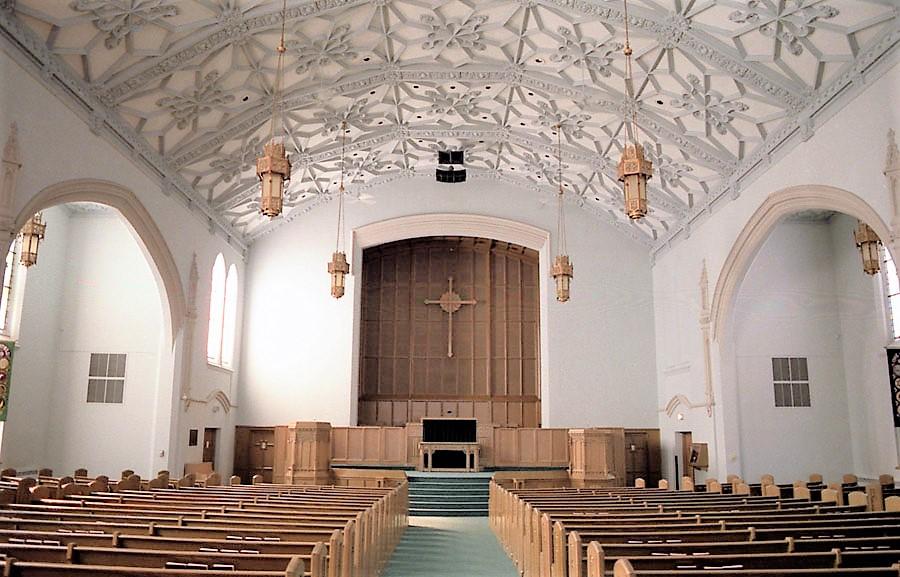
The Aeolian-Skinner was originally located in what is now Central Presbyterian Church, Park Ave., NY, NY. As best as I can tell, its life started out as a Hook & Hastings, c. 1902. The organ was then re-built by G. Donald Harrison and the firm of Aeolian-Skinner. It was fitted with this console, some Hook & Hastings ranks were retained, and a number of Aeolian-Skinner ranks were added, bringing the total to about 80 ranks. In 1948, Plymouth Congregational Church (Fort Wayne, IN) bought the instrument from Central Presbyterian Church and had it removed and reinstalled by Chester Raymond. It was maintained for many years by Harold Lucas of Auburn IN. Harold was an Aeolian-Skinner installer for the Chicago area before starting his own firm. He maintained the instrument until the mid-1990's, then retired to Canada. Before his retirement, he taught me many skills, including tuning and releathering. Most of the Solo division's stops were releathered by me after the failure of the original pouches made from Perflex. The instrument was 72 ranks and was located in the chancel area before its replacement by a 4-manual Allen Renaissance c. 2003. The Allen 8000 ADC was purchased in 1985 and installed in the balcony. It too was removed around the 2003 renovation of the sanctuary.
Additional pipework by A.R. Shopp, Trivo Co., and Laukauff was added to the pipe organ throughout its life. Most of the installation of additional/replacement ranks was done by Harold Lucas. The Great Principal Chorus was original G. Donald Harrison pipework. The 16' Ophecliede used 16' wood resonators. The 16' Violone stop was wood, full length, and because of its smaller scale, was actually closer to 20' in length. The Open Diapason 16' in the pedal had a lower 32' extension, which because of expense, was left in New York. The specification below was the instrument's final reincarnation, as of 1999.
From 1983 to 1999, several changes to the specification took place.
An 8' Stopped Diapason (Odel) replaced the Erzahler in the Gt.
Through switching, the 16' Open Diapason and 16' Soubass were added to the pedal specification at 10 2/3' pitches.
For want of a feed wire, the 16-8-4' pedal Soubasse were played for the first time since 1948.
One of the Swell strings (there were 4 ranks, very similar in volume and timbre) was replaced by an 8' Cor Anglais - new pipework by Trivo Co.
A 32' reed by Laukauff replaced an old Double Trumpet 16' in the pedal division. An extension was added by A.R. Shopp's so it could be played at 32' and 16' pitches.
The 8' Diapason in the Solo was replaced by an 8' Doppel Flute.
An 8-level S.S.L. Combination Action was installed. The pistons under the Choir manual which duplicated the pedal toe-studs were re-configured as Generals, which brought the total number of General pistons to 21; 8 of those were duplicated by toe studs. There were four user-definable Creschendo pedal settings, and a set-able Sfz. for each level of memory.
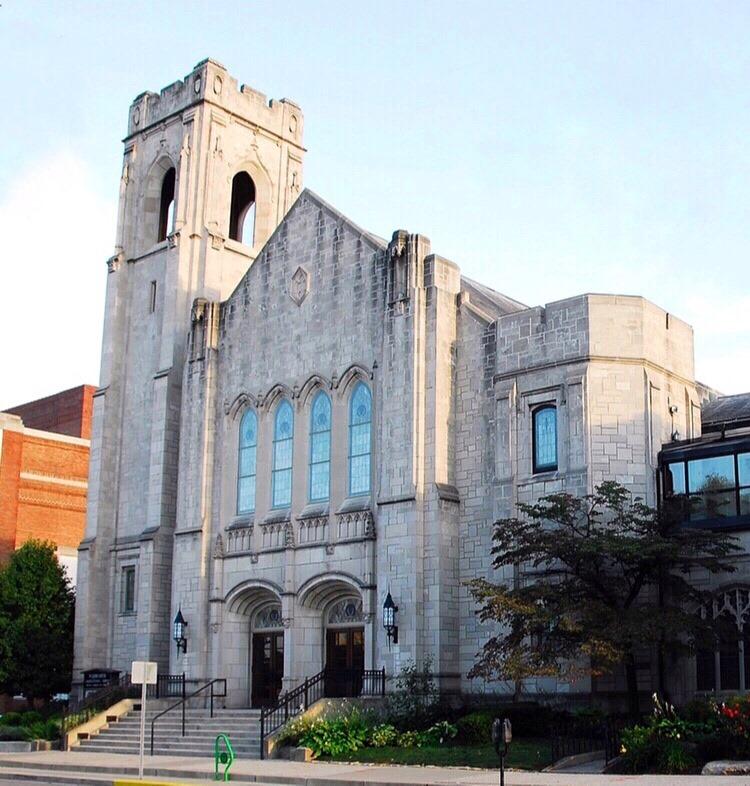
Note: All of the photos on this page were captured between 1983 and 1999. Many changes have taken place since some of this pictures were taken - to the exterior of the building, the sanctuary and the organ console as well. One should not assume that the pictures of a given object were neccessarily photographed within the same time period.
Database Manager on May 22nd, 2016:
Updated through online information from Thad Reynolds.
There were no Austin pipes in this organ. All the older pipes were Hook & Hastings. Several ranks of pipes, including strings, pedal Viol, and pedal Ophicleide were added to EMS opus 803 at High Street UMC in Muncie, Indiana where they are very appropriate.
Database Manager on November 2nd, 2012:
Updated through online information from John Gouwens. -- The organ had been tinkered with greatly over the years, with many ranks swapped out by various individuals. Late in its life, the combination action was replaced with and SSL control system, but retaining the old cloth-wrapped wiring. This caused many problems. Finally, the organ was scrapped, with at at least some parts being acquired by Reynolds Associates of Marion, IN. The church has ever since had an electronic. Tradition had it that some of the older ranks had been not from Austin but from Hook & Hastings. The Aeolian-Skinner contribution had been mostly principal chorus of the Great. Back in its original home in New York, it was replaced by the landmark Möller organ (Central Presbyterian Church).
Database Manager on July 9th, 2007:
Identified through information adapted from E. M. Skinner/Aeolian-Skinner Opus List, by Sand Lawn and Allen Kinzey (Organ Historical Society, 1997), and included here through the kind permission of Sand Lawn:
Rebuild and relocation of Aeolian-Skinner Opus 1027 (1941).
Related Instrument Entries: Aeolian-Skinner Organ Co. (Opus 1027, 1941)
Something missing or not quite correct?Add NoteorAdd WebpageorAdd Cross ReferenceorSuggest an Edit