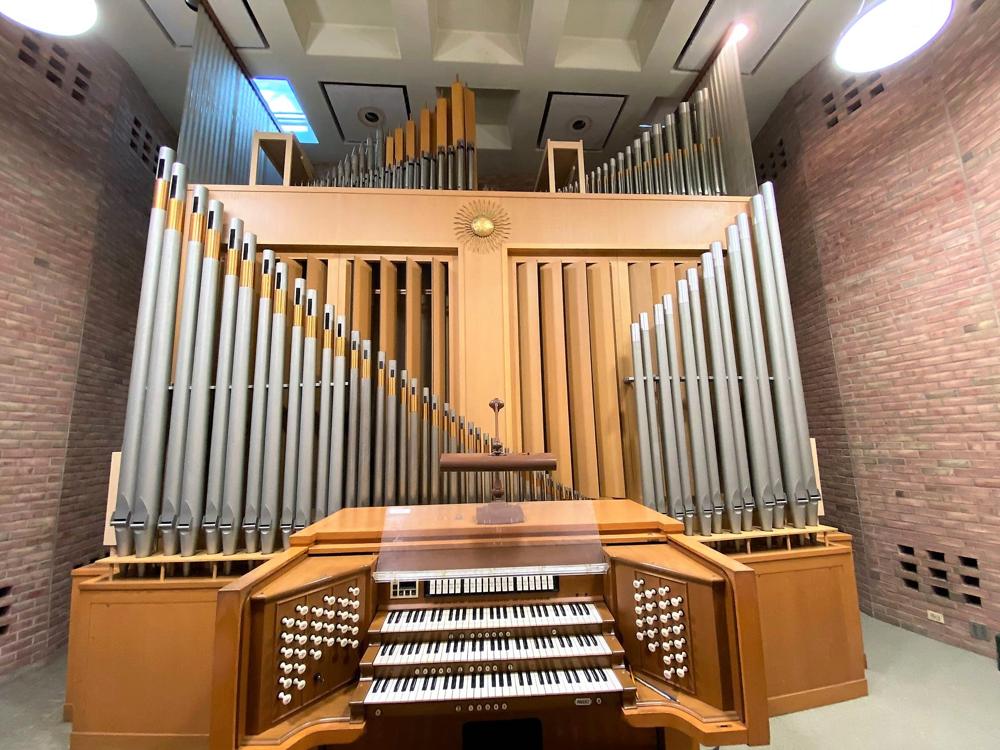
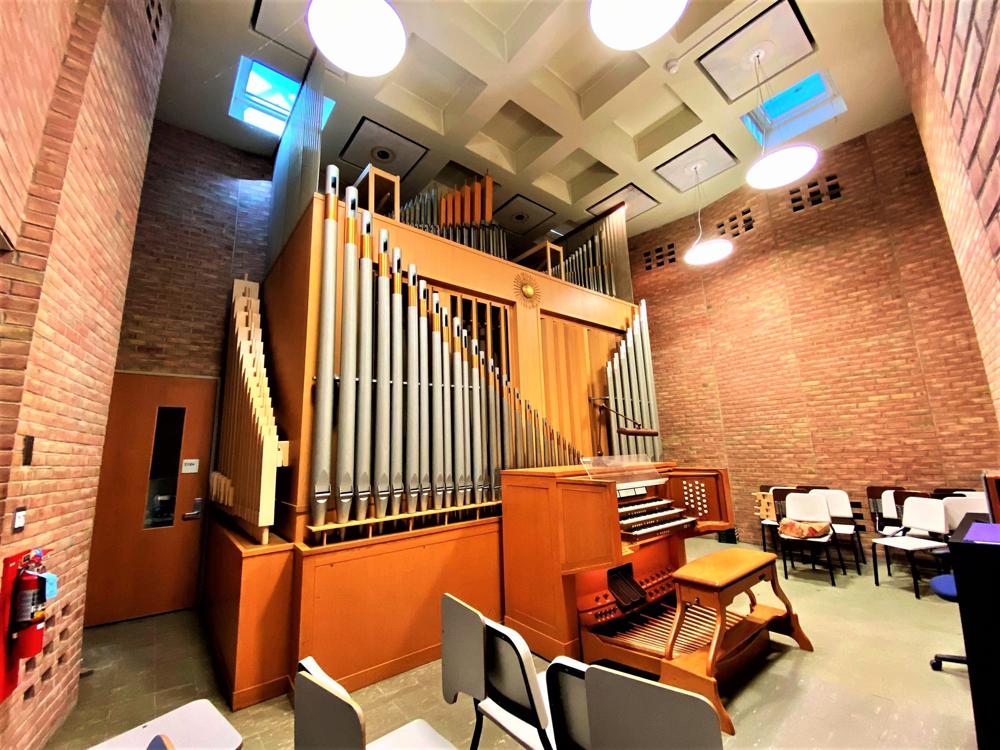
M. P. Möller
Opus 9905, 1964
University of Michigan School of Music, Theatre, and Dance
Studio 2102
1100 Baits Drive
Ann Arbor, MI, US
22 Ranks - 1,396 Pipes
Something not quite correct?Suggest an Edit
IMAGES
Something missing or not quite correct?Add ImageorSuggest an Edit
STOPLISTS
Something missing or not quite correct?Add Stoplist
CONSOLES
Builder: Unknown
Position: Unknown
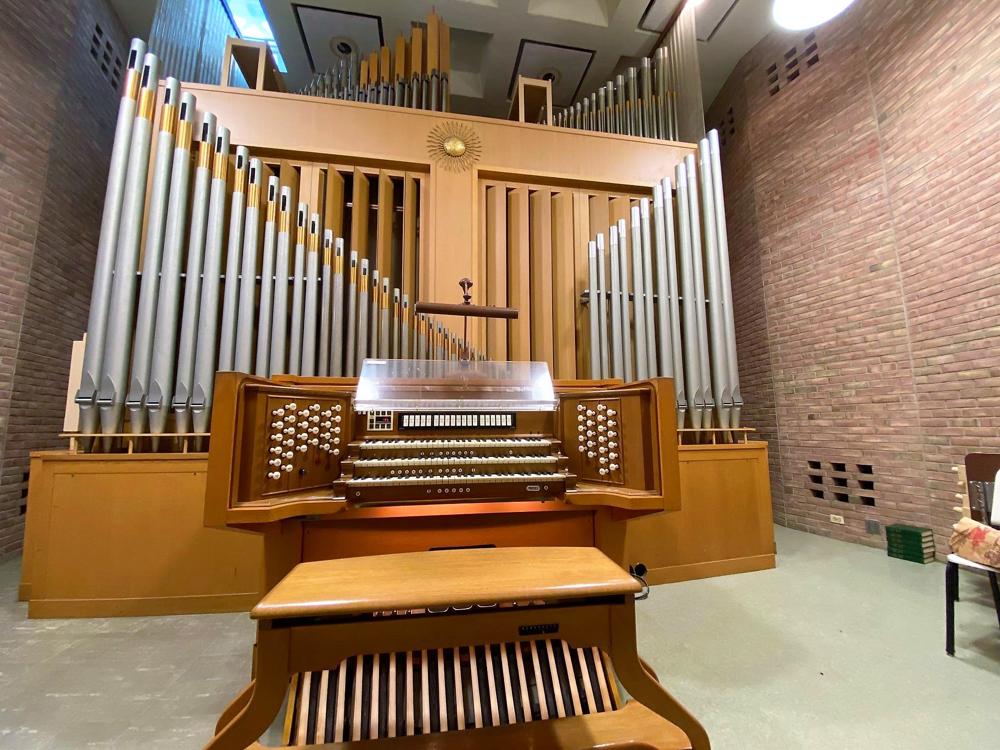
Design: Traditional With Roll Top
Pedalboard Type: Concave Radiating (Meeting AGO Standards)
Features:
3 Manuals (61 Notes)32 Note Pedal5 Divisions36 Stops18 RegistersElectrical Key ActionElectrical Stop ActionCombination Thumb Piston(s)Combination Toe Piston(s)Coupler Thumb Piston(s)Coupler Toe Piston(s)Sforzando Thumb Piston(s)Sforzando Toe Piston(s)Stop Layout: Drawknobs in Vertical Rows on Angled Jambs
Expression Type: Balanced Expression Shoes/Pedals (Meeting AGO Standards)
Combination Action: Remote Pneumatic/Mechanical Capture
Control System: Unknown or N/A
Something missing or not quite correct?Add ConsoleorSuggest an Edit
DETAILS
This instrument is: Not Extant and Not Playable in this location
Sold in 2020 to John Rust, Acme Organ Institute. Relocated by Don Veerkuilen and restored, without changes, by Ed Bruenjes at Acme.
Database Manager on December 30th, 2010:
Updated through on-line information from Charles Kennedy. -- The console was renovated in 1995 with the installation of a 256-memory level Solid State Logic combination action. Several stops (marked with an asterisk) were added, taken from existing pipework on unit chests, and more couplers (both intermanual and intramanual) were added to increase the organ's flexibility. At some point after the organ's original installation (within a year or so), a 32' Cornet was added to the Pedal, derived from the Swell 16' Spizflöte, using the pitches 10-2/3', 6-2/5', 4-4/7' and 3-5/9'. At some point later, the 3-5/9' was removed from the wiring, so that it is now 10-2/3', 6-2/5', and 4-4/7'. These pitches carry through the entire pedal compass. The original Positiv 8' Gedeckt was removed, and substituted for it was the original 4' Koppelflöte with an 8' wooden bass from an unknown source. In place of the Positiv 4' Koppelflöte was substituted a stopped metal rank, believed to have come from one of the earlier studio instruments (either by Kuhn or Rieger) which existed in the old music facilities on central campus, and which were later sold or dispersed. At some point, a Zimbelstern was added, controlled by a revsersible toe stud. [Corrections to specifications as printed in the database: The Positiv Sifflöte 1' is a 12-pipe extension of the 2' Blockflöte, and is not independent. The Pedal 8' and 4' Gedeckt are both extended from the 16' Subbass and are not derived from the Positiv Gedeckt.]
Database Manager on July 16th, 2009:
Updated through on-line information from Jeff Scofield. -- Installed as studio organ for Robert Glasgow; currently the studio organ for James Kibbie.
Database Manager on July 15th, 2009:
Updated through on-line information from Jeff Scofield.
Database Manager on January 12th, 2009:
Identified from factory documents and publications courtesy of Stephen Schnurr.
Related Instrument Entries: Acme Organ Company (2021)
Something missing or not quite correct?Add NoteorAdd WebpageorAdd Cross ReferenceorSuggest an Edit