W. W. Kimball Co.
1929
Residence: Stephen A. Gerrard
748 Betula Ave.
Cincinnati, OH, US
21 Ranks
Something not quite correct?Suggest an Edit
🤝 Instrument entries in Ohio sponsored by:
We are grateful for the generous support of our sponsors, who make it possible for us to continue our mission of preserving and promoting the rich history of pipe organs across the globe.

IMAGES
Something missing or not quite correct?Add ImageorSuggest an Edit
STOPLISTS
Something missing or not quite correct?Add Stoplist
CONSOLES
Builder: Unknown
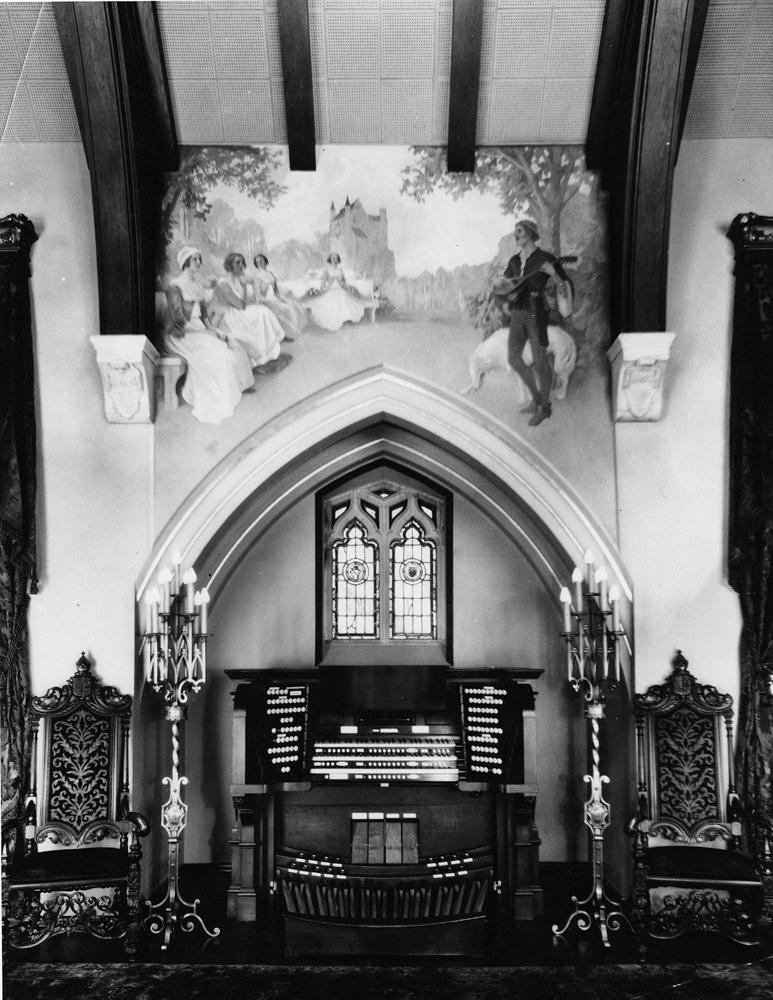
Position: Console in Fixed Position, Center
Design: Traditional With Roll Top
Pedalboard Type: Concave Radiating (Details Unknown)
Features:
3 Manuals (61 Notes)32 Note Pedal4 Divisions21 Stops59 RegistersElectrical Key ActionElectrical Stop ActionCrescendoCombination Thumb Piston(s)Combination Toe Piston(s)Stop Layout: Unknown
Expression Type: Balanced Expression Shoes/Pedals (Details Unknown)
Combination Action: Adjustable Combination Pistons
Control System: Unknown or N/A
Something missing or not quite correct?Add ConsoleorSuggest an Edit
DETAILS
This instrument is: Extant and Not Playable in this location
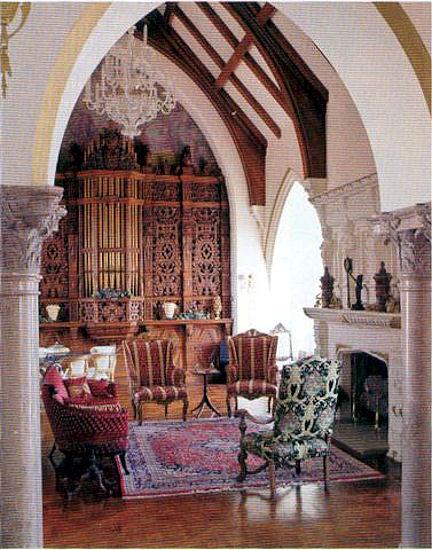
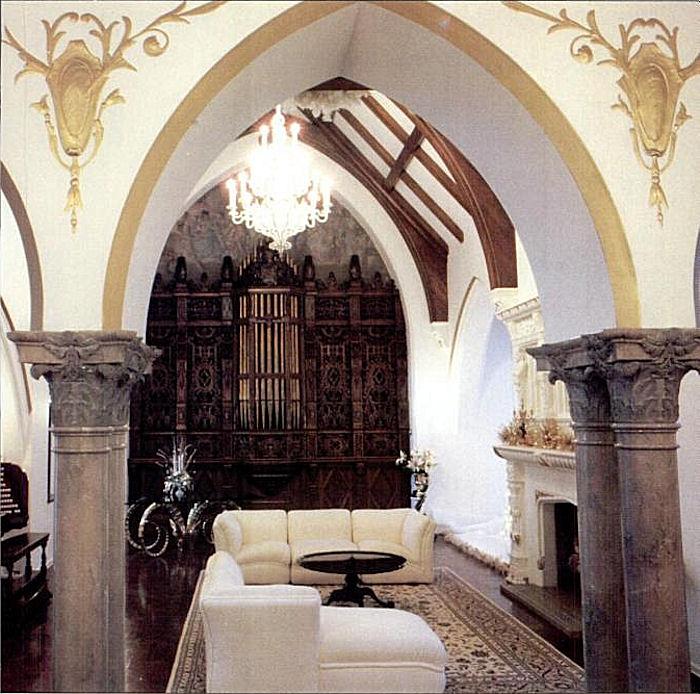
Born in 1860 in the Cincinnati-area community of Cherry Grove, Stephen Gerrard supported himself in his youth as a street peddler, but ultimately made himself wealthy by taking advantage of refrigerated rail cars to transport cantaloupes nationwide, selling them far more widely than was otherwise possible. His sales of Colorado melons throughout the country's central and eastern regions enriched Gerrard, gaining him the nickname of "Cantaloupe King", and enabling him to build the present house in 1915 as well as constructing a grand mausoleum in the same section of Spring Grove Cemetery as other prominent local businessmen. Its location in North Avondale, a gaslight neighborhood, made Gerrard a neighbor to some of Cincinnati's economic élites. However, his fortune was destroyed by the Great Depression, and he died in 1936. Built of limestone with a limestone foundation, the Tudor Revival house is covered with a slate roof. Two and a half stories tall, the house features an irregular plan, with battlement-topped bay windows in assorted gables, tall chimneys, and a porte-cochère sheltering the main entrance. The windows are sheltered by hoodmolds, and the upper and lower sections of the facade are separated by a stone belt course. Decorative elements in the upper part of the house include a pair of gargoyles atop the roof and the ornamental chimney pots atop the chimneys. Extensive wooden panelling beautifies the interiors, which feature ornamental ceilings and marble fireplaces. Upon its completion, the house possessed its own pipe organ, made by W.W. Kimball of Chicago. The entire house has an area of 5,400 square feet.
Database Manager on September 24th, 2009:
Updated through on-line information from James R. Stettner. -- Stops were drawknobs in horizontal rows on standard angled drawknob jambs. The music room and organ were added to the house in 1929 as a gift from Gerrard to his wife, Estelle. According to the May 1988 issue of 'Cincinnati' magazine, "By 1929, he had distinguished himself by amassing a fortune, and he celebrated by distinguishing his house. He added formal gardens and a music room for his wife. It is this room -- Estelle Gerrard's anniversary present of an organ room -- which made the home more than a run-of-the-mill mansion. The organ (the largest house organ in the country) was a player organ with intricately wired mechanism housed in the basement and zinc and wooden pipes behind an elaborately carved pipe screen." Sadly, Gerrard lost his fortune in the stock market crash. The family continued to live there until Gerrard's death in 1934. The property changed hand several times. It was finally purchased by Joe and Robin Shildmeyer who have restored the home after being empty for 13 years. The 'Cincinnati' magazine article further states about the organ, "It also brought them to the attention of the Smithsonian Museum, which sent an organ expert to see if there were a way to salvage the player organ, one of only two in the country. He left the music room weeping; time and moisture had done their worst." Despite this report, the organ was still present at the time this article was written.
Database Manager on August 27th, 2009:
Identified through on-line information from Jim lewis. -- Three-manuals. Electro-pneumatic action.
Something missing or not quite correct?Add NoteorAdd WebpageorAdd Cross ReferenceorSuggest an Edit