George (John) Kilgen / Geo. Kilgen
1885
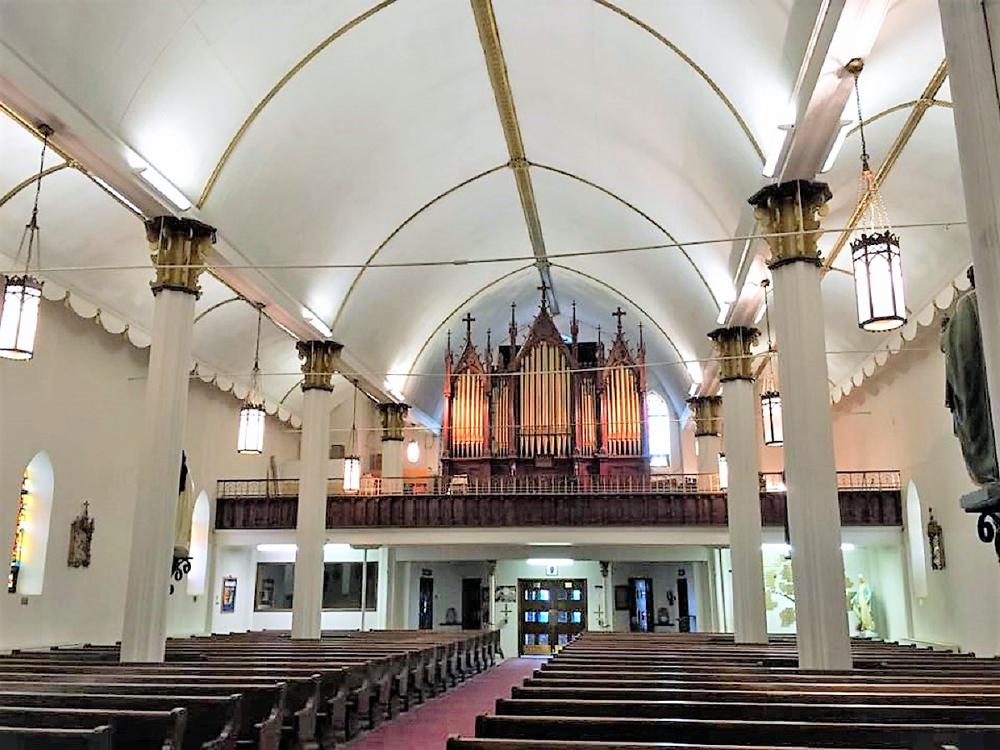
Our Lady of Sorrows Roman Catholic Church
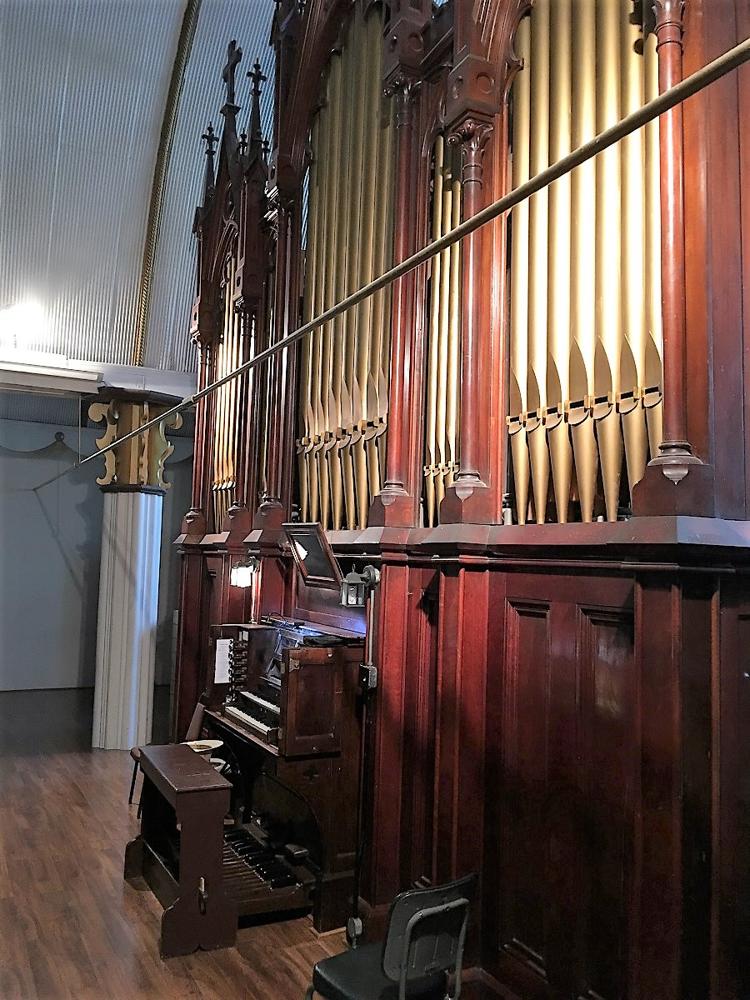
Sanctuary; rear gallery
403 Valencia Street
Las Vegas, NM, US
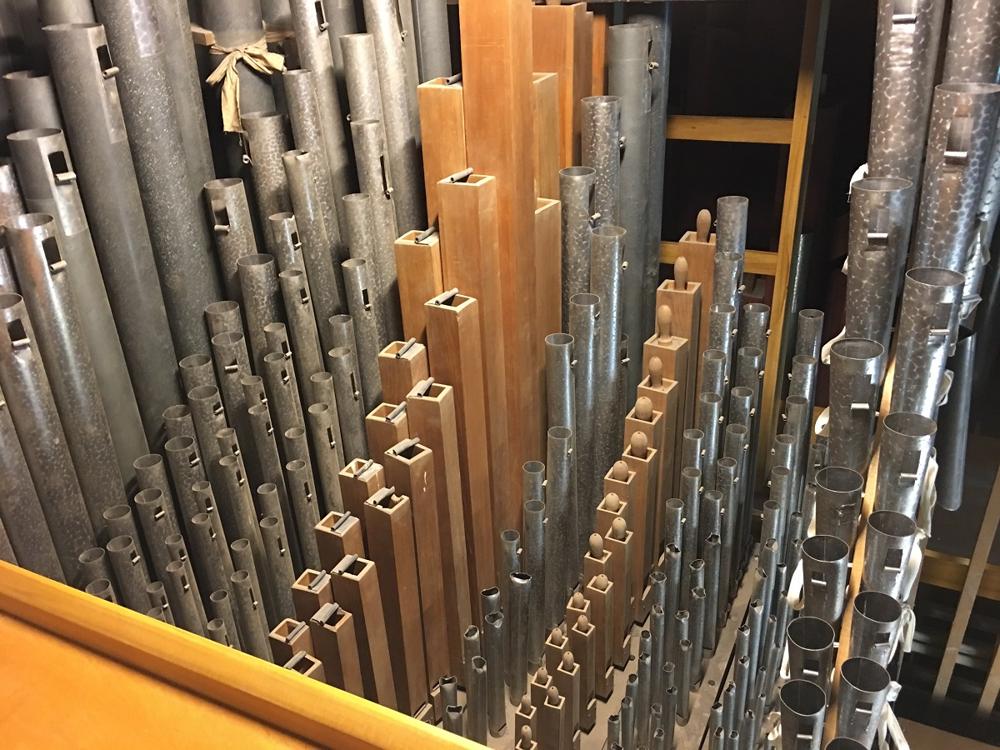
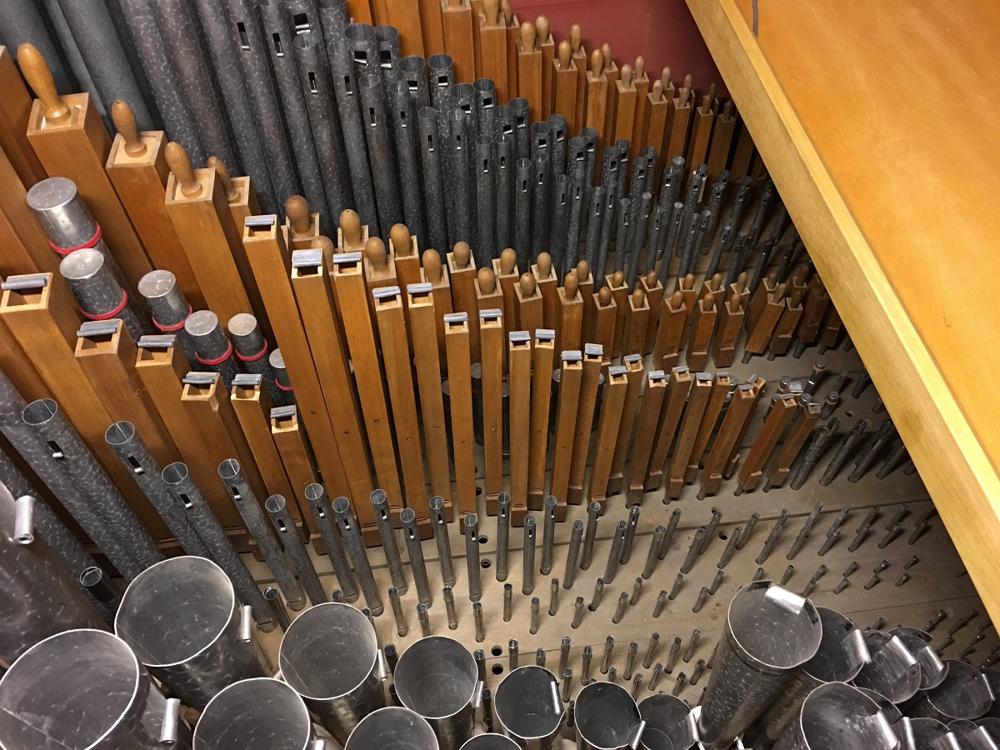
29 Ranks - 1,589 Pipes
EXPLORE IMAGESVIEW STOPLISTSomething not quite correct?Suggest an Edit
IMAGES
Something missing or not quite correct?Add ImageorSuggest an Edit
STOPLISTS
Something missing or not quite correct?Add Stoplist
CONSOLES
Builder: George (John) Kilgen / Geo. Kilgen
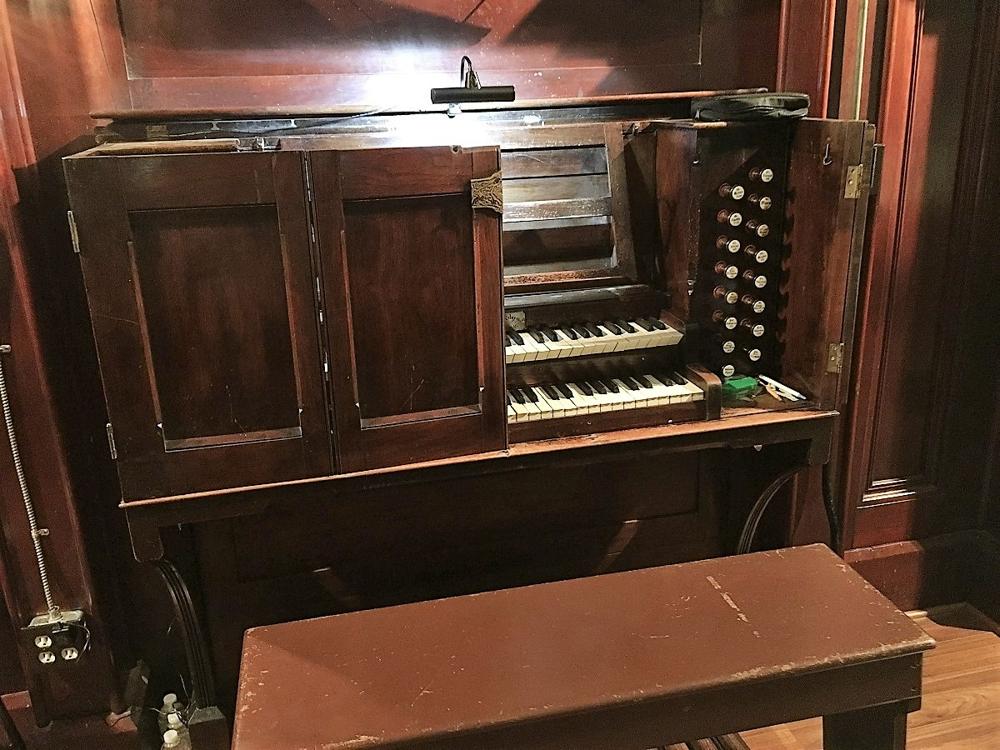
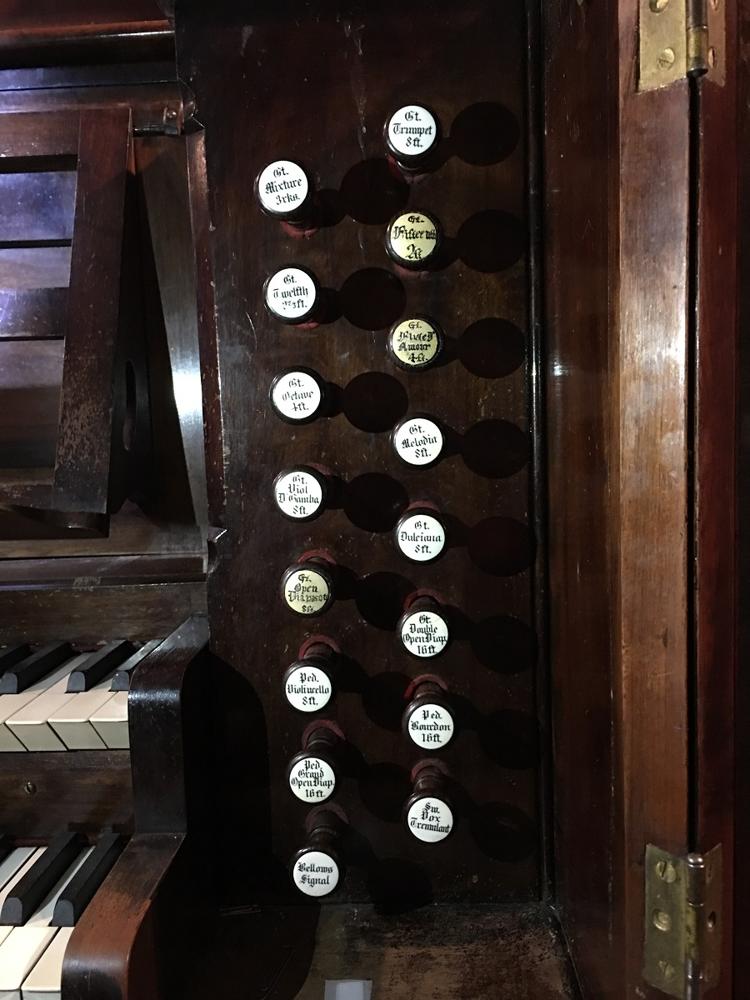
Position: Keydesk Attached, Manuals Set Into Case
Design: Traditional With Hinged Doors That Enclose Keyboards
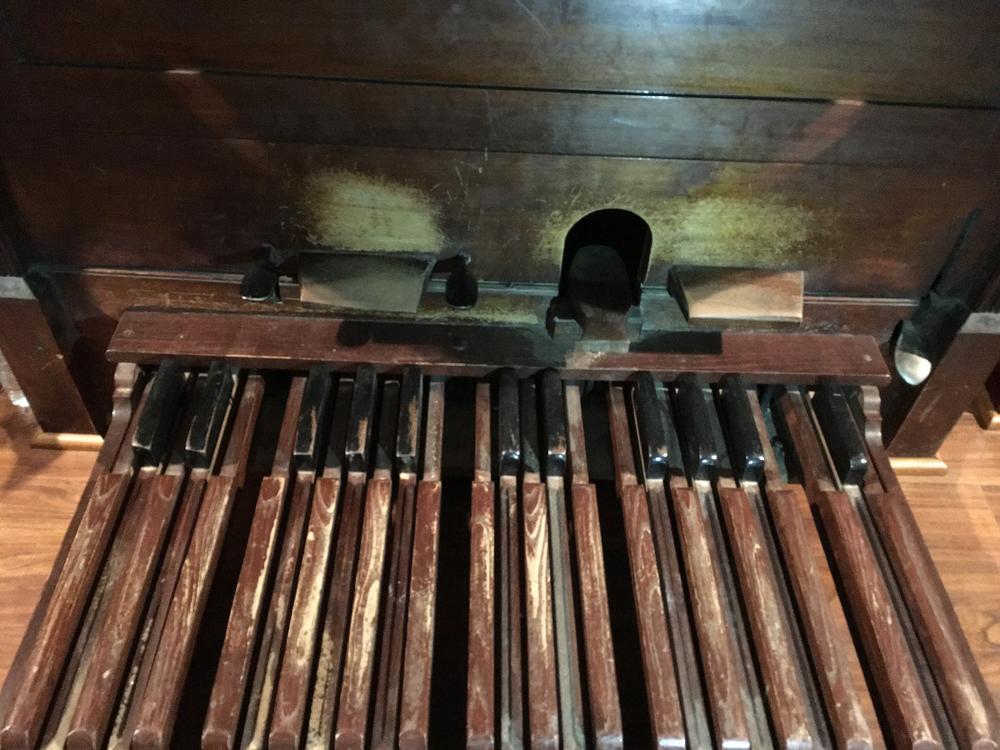
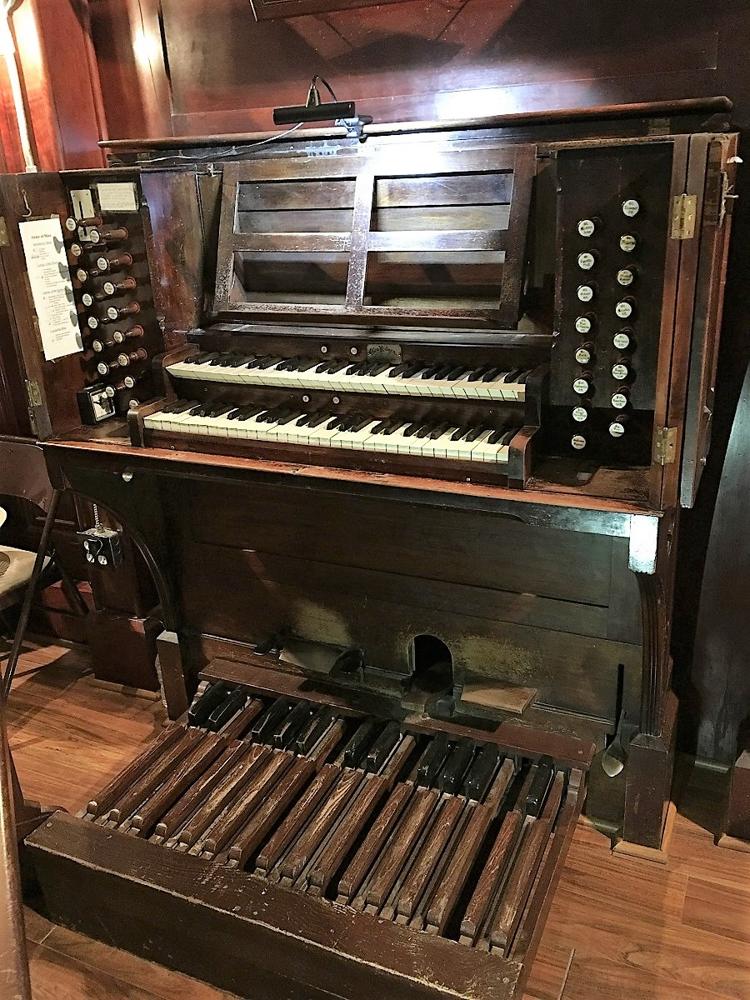
Pedalboard Type: Flat Straight
Features:
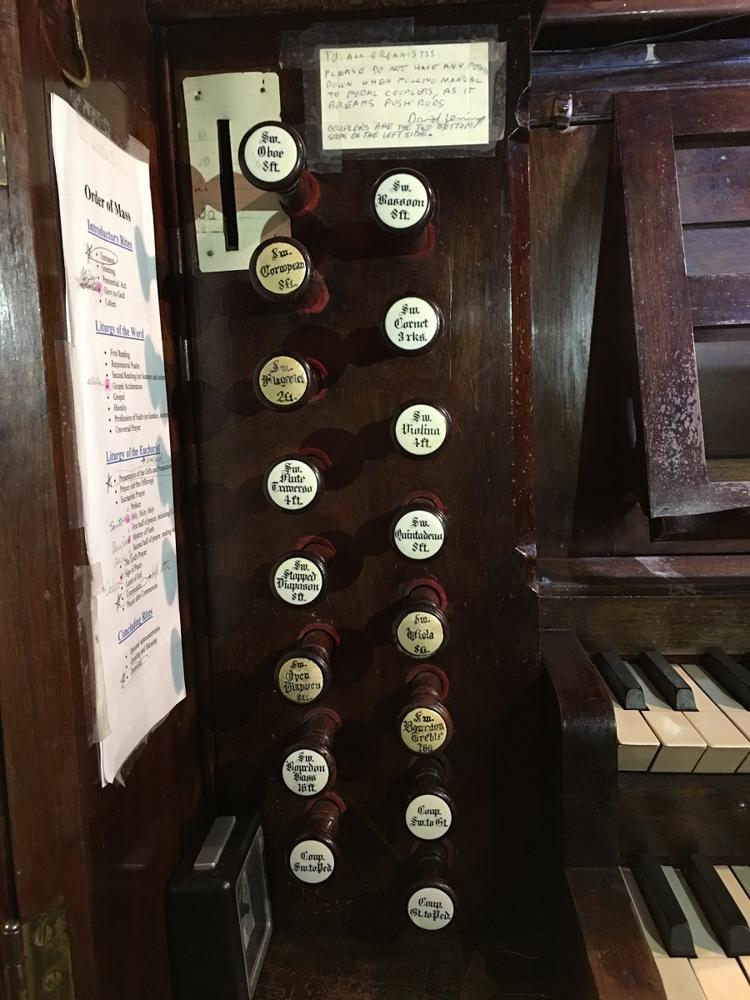
2 Manuals (58 Notes)27 Note Pedal3 Divisions25 Stops27 RegistersMechanical (Unknown) Key ActionMechanical Stop ActionCombination Thumb Piston(s)Coupler Trundle(s)Stop Layout: Drawknobs in Vertical Rows on Flat Jambs
Expression Type: Balanced Expression Shoes/Pedals (Details Unknown)
Combination Action: Fixed Mechanical
Control System: Unknown or N/A
Something missing or not quite correct?Add ConsoleorSuggest an Edit
DETAILS
This instrument is: Extant and Playable in this location
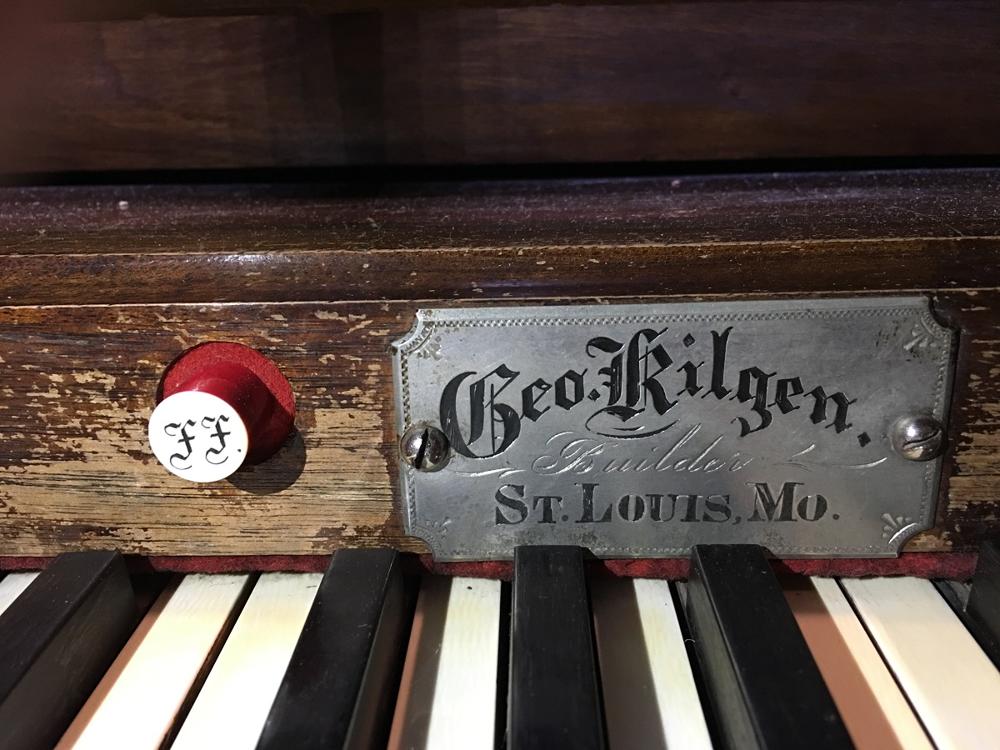
Updated by David Beatty, who has heard or played the organ. The pedal keys are spaced closer together than AGO standard. "White" keys are brown against black sharp/flat keys. "P" and "FF" (tutti) pistons are placed beneath both Swell and Great manuals, but are not functional at this time. The coupler draw knobs, as indicated in the stoplist, are not functional at this time. The action is quite stiff on both manuals at this time, but still playable. There has been a recent tuning, as attested by Bonnie Bolton, which seems to have held up. A great majority of pipes are sounding, although, understandably at this time, there is some variety in volume as one proceeds up the scale, with higher notes being more dependable than lower notes. The organ has some lovely stops that can only be enhanced by the restoration efforts.
Database Manager on May 4th, 2017:
Updated by John Grunow, who maintains the organ. The printed specification incorrectly states there is a pneumatic key assist. This is not true. The confusion arises from a proposed organ built by Marshall Brothers of Milwaukee that appears in some historic documents in the church's archive. A local businessman traveled to St. Louis and was shown the Marshall and Kilgen organs displayed at the Mercantile Library in St. Louis. Records indicate they couldn't afford the Marshall instrument and instead purchased the Kilgen. The instrument arrived in Las Vegas in early October 1885 and was dedicated in late November of the same year. George and Charles Kilgen traveled from St. Louis to install the organ. Most, if not all flue ranks are inscribed with the initials G.H.K. on low C. Reed stops are not marked. Wind pressure is 3-1/2" for the entire instrument. The organ is in the beginning stages of a multiyear restoration. My company has been entrusted with this work. The goal is to restore it to original condition with the exception of an electric blower and tuning slides to protect previously cone-tuned pipes from further future damage.
Database Manager on February 1st, 2016:
Updated through online information from James R. Stettner.
Database Manager on January 24th, 2016:
Updated through online information from James R. Stettner. While the nameplate says Geo. Kilgen, one of the videos available on either the website or the Facebook page states that the organ was built by Marshall Bros. in Milwaukee, Wisconsin.
Database Manager on July 7th, 2009:
Updated through online information from Alan Sciranko.
Database Manager on February 27th, 2007:
Updated through online information from James R. Stettner.
Database Manager on October 30th, 2004:
This entry represents the installation of a new organ. Status Note: There 1989.
Webpage Links: Our Lady of Sorrows George Kilgen Pipe Organ
Something missing or not quite correct?Add NoteorAdd WebpageorAdd Cross ReferenceorSuggest an Edit