Peragallo Pipe Organ Co.
Opus 700, 2011
St. Francis Xavier Roman Catholic Church
30 West 16th Street
New York City: Manhattan, NY, US
52 Ranks - 3,323 Pipes
Instrument ID: 48457 ● Builder ID: 4840 ● Location ID: 9485
⬆️ These are database IDs that may change. Don't use as academic reference.EXPLORE IMAGESVIEW STOPLISTSomething not quite correct?Suggest an Edit
Plenum Organ Company
🤝 Instrument entries in New York sponsored by:
We are grateful for the generous support of our sponsors, who make it possible for us to continue our mission of preserving and promoting the rich history of pipe organs across the globe.

IMAGES
Category:
Only show images in a specific category ☝️
Something missing or not quite correct?Add ImageorSuggest an Edit
STOPLISTS
Selected Item:
View additional stoplist entries if they exist ☝️
Something missing or not quite correct?Add StoplistorSuggest an Edit
CONSOLES
Selected Item:
View additional console entries if they exist ☝️
Builder: Unknown
Position: Movable Console
Design: Traditional With Roll Top
Pedalboard Type: Concave Radiating (Meeting AGO Standards)
Features:
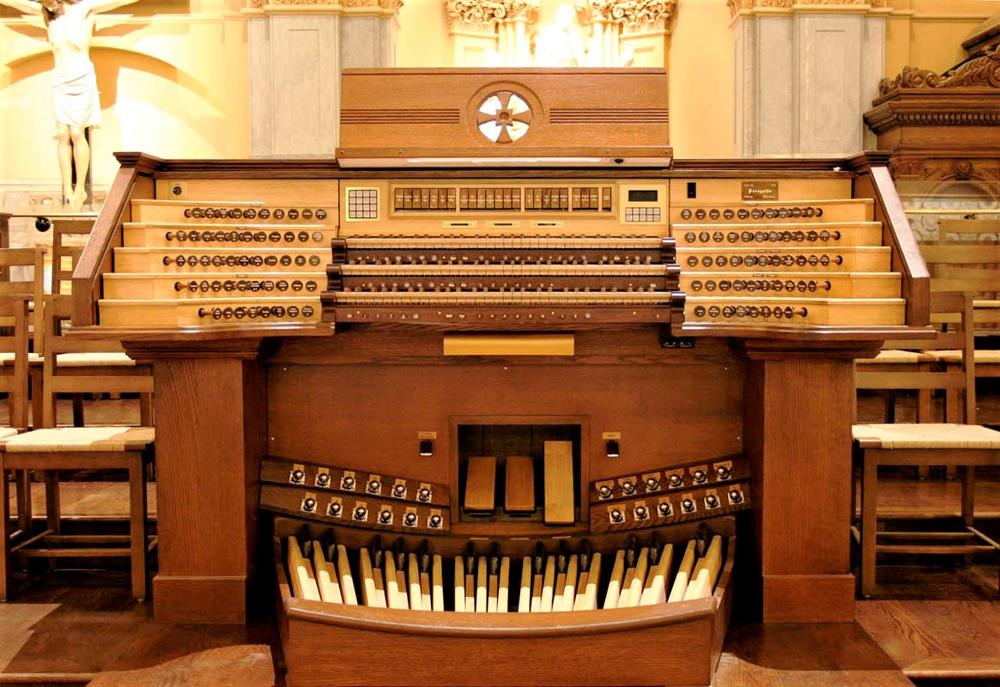
3 Manuals (61 Notes)32 Note Pedal4 DivisionsElectrical Key ActionElectrical Stop Action✓ Crescendo✓ Sequencer✓ Combination Thumb Piston(s)✓ Combination Toe Piston(s)✓ Coupler Toe Piston(s)✓ Sforzando Thumb Piston(s)✓ Sforzando Toe Piston(s)Stop Layout: Drawknobs in Horizontal Rows on Curved Jambs
Expression Type: Balanced Expression Shoes/Pedals (Meeting AGO Standards)
Combination Action: Computerized/Digital
Control System: Unknown or N/A
Something missing or not quite correct?Add ConsoleorSuggest an Edit
DETAILS
Switch between notes, documents, and blowers ☝️
This instrument is: Extant and Playable in this location
Jeff Scofield on November 3rd, 2020:
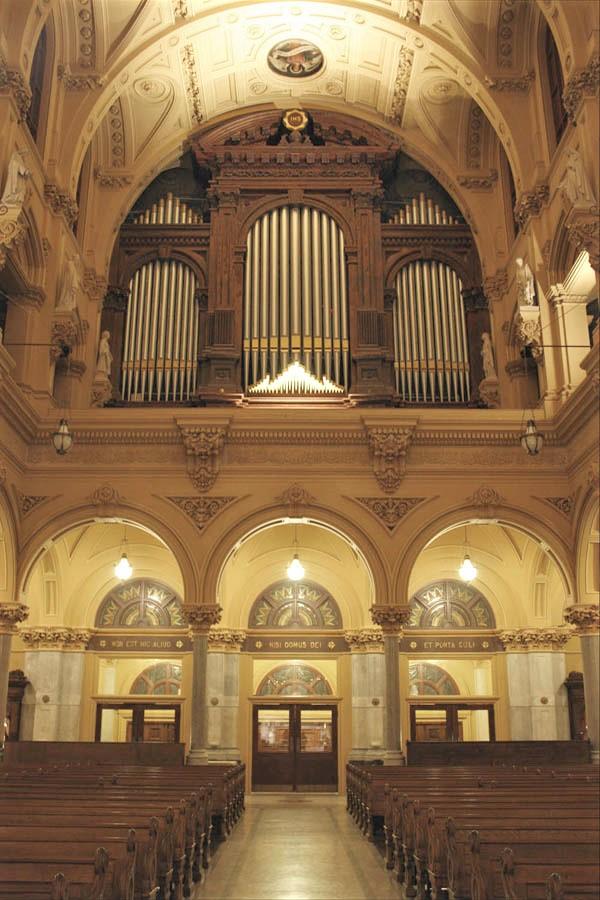
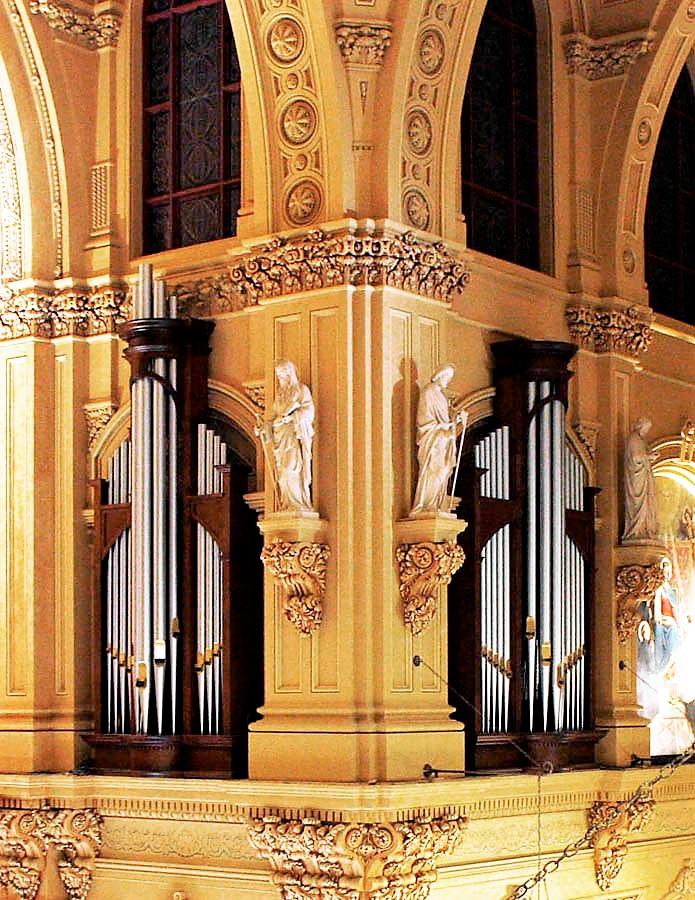
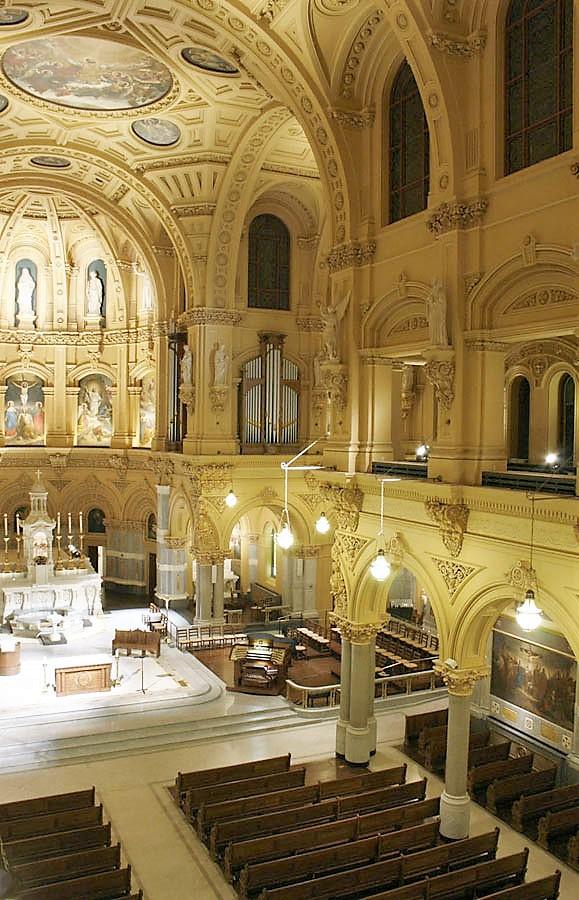
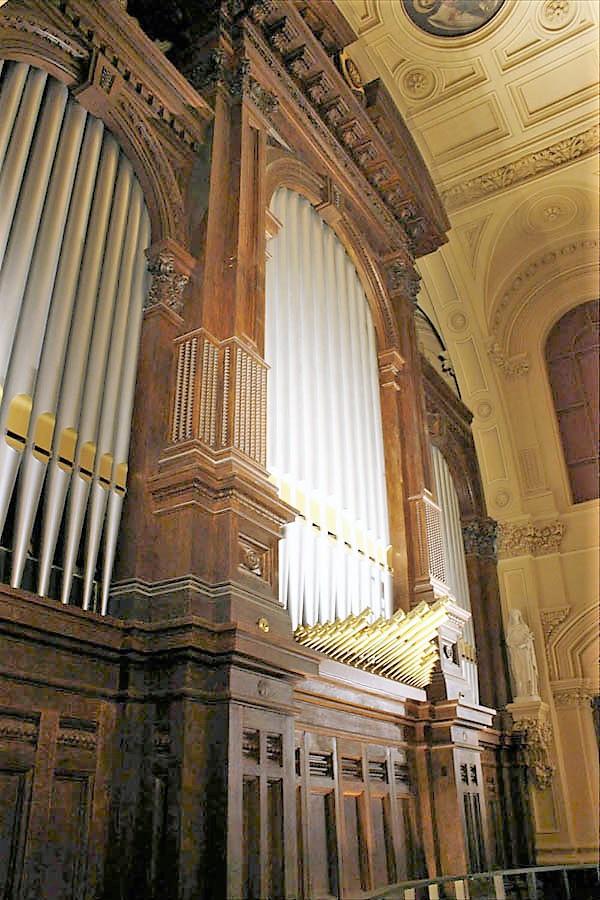
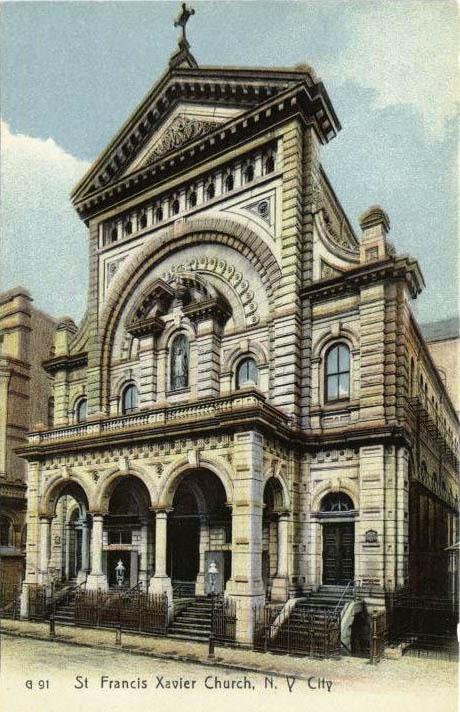
Built from 1878 to 1882, the church was designed by Patrick C. Keely, the prolific ecclesiastical architect from Brooklyn. Keely was known for his Gothic designs, but for St. Francis Xavier he created an exhuberant building in the classical "Roman Basilica" style. Facing 16th Street is the rock-faced facade of bluish-gray granite. The main entrances are sheltered by a gabled portico that measures 48 by 14 feet and rises to a height of 104 feet. A planned campanile tower was to be 180 feet high, but it was never built. Extending from street to street, the extreme length from the portico to the chancel wall is 190 feet, while the breadth of the nave and aisles is 178 feet. Rising to a height of about 74 feet, the interior of the upper church features frescoed medallions on the decorated barrel-vault ceiling and large murals of the stations between pilasters on the sides. The completed church was dedicated by Archbishop Corrigan on Sunday, December 3, 1882. After nearly 120 years of use, the church building was in need of substantial repairs, cleaning and restorative work. From 2000-2010 the congregation undertook a $12 million capital campaign to renew, renovate and restore the church interior and exterior. At this time the sanctuary (chancel) was reconfigured and enlarged by removing several rows of pews. The original high altar and reredos were moved forward to provide space behind for a new sacristy, and a new baptismal pool was constructed in front of the high altar. The liturgical south transept was reconfigured to provide flexible accomodations for choir seating, the organ console and grand piano. New organ chambers were created at the triforium level of the transepts. The renewed church was rededicated on Sunday, June 19, 2010. As part of its restoration campaign, the church contracted with the Peragallo Pipe Organ Company of Paterson, N.J., to build a new organ. Completed in 2010, Peragallo's Opus 700 is a hybrid organ that combines a total of 52 ranks of pipes—including 23 ranks from the previous Kilgen gallery organ—with several digital stops. The organ was designed with a French tonal scheme by John Peragallo III, Tonal Director of the company, in consultation with John Uehlein, Director of Music. The main instrument is installed in two chambers that were created in the triforium on each side of the chancel. Fronting the four tone openings into the chancel and transepts are oak cases with façades of functional pipes that have gothic gold arched mouths. Frank Peragallo designed the case work. The Grand-Orgue, Grand-Choeur and Pédale divisions are located in the east (liturgical north) chamber and the Récit and Positif divisions are in the west (liturgical south) chamber. The Antiphonale division at the rear of the church is comprised of eight digital stops that emanate from behind the original organ case plus the 49 gold-painted pipes of the Trompette en chamade that are mounted at the base of the case. Built in 1881 by E. & G.G. Hook & Hastings of Boston, the noble hand-carved organ case was restored and its façade pipes were painted silver with gold mouths. Controlling the organ is a movable three-manual French-style console with terraced drawknobs and a hand-carved music rack that incorporates the Xavier cross. A complete MIDI interface and sound module allows the organist to access many digital effects for contemporary worship music and record and playback the instrument. The organ was dedicated on October 11, 2010, with a recital by organist Matthew Phelps, assisted by mezzo-soprano Robin Lynne Frye.
Built from 1878 to 1882, the church was designed by Patrick C. Keely, the prolific ecclesiastical architect from Brooklyn. Keely was known for his Gothic designs, but for St. Francis Xavier he created an exhuberant building in the classical "Roman Basilica" style. Facing 16th Street is the rock-faced facade of bluish-gray granite. The main entrances are sheltered by a gabled portico that measures 48 by 14 feet and rises to a height of 104 feet. A planned campanile tower was to be 180 feet high, but it was never built. Extending from street to street, the extreme length from the portico to the chancel wall is 190 feet, while the breadth of the nave and aisles is 178 feet. Rising to a height of about 74 feet, the interior of the upper church features frescoed medallions on the decorated barrel-vault ceiling and large murals of the stations between pilasters on the sides. The completed church was dedicated by Archbishop Corrigan on Sunday, December 3, 1882. After nearly 120 years of use, the church building was in need of substantial repairs, cleaning and restorative work. From 2000-2010 the congregation undertook a $12 million capital campaign to renew, renovate and restore the church interior and exterior. At this time the sanctuary (chancel) was reconfigured and enlarged by removing several rows of pews. The original high altar and reredos were moved forward to provide space behind for a new sacristy, and a new baptismal pool was constructed in front of the high altar. The liturgical south transept was reconfigured to provide flexible accomodations for choir seating, the organ console and grand piano. New organ chambers were created at the triforium level of the transepts. The renewed church was rededicated on Sunday, June 19, 2010. As part of its restoration campaign, the church contracted with the Peragallo Pipe Organ Company of Paterson, N.J., to build a new organ. Completed in 2010, Peragallo's Opus 700 is a hybrid organ that combines a total of 52 ranks of pipes—including 23 ranks from the previous Kilgen gallery organ—with several digital stops. The organ was designed with a French tonal scheme by John Peragallo III, Tonal Director of the company, in consultation with John Uehlein, Director of Music. The main instrument is installed in two chambers that were created in the triforium on each side of the chancel. Fronting the four tone openings into the chancel and transepts are oak cases with façades of functional pipes that have gothic gold arched mouths. Frank Peragallo designed the case work. The Grand-Orgue, Grand-Choeur and Pédale divisions are located in the east (liturgical north) chamber and the Récit and Positif divisions are in the west (liturgical south) chamber. The Antiphonale division at the rear of the church is comprised of eight digital stops that emanate from behind the original organ case plus the 49 gold-painted pipes of the Trompette en chamade that are mounted at the base of the case. Built in 1881 by E. & G.G. Hook & Hastings of Boston, the noble hand-carved organ case was restored and its façade pipes were painted silver with gold mouths. Controlling the organ is a movable three-manual French-style console with terraced drawknobs and a hand-carved music rack that incorporates the Xavier cross. A complete MIDI interface and sound module allows the organist to access many digital effects for contemporary worship music and record and playback the instrument. The organ was dedicated on October 11, 2010, with a recital by organist Matthew Phelps, assisted by mezzo-soprano Robin Lynne Frye.
Database Manager on August 13th, 2011:
Identified through online information from Stephen Hall. -- 23 ranks of pipes were retained from the 1950 Kilgen Organ.
Webpage Links: Pipe Organs : New York, NY : St. Francis Xavier Church , St. Francis Xavier Catholic Church [NYC AGO Organ Project Web Site]
Something missing or not quite correct?Add NoteorAdd WebpageorAdd Cross ReferenceorSuggest an Edit
Pipe Organ Database
A project of the Organ Historical Society Website by John RoperEditor Login