Wicks Organ Co.
1964
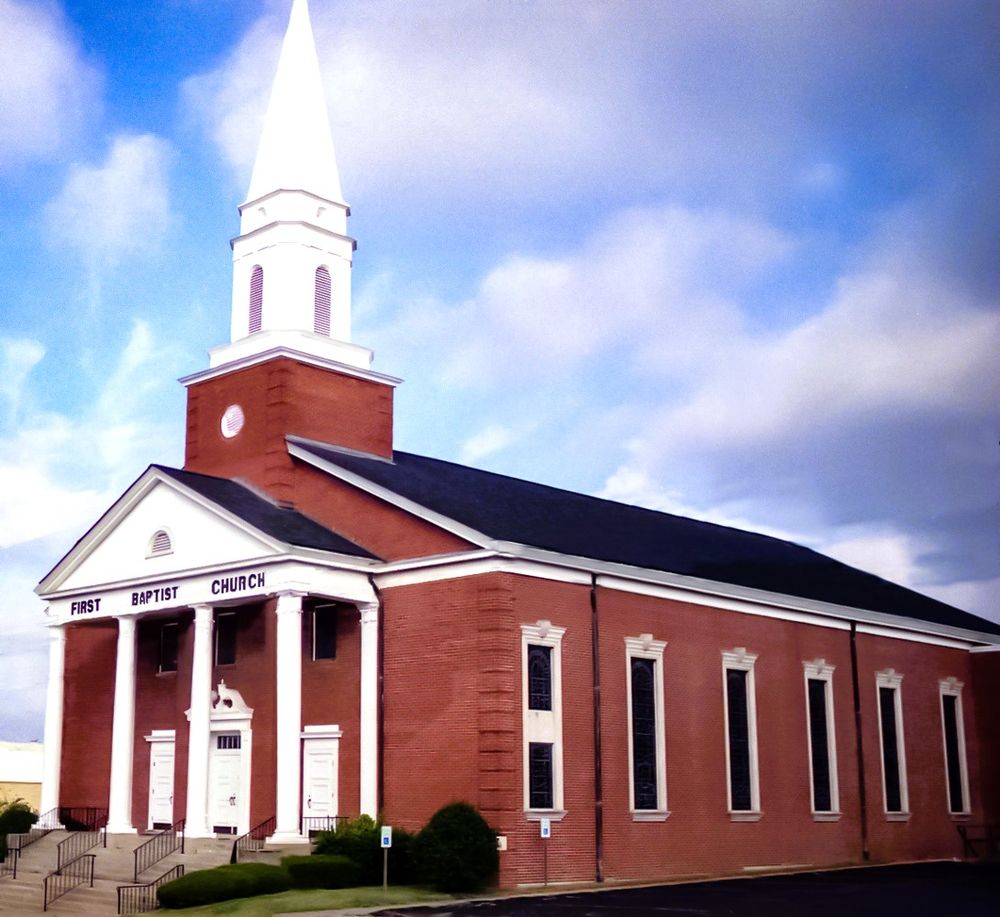
First Baptist Church
Sanctuary
227 East Main Street
Lebanon, TN, US
26 Ranks - 1,547 Pipes
Something not quite correct?Suggest an Edit
IMAGES
Something missing or not quite correct?Add ImageorSuggest an Edit
STOPLISTS
Something missing or not quite correct?Add Stoplist
CONSOLES
Builder: Unknown
Position: Unknown
Design: Unknown
Pedalboard Type: Unknown
Features:
3 Manuals (61 Notes)32 Note Pedal4 Divisions22 Stops31 RegistersElectrical Key ActionElectrical Stop ActionStop Layout: Unknown
Expression Type: Unknown
Combination Action: Unknown
Control System: Unknown or N/A
Something missing or not quite correct?Add ConsoleorSuggest an Edit
DETAILS
This instrument is: Not Extant and Not Playable in this location
Updated by Randall Dyer, who gave this as the source of the information: First hand knowledge based on salvage removal.
Small portions of this organ continue to exist. Randall Dyer, a late teen at the time, was charged, by Schantz salesman Alfred Lunsford, to go to Lebanon and sift through the destroyed organ for usable pipes. Included in the salvage was the 16\' Principal (now gone), but the 8\' Rohrflöte and a 4\' Principal were used by Dyer to make a practice organ for Carson-Newman College, in Jefferson City, TN. That organ is now in the builder\'s living room.
Database Manager on November 30th, 2014:
Replaced in 1970 by 2/26 Schantz Op. 999.
Database Manager on November 30th, 2012:
This entry describes an original installation of a new pipe organ.
Identified by William Dunklin, based on information learned from a conversation with
Betty Smallwood.
-- This organ was destroyed in a gas explosion which severely damaged the church building ca. 1969. Not only is the congregation "saved," but so was the building.
Something missing or not quite correct?Add NoteorAdd WebpageorAdd Cross ReferenceorSuggest an Edit