Schlicker Organ Co.
1973
Holy Cross Lutheran Church
633 Church St.
Farnham, NY, US
7 Ranks
EXPLORE IMAGESVIEW STOPLISTSomething not quite correct?Suggest an Edit
IMAGES
Something missing or not quite correct?Add ImageorSuggest an Edit
STOPLISTS
Something missing or not quite correct?Add Stoplist
CONSOLES
Builder: Unknown
Position: Console in Fixed Position, Left
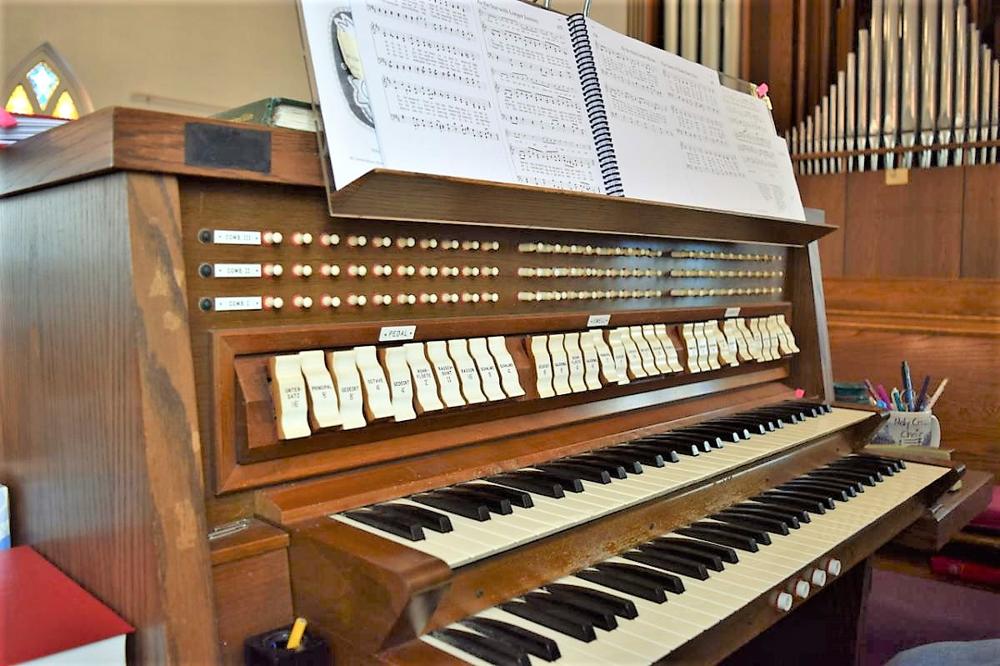
Design: Non-Traditional Style, As Consoles by Holtkamp, Schlicker, et al
Pedalboard Type: Concave Radiating (Meeting AGO Standards)
Features:
2 Manuals (61 Notes)32 Note Pedal3 Divisions27 Stops27 RegistersElectrical Key ActionElectrical Stop ActionCombination Thumb Piston(s)Stop Layout: Tilting/Rocking Tablets Above Top Manual
Expression Type: Balanced Expression Shoes/Pedals (Meeting AGO Standards)
Combination Action: Freie Kombinationen
Control System: Unknown or N/A
Something missing or not quite correct?Add ConsoleorSuggest an Edit
DETAILS
This instrument is: ExtantandPlayable in this location
Updated through online information from Scot Huntington. -- It is not known if the church may have had a pipe organ previously, but the Schlicker replaced an aging electronic. A photo of the organ may be seen at the church's web site.
Database Manager on January 22nd, 2013:
This entry describes an original installation of a new pipe organ.
Identified by Scot Huntington, based on personal knowledge of the organ.
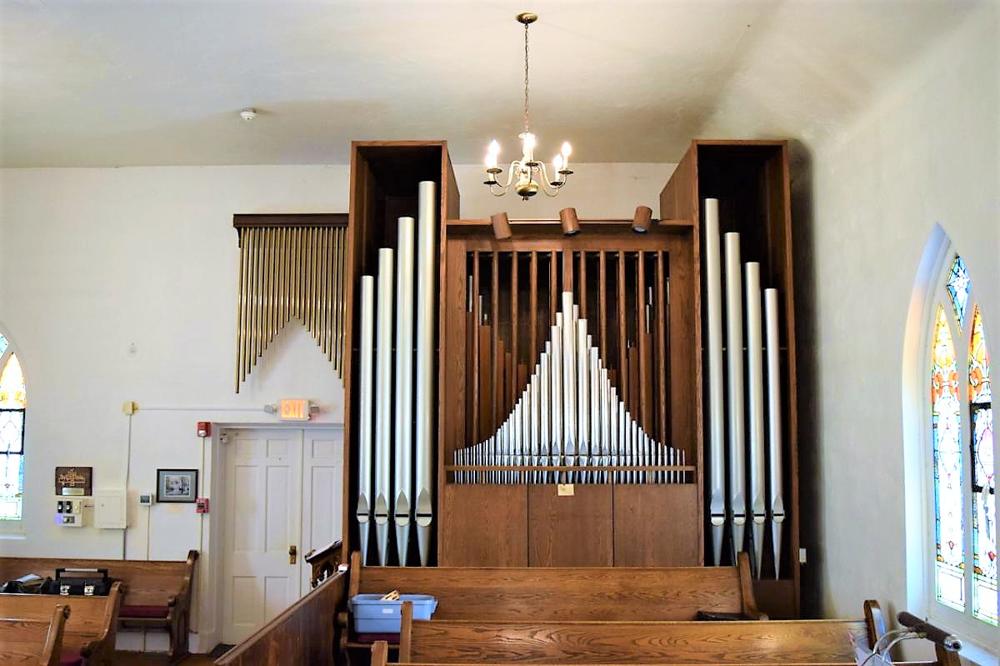
-- The organ is a stock-design unit organ, installed in a walnut-stained oak case. The cost of the instrument was $18,500, and when it was installed in May 1973, the delivery was 6 months late. The organ was not contracted to have a combination action, but Hermann Schlicker added the company's rudimentary but economical setterboard-type combination action above the contract- no doubt because the church was less than a 45 minute drive from the factory which made it a suitable demonstration instrument for prospective clients, and Schlicker wanted the organ to demonstrate all the available options. The combination action was blind, and like similar systems popular in Germany at the time, uses three rows of tiny drawknobs above each stop tablet- each row corresponding to one of the three numbered pistons. This type of system allows the organist not only to see visually what combinations are set, but to change them at will, even while playing. The on-site voicing and tonal finishing was done by Louis Rothenberger and David Dickson. Originally installed with the detached console facing the organ and choir, (and the organist's back to the altar), the console has since been turned 90 degrees with the choir and organ now at the organist's right.
Webpage Links: Our Christian Foundation [Church\'s web site]
Something missing or not quite correct?Add NoteorAdd WebpageorAdd Cross ReferenceorSuggest an Edit