Schlicker Organ Co.
1962 ca.
Wartburg College
Neumann Center for the Arts - Orchestral Hall
100 Wartburg Blvd.
Waverly, IA, US
17 Ranks
Something not quite correct?Suggest an Edit
🤝 Instrument entries in Iowa sponsored by:
We are grateful for the generous support of our sponsors, who make it possible for us to continue our mission of preserving and promoting the rich history of pipe organs across the globe.

IMAGES
Something missing or not quite correct?Add ImageorSuggest an Edit
STOPLISTS
Something missing or not quite correct?Add Stoplist
CONSOLES
Builder: Schlicker Organ Co.
Position: Movable Console
Design: Non-Traditional Style, As Consoles by Holtkamp, Schlicker, et al
Pedalboard Type: Concave Radiating (Meeting AGO Standards)
Features:
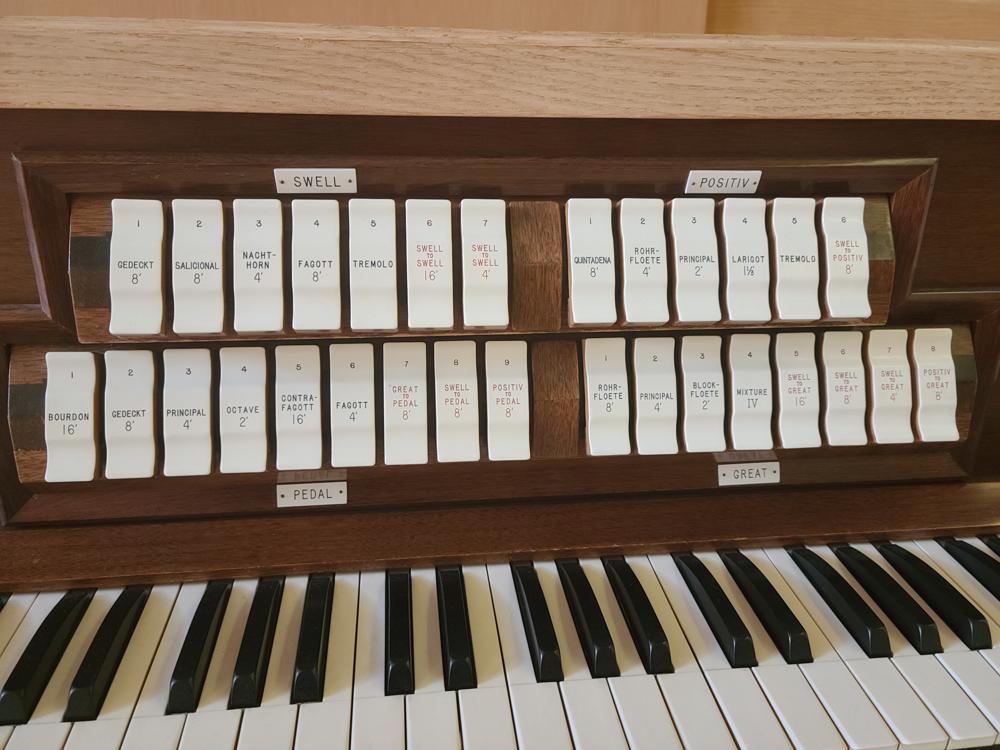
3 Manuals (61 Notes)32 Note Pedal4 Divisions18 Stops30 RegistersElectrical Key ActionElectrical Stop ActionCombination Thumb Piston(s)Combination Toe Piston(s)Sforzando Toe Piston(s)Stop Layout: Tilting/Rocking Tablets Above Top Manual
Expression Type: Balanced Expression Shoes/Pedals (Meeting AGO Standards)
Combination Action: 'Hold and Set' Pneumatic/Mechanical
Control System: Unknown or N/A
Something missing or not quite correct?Add ConsoleorSuggest an Edit
DETAILS
This instrument is: Extant and Playable in this location
This organ is not found in the auditorium. It is in the orchestral hall as the stoplist document states.
Database Manager on August 8th, 2014:
Updated through online information from Scot Huntington.
Database Manager on August 7th, 2014:
Updated by Scot Huntington, using information found in Promotional company literature sent with an instrument proposal from Schlicker in my files..
-- A "multum in parvo" design for a studio teaching organ, this is the smallest three-manual organ Schlicker ever built. It is Schlicker's re-interpretation of similar revival-era teaching instruments built by Holtkamp and Aeolian-Skinner. The Great and Positive divisions utilize the same disposition Schlicker used in his two-manual, mechanical-action teaching studio/chapel organs.
Database Manager on August 6th, 2014:
This entry describes an original installation of a new pipe organ.
Identified by Scot Huntington, using information found in sample stoplist.
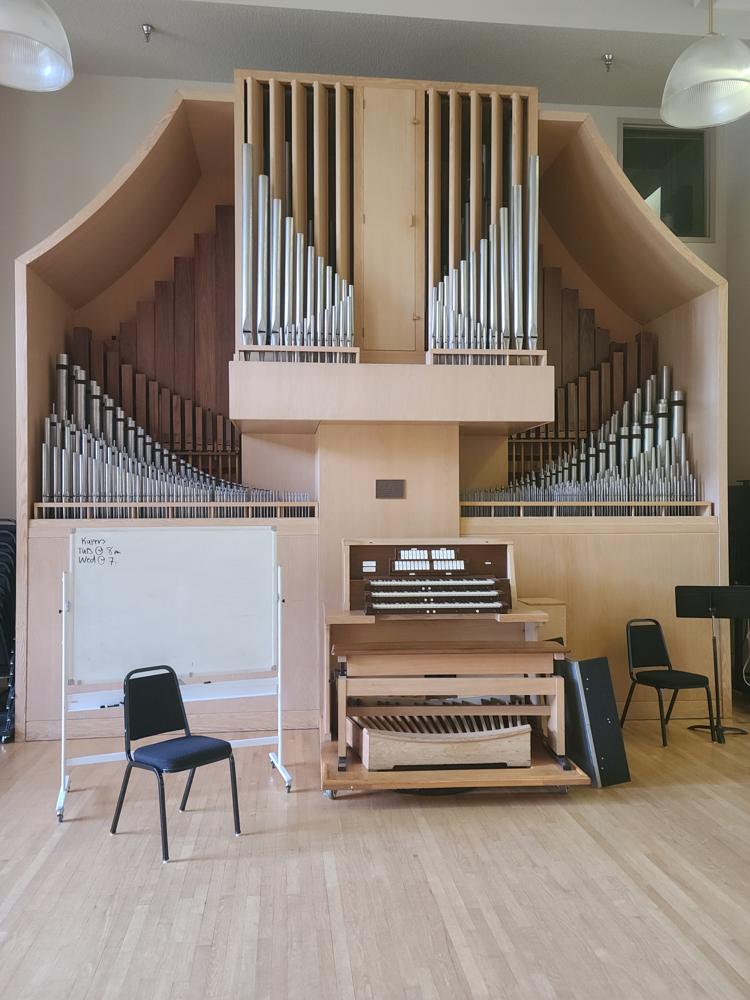
-- Located in Orchestra Hall of the Fine Arts Center. Functionally exposed pipework within a simple reflecting casework: Swell upper center, pedal upperwork in front; Great chromatic chest left, Positive chromatic chest right, pedal basses divided left and right behind. Single-bolster Choir-Master console.
he organ had electro-pneumatic action with expansion chambers drilled within the toeboards; had a reflective wooden enclosure, and the company's trademark "choir-master" console with the rocking stop tablets in a single row above the Swell manual. The Swell was enclosed in the center, the Pedal Principal chest was cantilevered in front, the unenclosed Great and Positive divisions were on chromatic chests on either side, and the pedal was divided on C/C-sharp chests behind them. The pipework is voiced with open-toes on low pressure, and the console is moveable.
Something missing or not quite correct?Add NoteorAdd WebpageorAdd Cross ReferenceorSuggest an Edit