Wicks Pipe Organ Co.
Opus 6426, 2005
St. Gabriel Roman Catholic Church
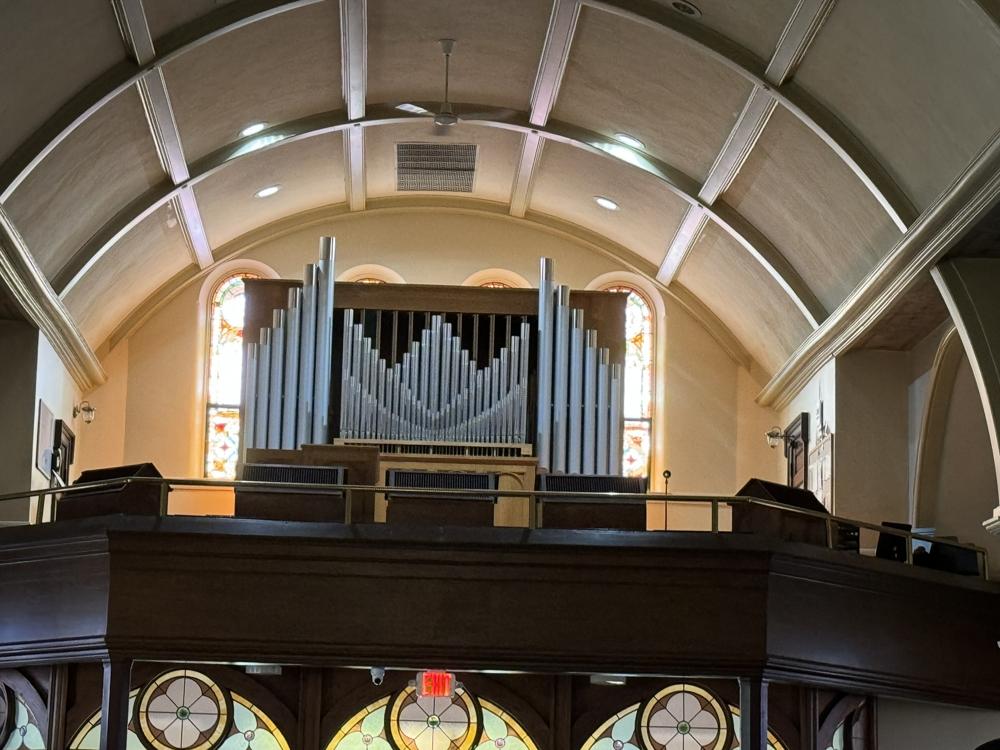
Sanctuary; rear gallery
48 W. Sharon Ave.
Glendale, OH, US
11 Ranks
EXPLORE IMAGESVIEW STOPLISTSomething not quite correct?Suggest an Edit
🤝 Instrument entries in Ohio sponsored by:
We are grateful for the generous support of our sponsors, who make it possible for us to continue our mission of preserving and promoting the rich history of pipe organs across the globe.

IMAGES
Something missing or not quite correct?Add ImageorSuggest an Edit
STOPLISTS
Something missing or not quite correct?Add Stoplist
CONSOLES
Builder: Wicks Pipe Organ Co.
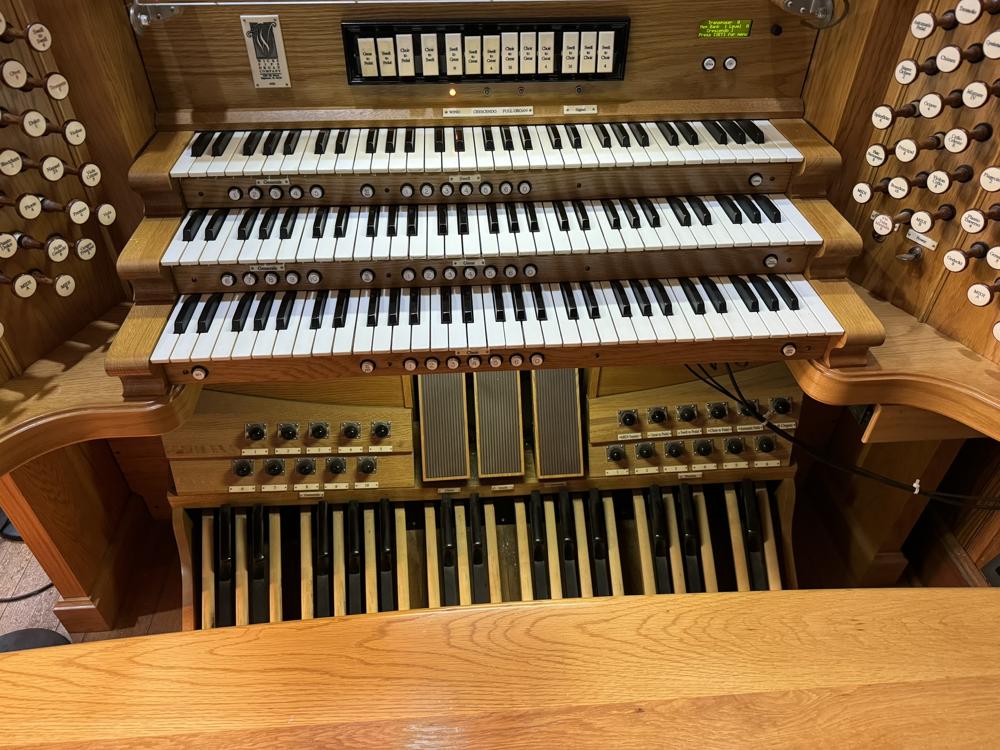
Position: Console in Fixed Position, Left
Design: Traditional With Roll Top
Pedalboard Type: Concave Radiating (Meeting AGO Standards)
Features:
3 Manuals (61 Notes)32 Note Pedal4 Divisions11 StopsElectrical Key ActionElectrical Stop ActionCrescendoSequencerCombination Thumb Piston(s)Combination Toe Piston(s)Coupler Thumb Piston(s)Coupler Toe Piston(s)Sforzando Thumb Piston(s)Sforzando Toe Piston(s)Stop Layout: Drawknobs in Vertical Rows on Angled Jambs
Expression Type: Balanced Expression Shoes/Pedals (Meeting AGO Standards)
Combination Action: Computerized/Digital
Control System: Unknown or N/A
Something missing or not quite correct?Add ConsoleorSuggest an Edit
DETAILS
This instrument is: Extant and Playable in this location
I have added additional pictures to further document this organ.
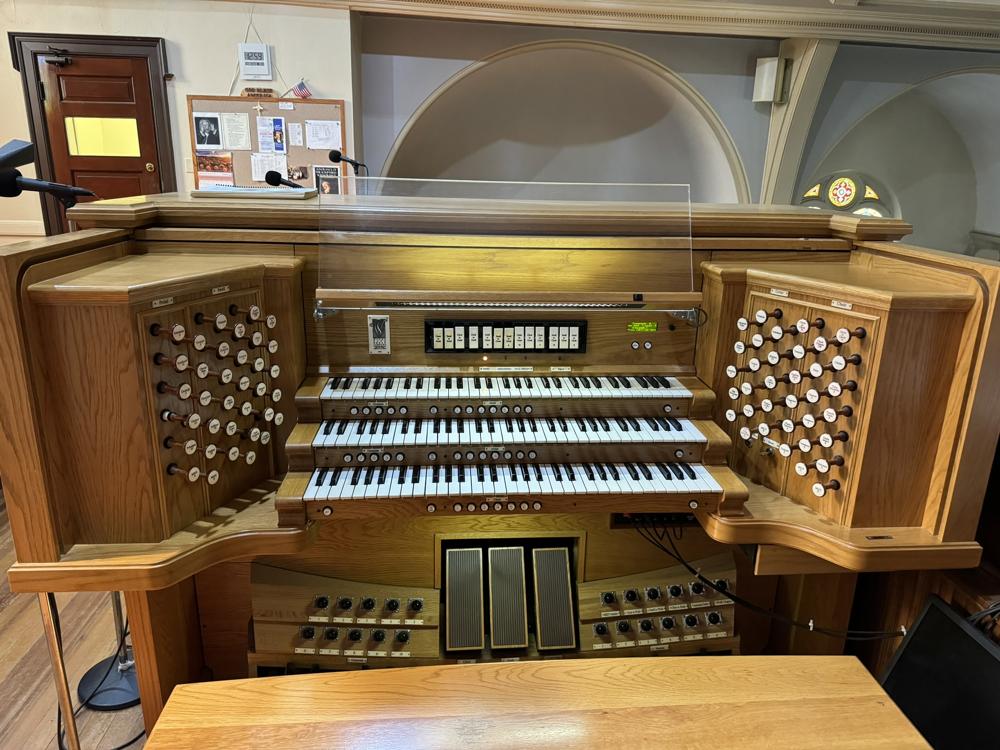
The picture of the console detail should provide more clarity.
The 'UP' and 'DOWN' buttons below the green display to the right of the coupler panel are for selecting the Combination Memory Level.
The small knob to the right of the display is for setting the Transposer.
There is no piston sequencer.
The two Toe Studs marked 'illegible' are the following:
o MIDI sustain - there is a Rodgers midi sound module connected through the visible cables to provide a simulated "piano". I think this is the sustain pedal for that.
o Automatic Pedal. Not sure, but I think this is for pianists who don't know how to play pedal. It causes the lowest note played on a keyboard to also sound on the pedal.
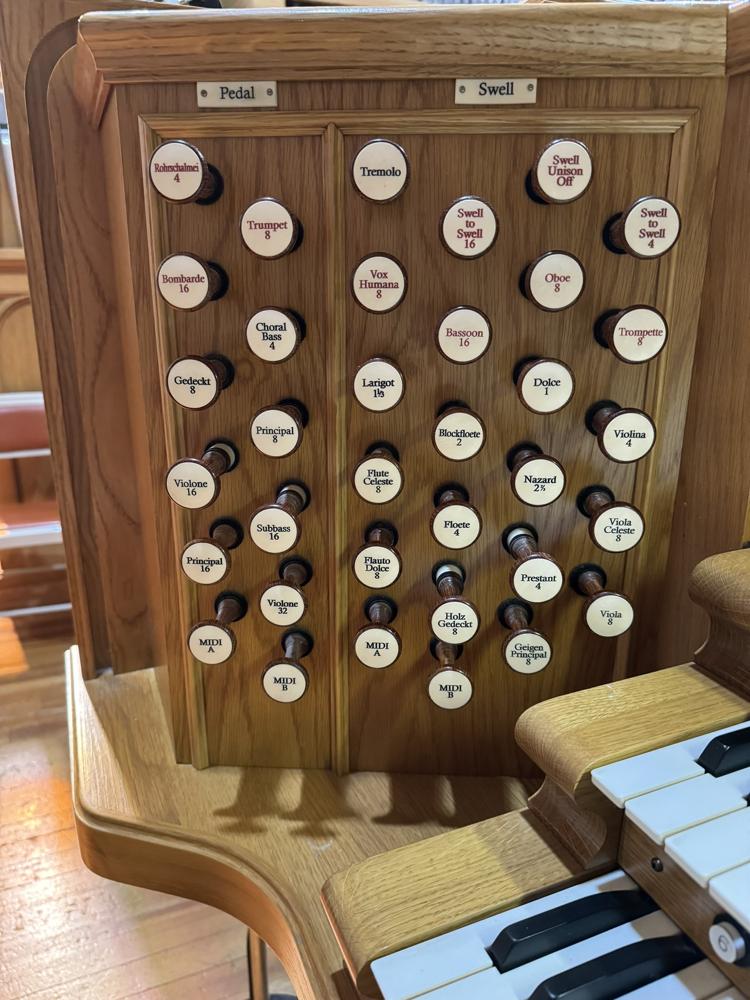
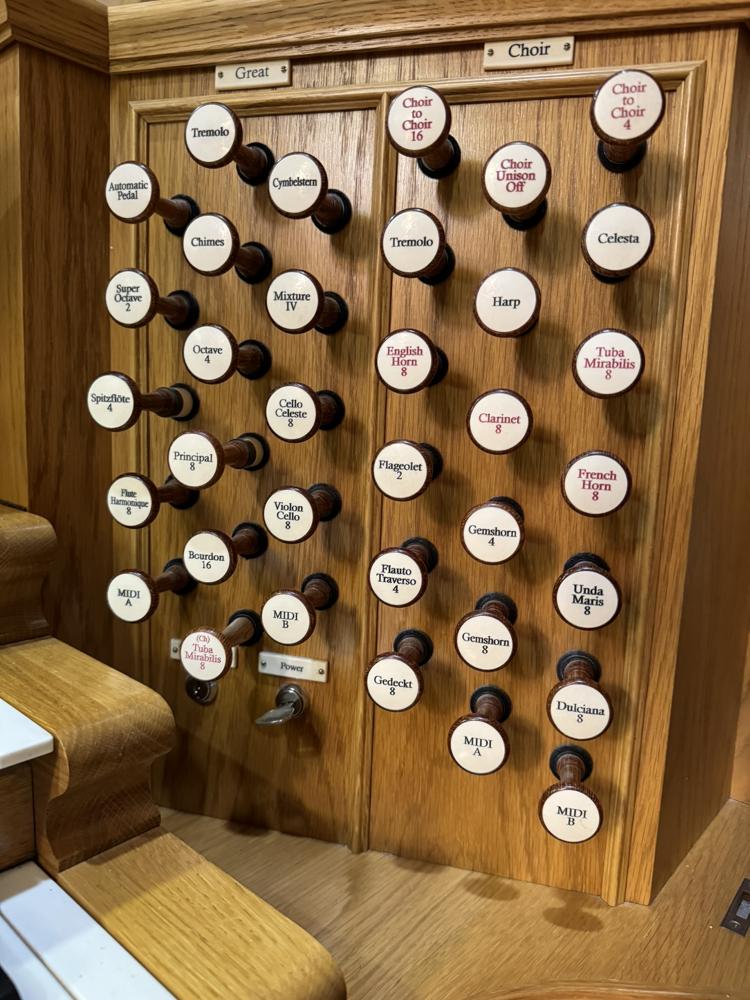
The closeup views of the two stop jambs give a better understanding of the stops available.
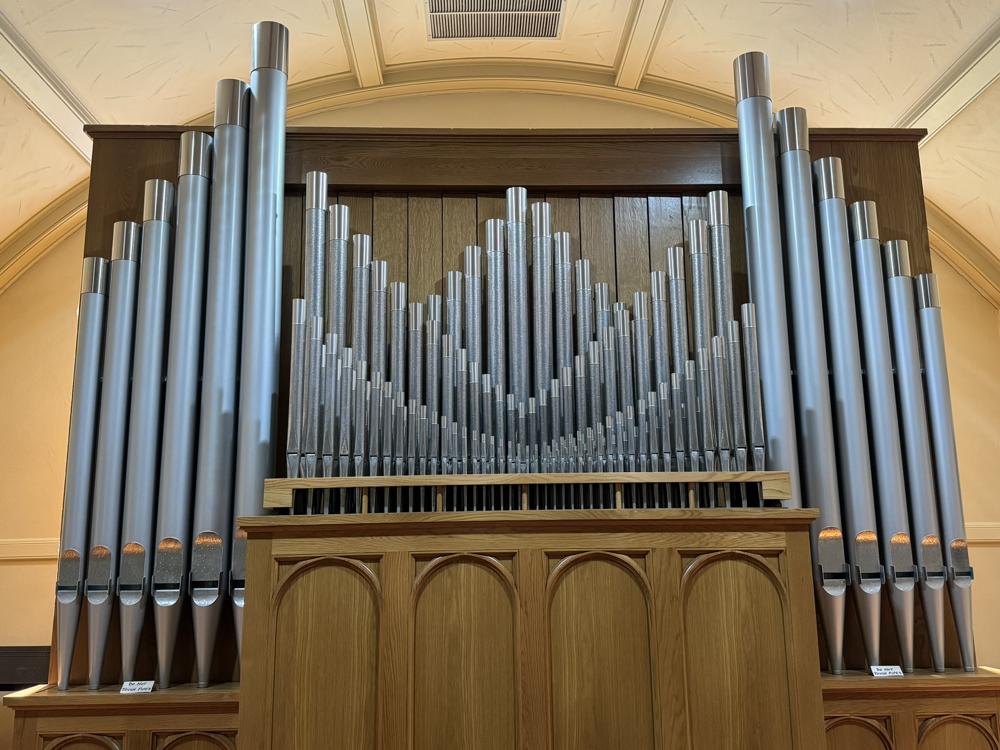
The closeup of the organ case gives a good view of this compact instrument. Even though the majority of the instrument is comprised of Walker digital ranks, it is very practical for this modest size church, yet it can "shake the timbers" whenever we want. Wicks has been building hybrid organs like this for years.
Jim Stettner on November 6th, 2023:
This entry represents the installation of a new organ. Identified from the Wicks opus list. There are 11 pipe ranks, and 36 digital 'ranks'.
Something missing or not quite correct?Add NoteorAdd WebpageorAdd Cross ReferenceorSuggest an Edit