Schantz Organ Co.
Opus 1815, 1986
Manassas Baptist Church
9830 Sudley Road
Manassas, VA, US
31 Ranks
EXPLORE IMAGESVIEW STOPLISTSomething not quite correct?Suggest an Edit
IMAGES
Something missing or not quite correct?Add ImageorSuggest an Edit
STOPLISTS
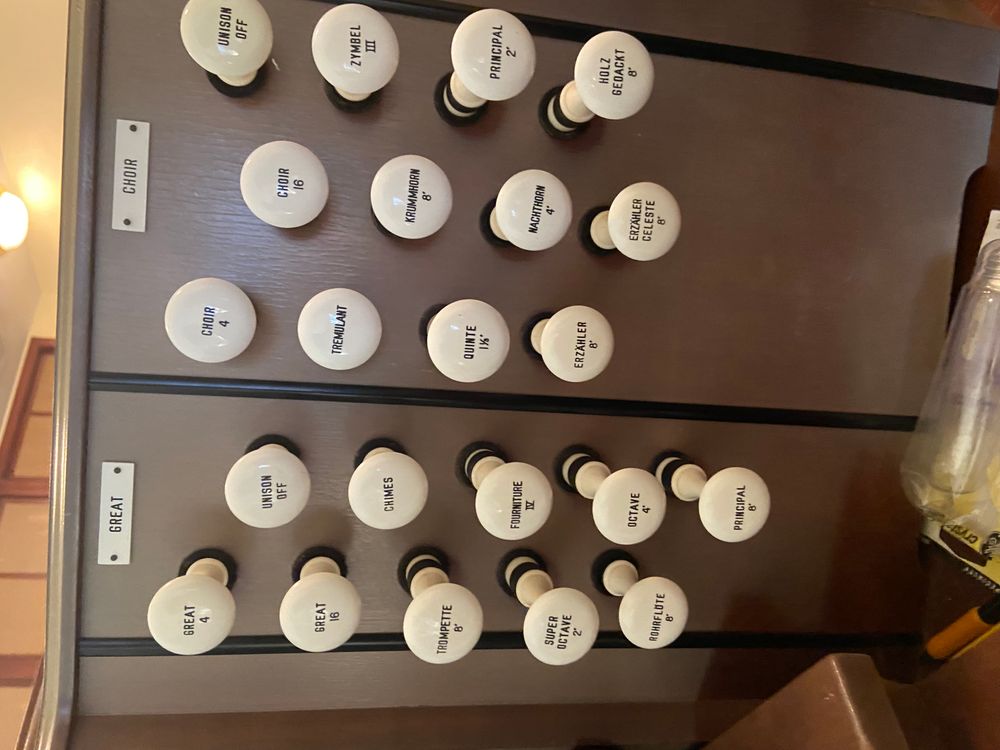
| Great (II) | ||
| 8' | Principal | |
| 8' | Rohrflöte | |
| 4' | Octave | |
| 2' | Super Octave | ext. 8' Pr. |
| IV | Fourniture | |
| 8' | Trompette | |
| Chimes | ||
| Great 16 | ||
| Unison Off | ||
| Great 4 | ||
| 16' | Swell to Great | |
| 8' | Swell to Great | |
| 4' | Swell to Great | |
| 16' | Choir to Great | |
| 8' | Choir to Great | |
| 4' | Choir to Great |
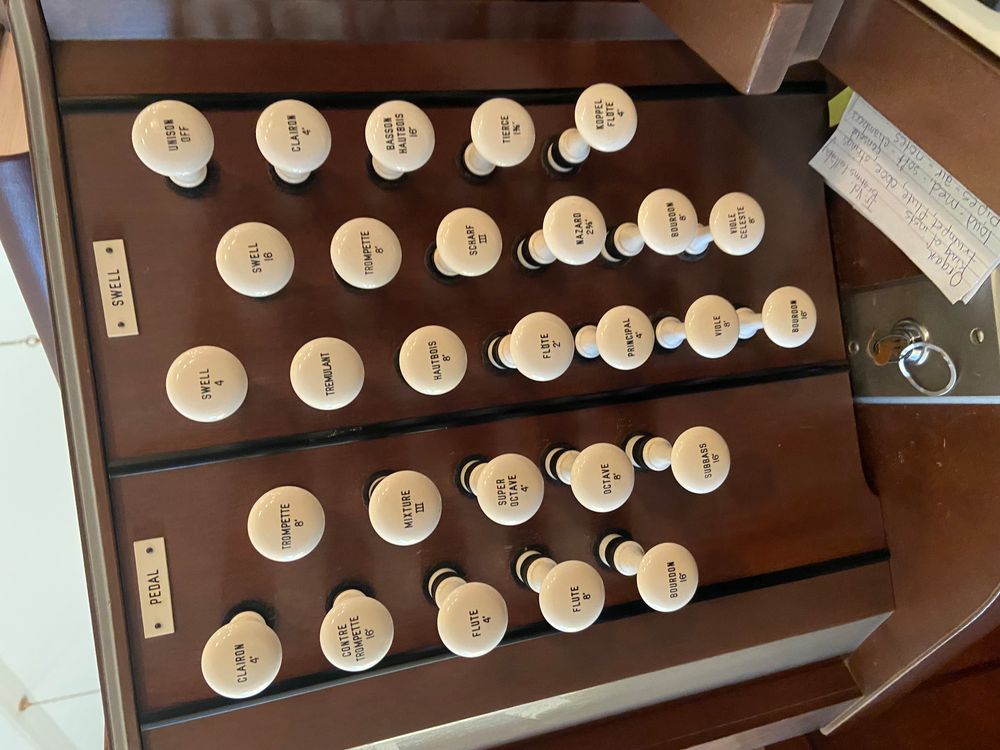
| Swell (III - Expressive) | ||
| 16' | Bourdon | |
| 8' | Viole | |
| 8' | Viole Celeste | |
| 8' | Bourdon | |
| 4' | Principal | |
| 4' | Koppel Flöte | |
| 2 2⁄3' | Nazard | |
| 2' | Flöte | |
| 1 3⁄5' | Tierce | |
| 16' | Basson Hautbois | 12 ext. 8' Hautbois |
| 8' | Trompette | |
| 8' | Hautbois | |
| 4' | Clairon | ext. Gt. 8' Tr. |
| Tremulant | ||
| Swell 16 | ||
| Unison Off | ||
| Swell 4 |
| Choir (I - Expressive) | ||
| 8' | Holz Gedackt | |
| 8' | Erzähler | |
| 8' | Erzähler Celeste | |
| 4' | Nachthorn | |
| 2' | Principal | |
| 1 1⁄3' | Quinte | |
| III | Zymbel | PF |
| 8' | Krummhorn | |
| Tremulant | ||
| Choir 16 | ||
| Unison Off | ||
| Choir 4 | ||
| 16' | Swell to Choir | |
| 8' | Swell to Choir | |
| 4' | Swell to Choir |
| Pedal | ||
| 16' | Subbass | |
| 16' | Bourdon | Sw. |
| 8' | Octave | Ft. 8' Pr. |
| 8' | Flute | |
| 4' | Super Octave | Gt. 4' Oct. |
| 4' | Flute | |
| III | Mixture | |
| 16' | Contre Trompette | 12 et. Gt. 8' Tr. |
| 8' | Trompette | Gt. |
| 4' | Clairon | Gt. 8' Tr. |
| 8' | Swell to Pedal | |
| 4' | Swell to Pedal | |
| 8' | Great to Pedal | |
| 4' | Great to Pedal | |
| 8' | Choir to Pedal | |
| 4' | Choir to Pedal |
General and divisional finger pistons; general and division toe studs, coupler reversible finger pistons and toe studs, Swell expression (bal.), Choir expression (bal.), Crescendo
Open In New TabSomething missing or not quite correct?Add StoplistorSuggest an Edit
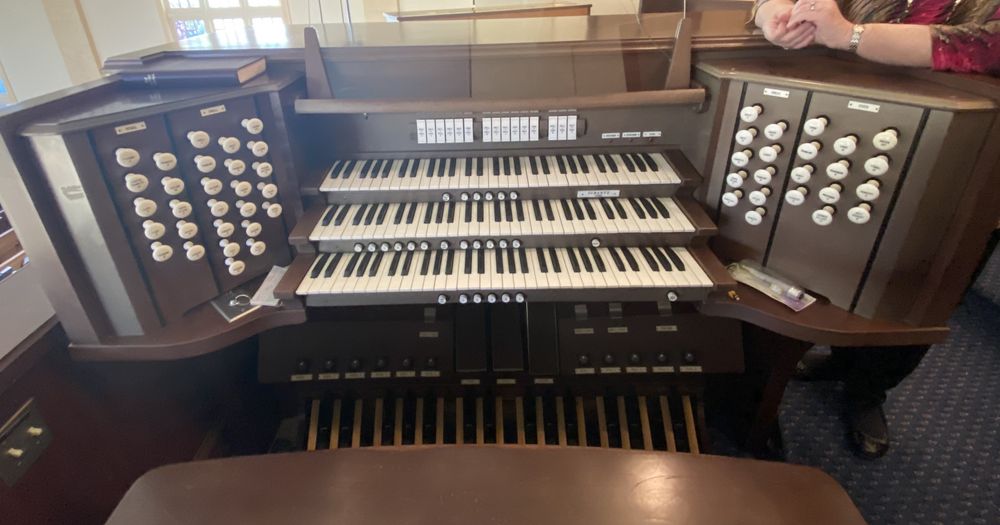
CONSOLES
Builder: Unknown
Position: Unknown
Design: Unknown
Pedalboard Type: Unknown
Features:
3 Manuals (61 Notes)32 Note PedalElectrical Key ActionElectrical Stop ActionStop Layout: Unknown
Expression Type: Unknown
Combination Action: Unknown
Control System: Unknown or N/A
Something missing or not quite correct?Add ConsoleorSuggest an Edit
DETAILS
This instrument is: ExtantandPlayable in this location
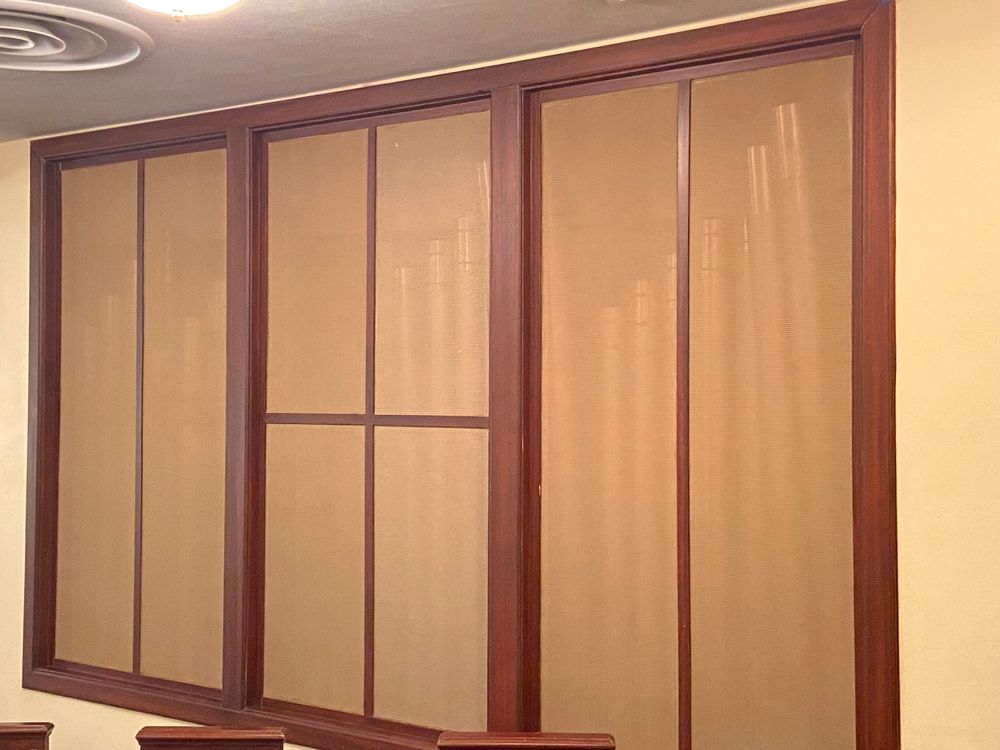
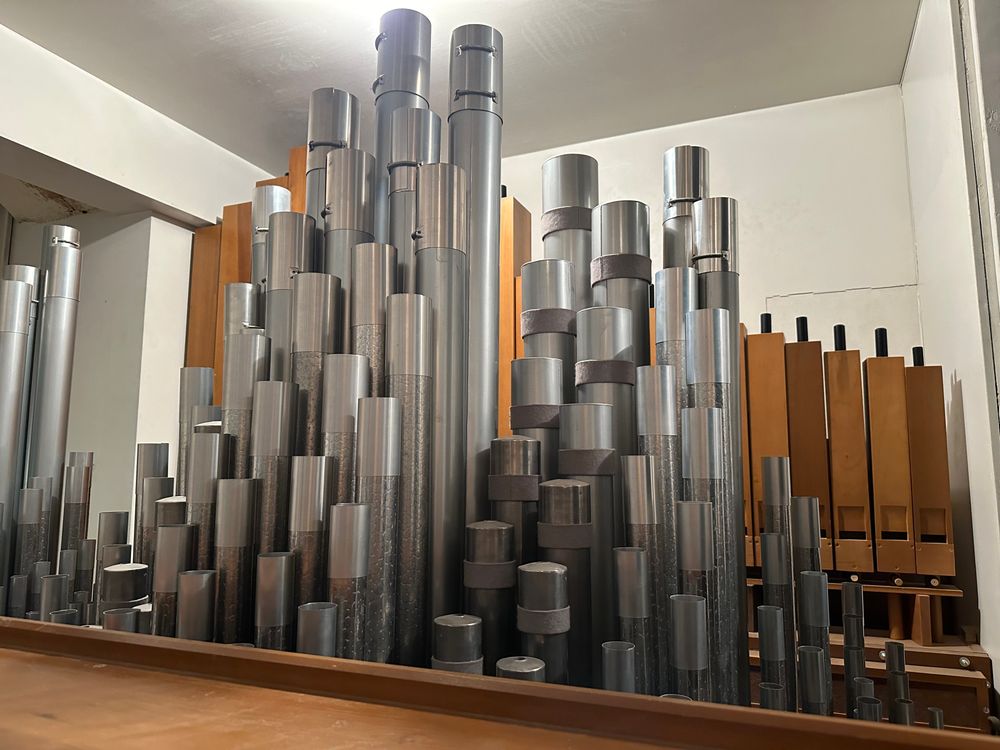
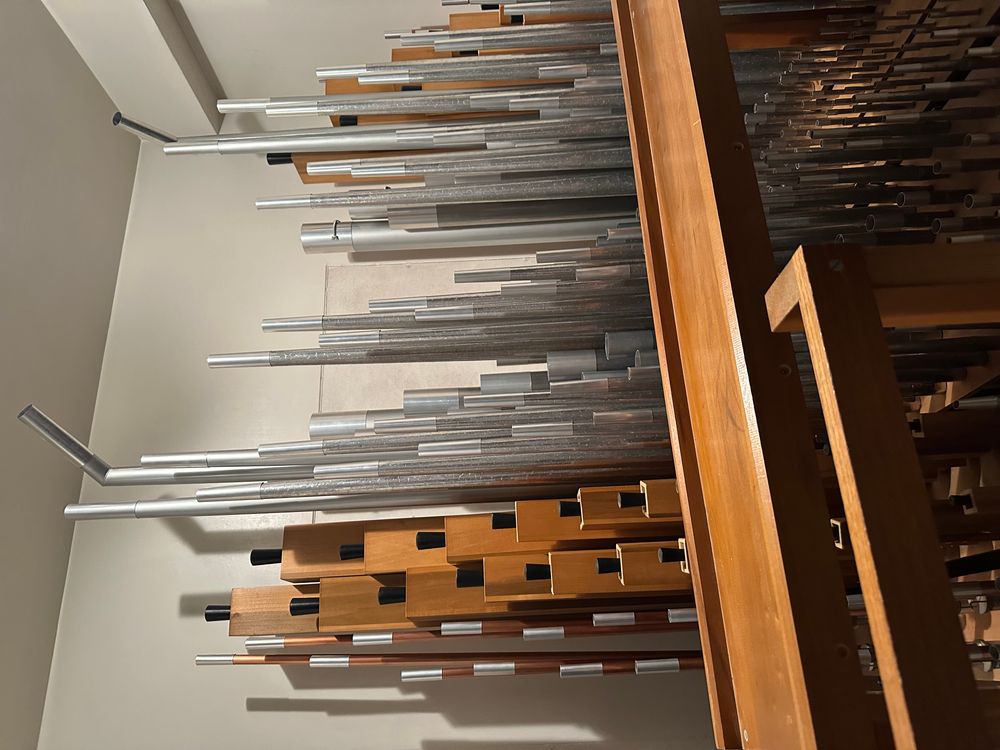
Updated by Steven Bartley, who maintains the organ: The organ is located in two smallish chambers on either side of a rear balcony. The balcony is for choir use only and can only be accessed through the choir room, behind it. The ceiling height of the balcony is not much over 10 feet, with the floor covered in carpet. The church building is a handsome rectangle shoe box shape with pews and none of those having been built in the 1970s or 80s has a traditional protestant church layout, except for the choir in the rear balcony. The organ is typical of the period, and is on the verge of being underwhelming. This I attribute to the style in which many organs of the period were built and the dead acoustics. Large tone openings face the choristers and smaller but helpful ones face the congregation. The console is located slightly to one side of the balcony, nearest the railing, and is turned so the organist's right side is to the choir. It is writer's understanding that the actual singing choir now sits in the front of the church, where a piano is used for accompaniment. The instrument is well designed and installed and has had no alterations or upgrades.
Something missing or not quite correct?Add NoteorAdd WebpageorAdd Cross ReferenceorSuggest an Edit