🤝 Instrument entries in Indiana sponsored by:
We are grateful for the generous support of our sponsors, who make it possible for us to continue our mission of preserving and promoting the rich history of pipe organs across the globe.

IMAGES
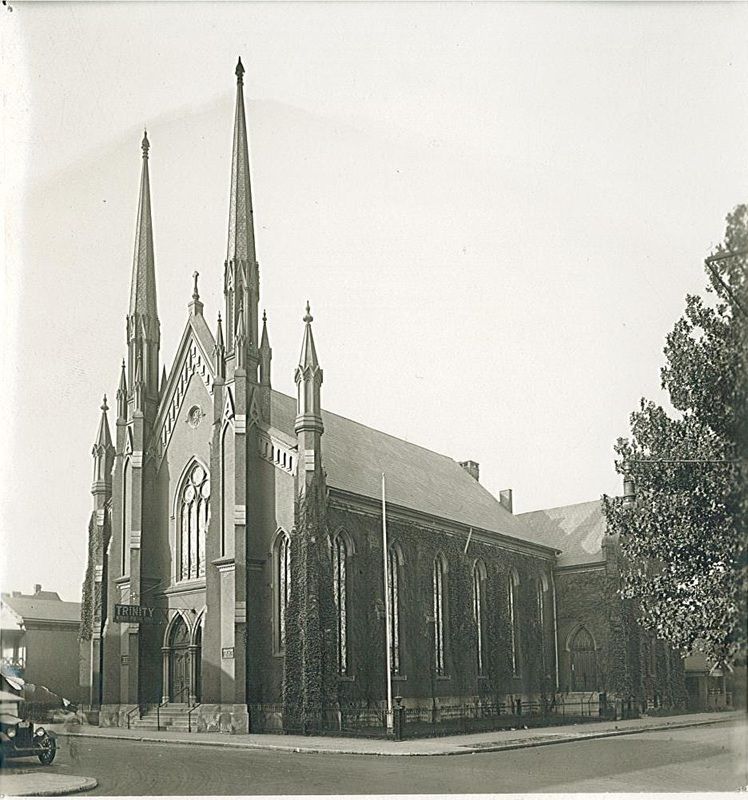
Something missing or not quite correct?Add ImageorSuggest an Edit
STOPLISTS
No stoplist details are available. If you have stoplists, please consider sharing them with us.
Something missing?Add Stoplist
CONSOLES
Builder: Unknown
Position: Unknown
Design: Unknown
Pedalboard Type: Unknown
Features:
Stop Layout: Unknown
Expression Type: Unknown
Combination Action: Unknown
Control System: Unknown or N/A
Something missing or not quite correct?Add ConsoleorSuggest an Edit
DETAILS
This instrument is: Not Extant and Not Playable in this location
Excerpt from an article on the dedication of the building, "Trinity Church," Lafayette (IN) Weekly Journal, Friday morning, March 28, 1873, [6], Newspapers.com, https://www.newspapers.com/image/1050080116:
[From the Daily Journal, Monday.] . . . In accordance with previous announcement and preparations already made, the new Trinity Methodist Church, on Sixth Street, corner of North, was yesterday [i.e., Sunday, May 23, 1873] dedicated to the service of the Lord. The dedication services proper took place in the main audience room at half-past 10 o'clock. . . . The organ was built by Mr. A. Pomplitz, of Baltimore, and after having been closely examined and thoroughly tested by competent parties, has been pronounced in all its parts and combinations, to be a very superior instrument.
From Trinity United Methodist Church, The History of Trinity: Trinity United Methodist Church, 1825–2005: Reliving 180 Years, https://www.trinitylafayette.org/history-of-trinity-1825-2005.html: "The entire church was dedicated on March 23, 1873. . . . The organ was built by Mr. A. Pompletz [sic] of Baltimore, Maryland. . . . A dedication service was held on September 28, 1952 to celebrate the new Moller organ that was installed in memory of Rev. Thomas J. Williams who was pastor of Trinity from 1919 to 1948."
Database Manager on February 3rd, 2017:
This entry describes an original installation of a new pipe organ. Identified by Steven Bartley, citing information from this publication: Der Deutsche Correspondent, Baltimore MD 2-21-1873 pg 4. The Short newspaper article, announcing this organ, gave no particulars about it. A recent photo of the church's interior, as seen on their web site, shows the large facade/case front of Gothic design very typical of those being built by Pomplitz, in the 1870s.
Something missing or not quite correct?Add NoteorAdd WebpageorAdd Cross ReferenceorSuggest an Edit