Unknown Builder
1896
Originally Unknown Builder (1860ca.)
Holy Cross Roman Catholic Church
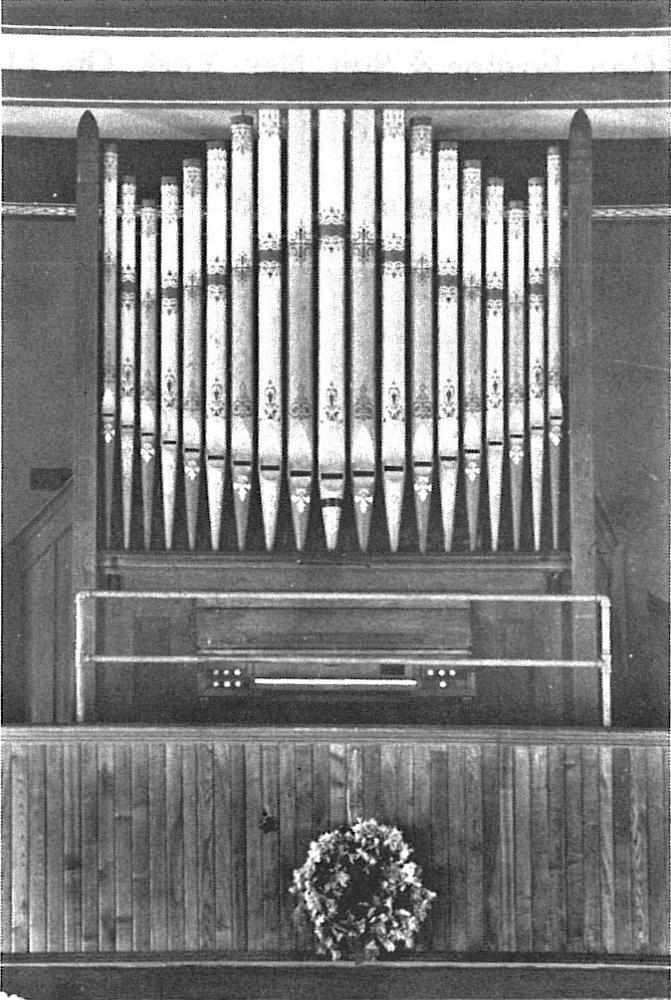
Sanctuary; rear gallery
7231 Main Street
Ovid, NY, US
7 Ranks - 327 Pipes
Something not quite correct?Suggest an Edit
🤝 Instrument entries in New York sponsored by:
We are grateful for the generous support of our sponsors, who make it possible for us to continue our mission of preserving and promoting the rich history of pipe organs across the globe.

IMAGES
Something missing or not quite correct?Add ImageorSuggest an Edit
STOPLISTS
| MANUAL | ||
| 8' | Open Diapason | |
| 8' | Dulciana (TC) | |
| 8' | Std. Diapason Treble (TC) | |
| 8' | Std. Diapason Bass | |
| 4' | Principal * | |
| 4' | Flute * (TC) | |
| 2' | Fifteenth |
| PEDAL | ||
| 16' | Ped. Bourdon | |
| Pedal Coupler | ||
| Bellows Signal |
Originally Written/Published: 1980
Open In New TabSomething missing or not quite correct?Add StoplistorSuggest an Edit
CONSOLES
Builder: Unknown Builder
Position: Keydesk Attached
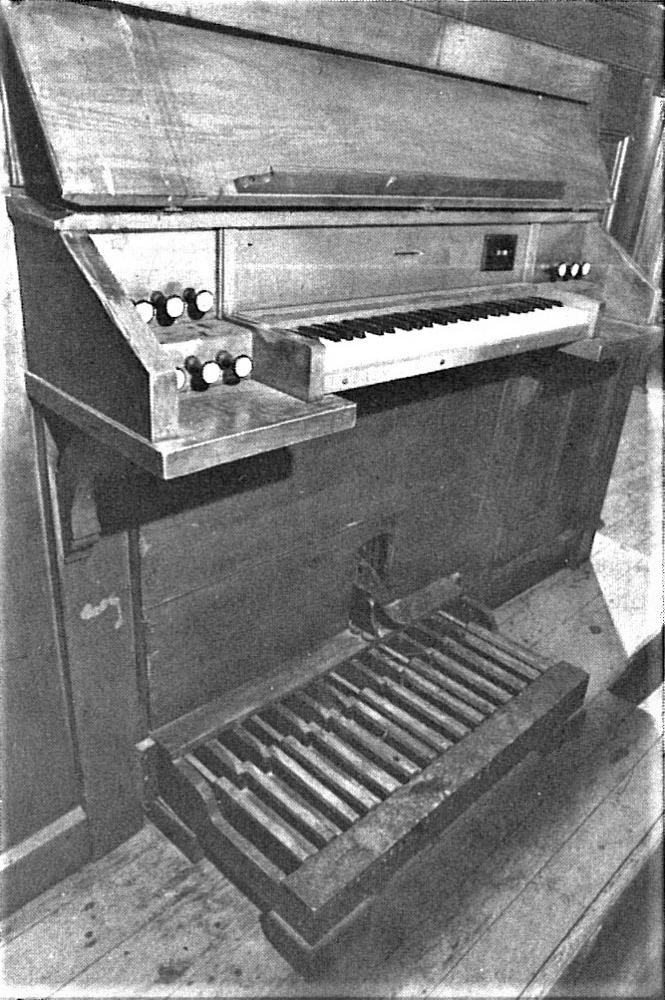
Design: Traditional With a Keyboard Cover That Can Be Lifted To Form a Music Rack
Pedalboard Type: Flat Straight
Features:
1 Manuals (56 Notes)25 Note Pedal2 Divisions7 Stops8 RegistersMechanical (Unknown) Key ActionMechanical Stop ActionStop Layout: Drawknobs in Horizontal Rows on Terraced/Stepped Jambs
Expression Type: Balanced Expression Shoes/Pedals (Details Unknown)
Combination Action: None
Control System: Unknown or N/A
Something missing or not quite correct?Add ConsoleorSuggest an Edit
DETAILS
Exhibited in the 1980 OHS convention(s)
This instrument is: Extant and Playable in this location
This organ was purchased in 1869 by Fr. James O'Connor, and dedicated with a concert 28 December of that year, in the parish's former building, an 1851 frame church which stood across the street from the present church building, constructed in 1895-6. The Farmer's Review for 20 June 1896 reports the moving of the organ into the new church. It is possible that the organ was new in .1869, but the key compass and other construction practices suggest a c. 1860 ( or perhaps even earlier) instrument. Interior evidence strongly suggests Garrett House of Buffalo as the original builder.
The instrument is free-standing in the rear gallery of the church, with the sides of the case angled to make the width greater at the rear. The original key compass was 54 notes, cleverly extended with a 2-note "chestlet" which, having neither slider nor ventil, is permanently on. The two pipes are open metal flues. Where the Dulciana originally stood are now located the original chest and most manual pipes appear to date from ca. 1860 and seem to be of New York state manufacture; the Pedal chest and pipes are later. The bottom four notes of the manual chest have double pallets. The manual pipes have been repitched (and thus rescaled). A different stop, probably a TC 8' Viola di Gamba, was originally on the 4' Flute toeboard, which is at the rear of the chest.
The projecting keydesk has terraced jambs and oblique knobs which are lettered in Old English, on round shanks. The rectangular nameplate, once located on the fall-board over the manual keys, is missing. The 25-note, flat pedal clavier has unusually short keys and controls two chests: a bass chest at the rear, and a treble chest at the right side.
-- 1980 OHS Handbook
Related Instrument Entries: Unknown Builder (ca. 1860)
Something missing or not quite correct?Add NoteorAdd WebpageorAdd Cross ReferenceorSuggest an Edit