Owner
ca. 2014
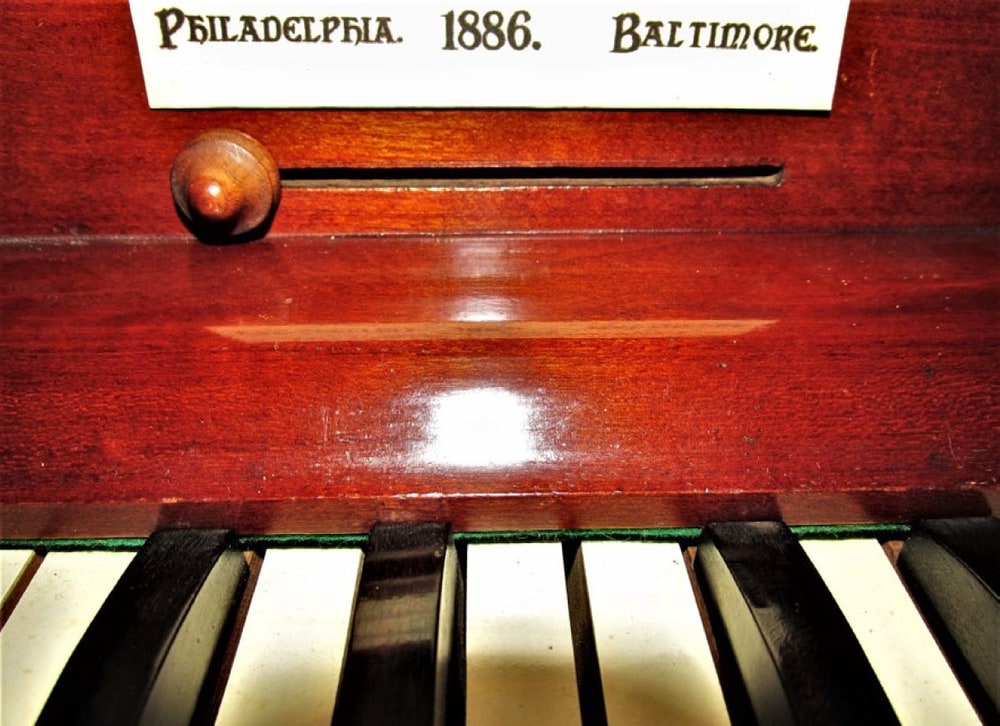
Originally Hilborne L. Roosevelt (1884-86)
Residence: Bruce D. Brewer
Baltimore, MD, US
2 Ranks - 100 Pipes - 1 Physical Divisions
EXPLORE IMAGESVIEW STOPLISTSomething not quite correct?Suggest an Edit
IMAGES




Something missing or not quite correct?Add ImageorSuggest an Edit
STOPLISTS
| Manual (I) | ||
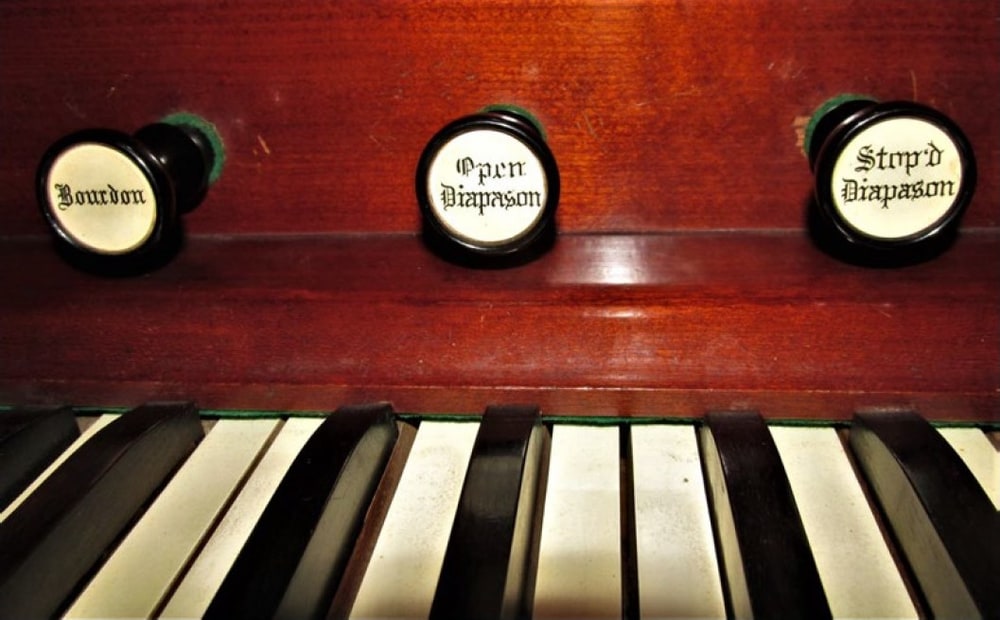
| Bourdon | ||
| Open Diapason | 44 | |
| Stop'd Diapason | 56 | |
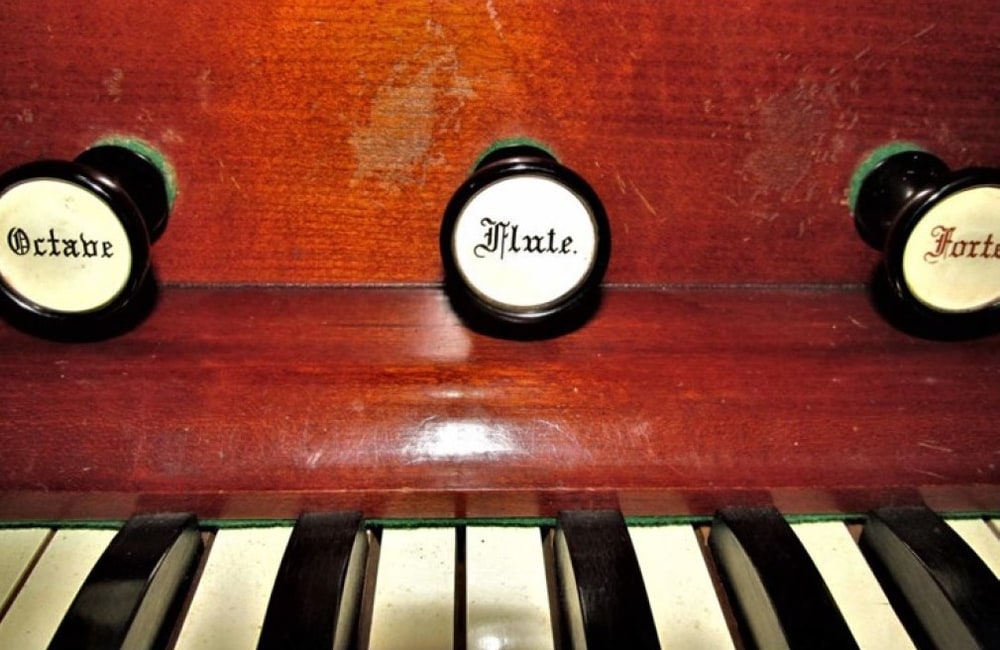
| Octave | ||
| Flute | ||
| Forte |
Something missing or not quite correct?Add StoplistorSuggest an Edit
CONSOLES
Builder: Hilborne L. Roosevelt
Position: Keydesk Attached
Design: Traditional With a Keyboard Cover That Can Be Lifted To Form a Music Rack
Pedalboard Type: No Pedalboard
Features:
1 Manuals (56 Notes)No Pedal1 Divisions2 Stops4 RegistersMechanical (Sticker) Key ActionMechanical Stop ActionStop Layout: Drawknobs in Horizontal Row Above Top Manual
Expression Type: Other
Combination Action: None
Control System: Unknown or N/A
Something missing or not quite correct?Add ConsoleorSuggest an Edit
DETAILS
This instrument is: ExtantandPlayable in this location
The only 1-manual, 2-rank Roosevelt organ listed for the period 1884-1886 is extant and owned by Stephen Schnurr in Indiana.
Paul R. Marchesano on June 5th, 2023:
Information from Bruce D. Brewer, Application for Historic Organ Certification:
"...only 146 of these instruments were produced, of which, I have only been able to identify seven which currently exist, and one which probably still exists, with (as far as my research has been able to discern) with only two or possibly three of these instruments in playable condition."
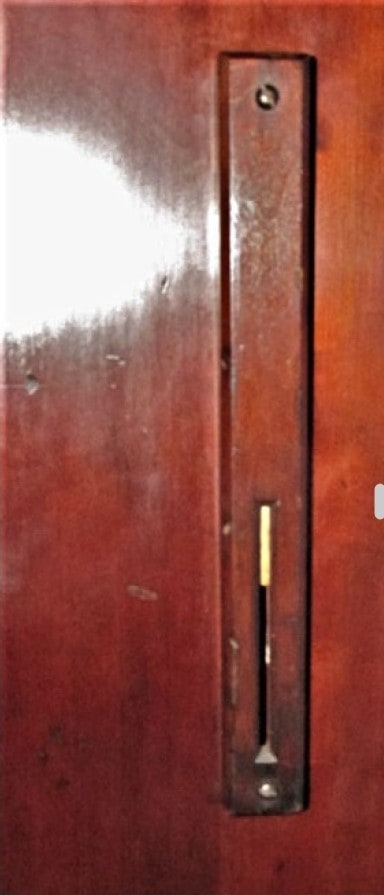
"The Instrument consists of one (1) manual with a 56 note compass from CC to g3, with a single swell shade which pivots in the middle, and is closed by a return spring behind the display grille. This swell is operated by a single knee lever.
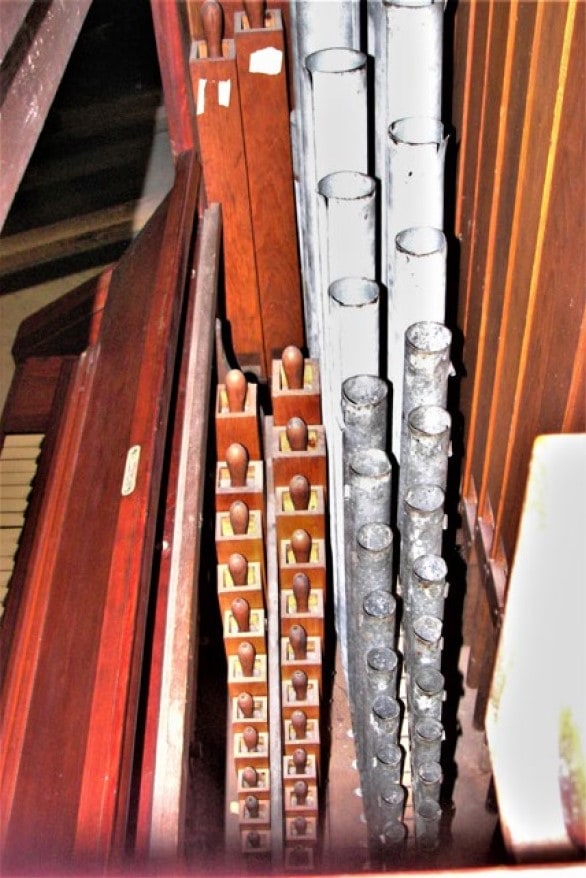
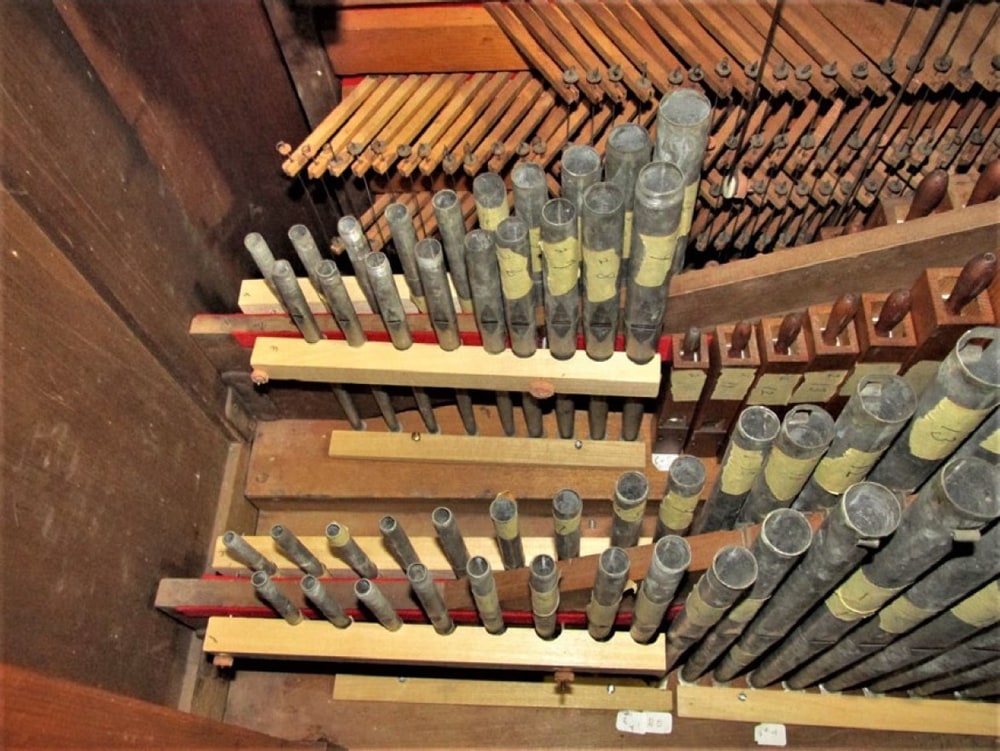
This instrument employs a patented unified mechanical action. A separate pallet is beneath each pipe, and is brought into play via a series of roller-boards, each corresponding to a stop, concealed behind the knee-panel. Utilizing this mechanism, the Diapason rank is divided into an 8' Open Diapason, and a 4' Octave.
The organ utilizes a mechanical “unification” system affecting two full-compass ranks of pipes producing the 8' and 4' stops for each rank. All of the pipework is original to the instrument, suffering no modifications, re-voicing etc.
The 8' Open Diapason/4' Octave utilizes wood pipes 1-12 of the 8' flute base as common base for the Open Diapason) and the Flute rank, followed by stopped metal Quintadena pipes for Tenor C and C#, and the balance throughout the top of the 4' Octave are lead, with the bulk slotted/ scroll tuned, and the final 20 pipes cone-tuned.
The 8'/4' Flute rank commences with 12 stopped bases across the back of the organ, followed by wood Chimney Flute pipes with the “chimney” being a hole drilled through the tuning handle and stopper, and concluding with the top 19 of the 4' Flute being cone-tuned lead."
Something missing or not quite correct?Add NoteorAdd WebpageorAdd Cross ReferenceorSuggest an Edit