IMAGES
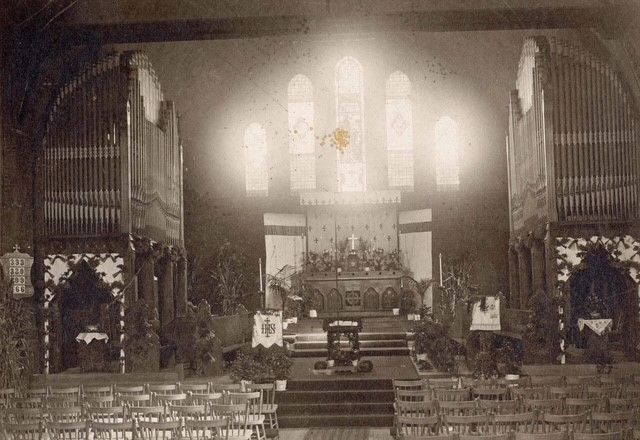
Something missing or not quite correct?Add ImageorSuggest an Edit
STOPLISTS
No stoplist details are available. If you have stoplists, please consider sharing them with us.
Something missing?Add Stoplist
CONSOLES
Builder: Unknown
Position: Unknown
Design: Unknown
Pedalboard Type: Unknown
Features:
2 Manuals Tubular Pneumatic (Unknown) Key ActionTubular Pneumatic (Unknown) Stop ActionStop Layout: Unknown
Expression Type: Unknown
Combination Action: Unknown
Control System: Unknown or N/A
Something missing or not quite correct?Add ConsoleorSuggest an Edit
DETAILS
This instrument is: Extant and Playable in this location
Updated through online information from Andrew Henderson (September 7, 2025): As reported in the Toronto Globe (June 8, 1895) the new organ was built by the R. S. Williams & Co.
Andrew Henderson on January 21st, 2024:
From The Hamilton Spectator (June 3, 1895): "The opening of the new pipe organ at the Church of St. John the Evangelist promises to be of more than usual interest to the musical people of Hamilton. The organ is a two-manual one of large dimensions, arranged on both sides of the church, the great organ on the north side and the swell organ on the south side, with the console facing the choir. The action throughout is pneumatic, insuring a light, elastic and quick touch. The metal pipes are of the best spotted metal and the reeds are French, having been imported specially for this organ. The tone of the organ is very fine. The diapason are voiced clear and bold, after the manner of English organ builders, giving a splendid foundation for the organ. The case work is very handsome. The architecture throughout is Gothic. The organ is built on oak pieces seven feet from the chancel floor, an arrangement which not only adds to the beauty of the instrument, but also gives a fine effect in sound. The front pipes are beautifully colored in buff, pale blue and gold, and blend nicely with the tinted sanctuary. The workmanship throughout is of a very fine order and reflects great credit on the builders. There will be a recital this evening given by J. W. F. Harrison, of Toronto, assisted by his pupil, the boy soprano of St. Simon's Church in that city."
The builder's name is not given in this or other mentions of the new instrument, and was possibly built by R. S. Williams & Son, who had built a handful of other area instruments and had a storefront operation in Hamilton at that time. It is well documented that the Williams firm imported their reed stops from France. The instrument was rebuilt 10 years later by Karn-Warren, possibly indicating problems with the organ's tubular-pneumatic action, which would have been an innovation for the Williams or any other Ontario firm in the 1890s.
Related Instrument Entries: Karn-Warren Organ Co. (1904)
Something missing or not quite correct?Add NoteorAdd WebpageorAdd Cross ReferenceorSuggest an Edit