Frobenius Orgelbyggeri
Opus 995, 1996
First United Methodist Church
175 Fifth Avenue
Saratoga Springs, NY, US
28 Ranks
EXPLORE IMAGESVIEW STOPLISTSomething not quite correct?Suggest an Edit
IMAGES
Something missing or not quite correct?Add ImageorSuggest an Edit
STOPLISTS
Something missing or not quite correct?Add Stoplist
CONSOLES
Builder: Unknown
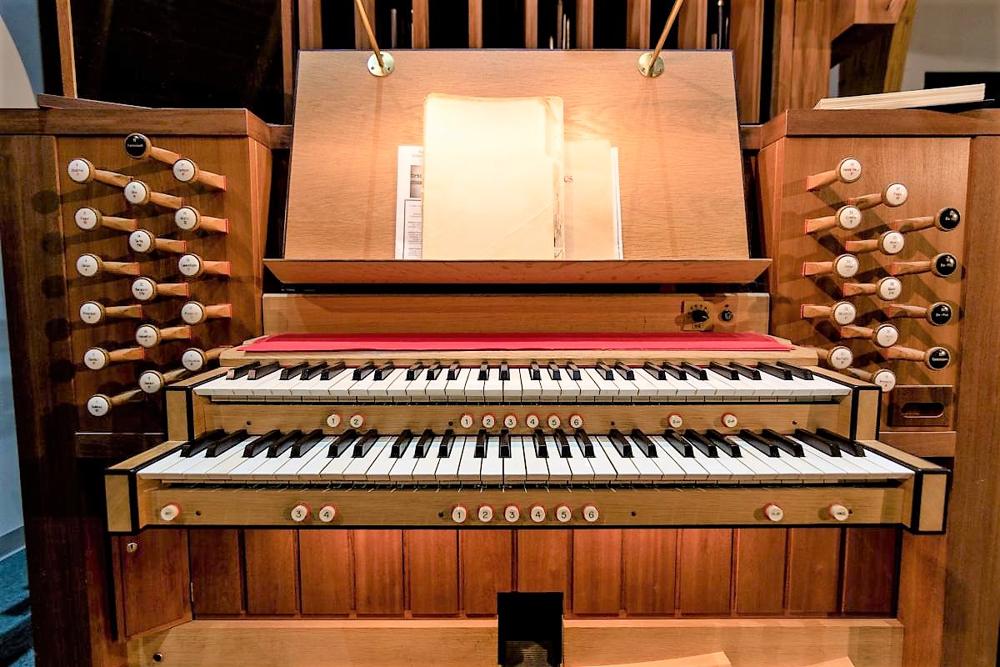
Position: Detached Keydesk (Mechanical Action)
Design: Non-Traditional Style, As Consoles by Holtkamp, Schlicker, et al
Pedalboard Type: Concave Radiating (Meeting AGO Standards)
Features:
2 Manuals (58 Notes)32 Note Pedal3 Divisions30 Stops32 RegistersMechanical (Unknown) Key ActionMechanical Stop ActionCombination Thumb Piston(s)Combination Toe Piston(s)Coupler Thumb Piston(s)Coupler Toe Piston(s)Stop Layout: Drawknobs in Horizontal Rows on Flat Jambs
Expression Type: Balanced Expression Shoes/Pedals (Details Unknown)
Combination Action: Adjustable Combination Pistons
Control System: Unknown or N/A
Something missing or not quite correct?Add ConsoleorSuggest an Edit
DETAILS
This instrument is: Extant and Playable in this location
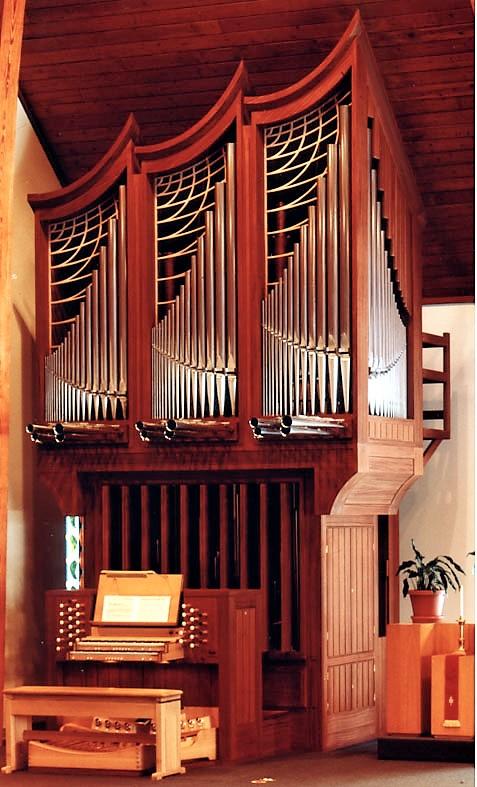
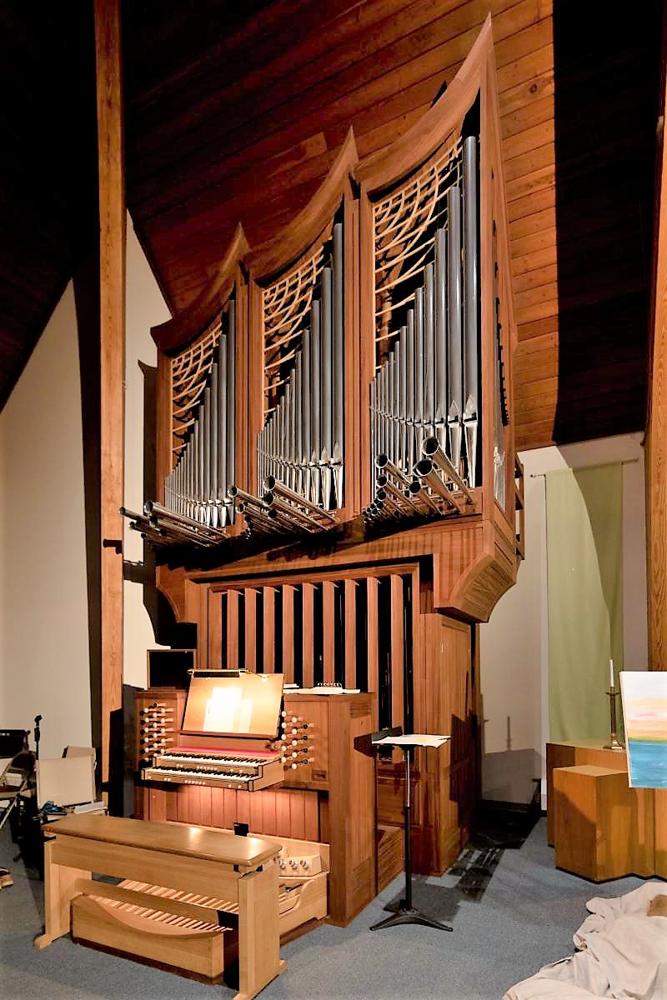
Updated through online information from Ian Pykett. -- The Saratoga organ, Opus 995, is Frobenius- fourth installation in the United States. The asymmetry of the mahogany case complements the off-center location of the instrument, and the upward sweeps parallel the arched beams of the contemporary sanctuary.
The manual natural keys and white stop-knobs are capped with mammoth tusk, and the sharps and black stop-knob plates are ebony. The pedal-board naturals are oak, and the sharps are ebony. The façade pipes are polished 70% tin.
The key action is mechanical. The 27 speaking stops are drawn mechanically, but may also be drawn via a computer-controlled combination system.
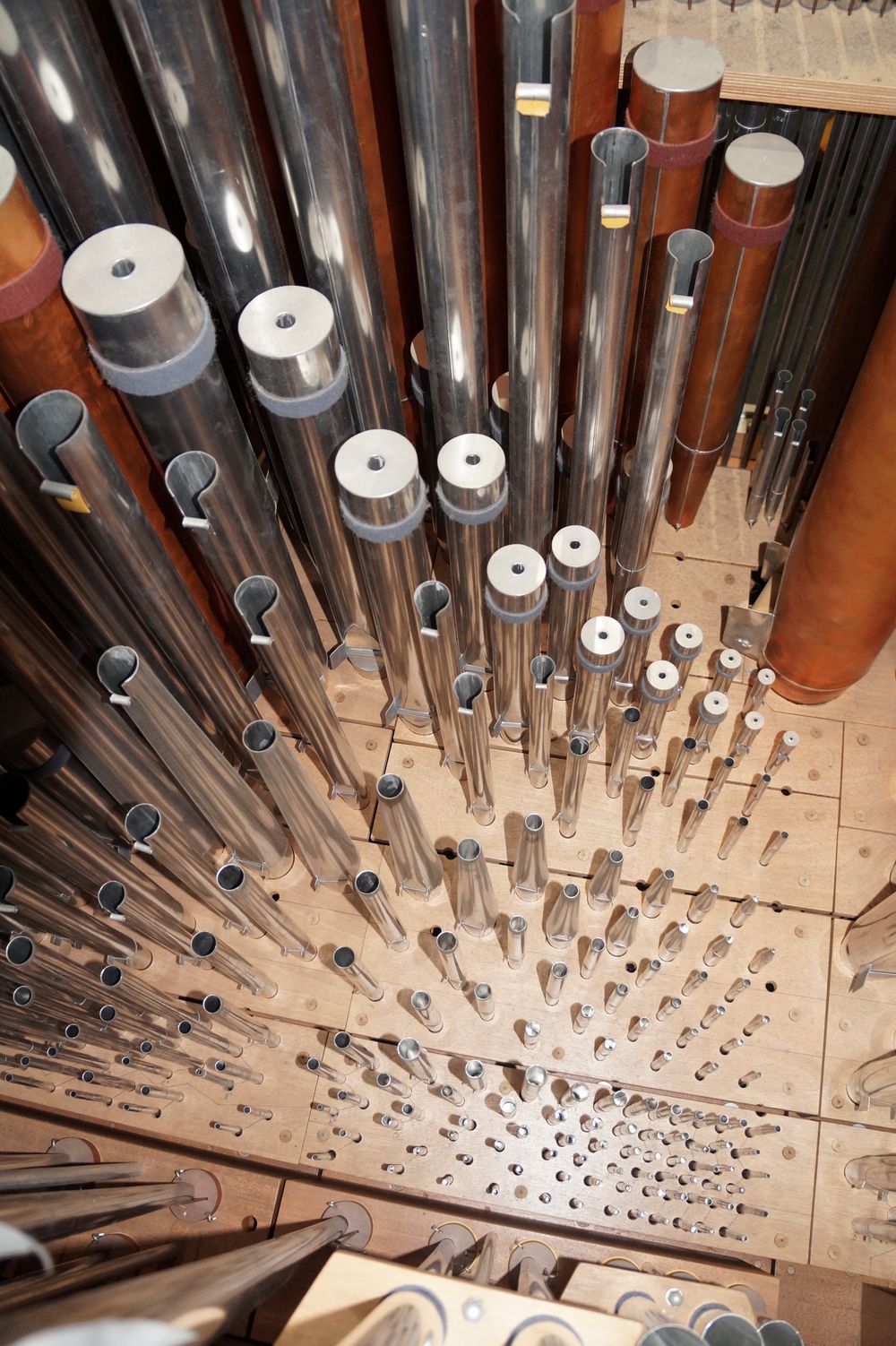
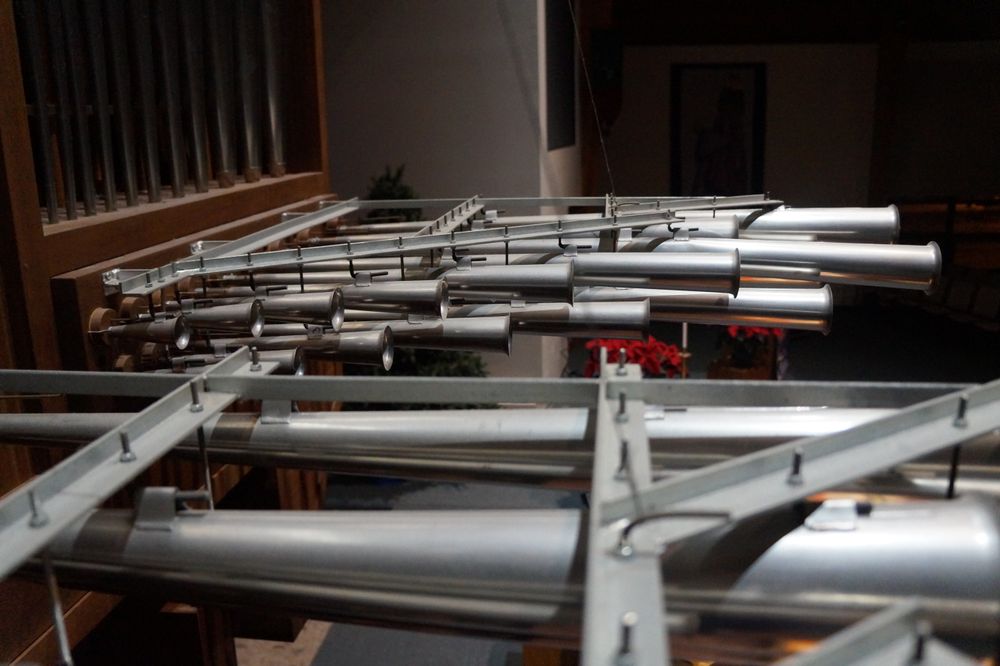
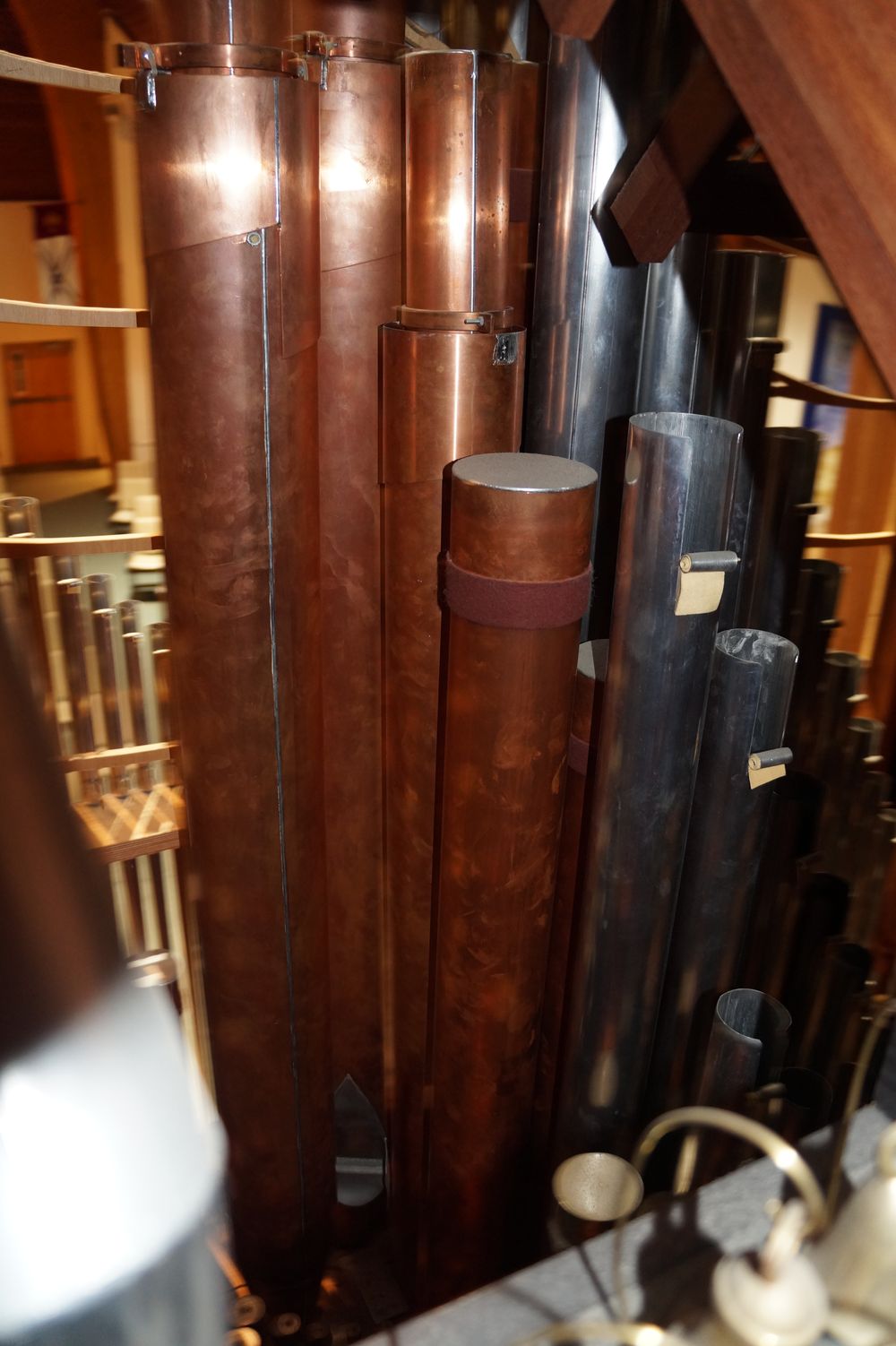
Nearly 1,700 pipes speak in 30 ranks. The wind pressure for the Hovedværk (Great) and Svelleværk (Swell) is 70mm, and that for the Pedal division is 78mm.
The case was designed by Jørgen Christiansen, and voicing was by Ole Willemoes Høyer assisted by Jan Wohlfart, Michel Budde-Jensen and Marius Mathiesen. The instrument was installed by Kasper Ketels and Finn ˜Østerberg, and was dedicated to the glory of God in November 1996
Database Manager on September 9th, 2013:
Updated through online information from Sam Cherubin.
Database Manager on December 18th, 2010:
Updated through online information from Sam Cherubin.
Database Manager on November 28th, 2010:
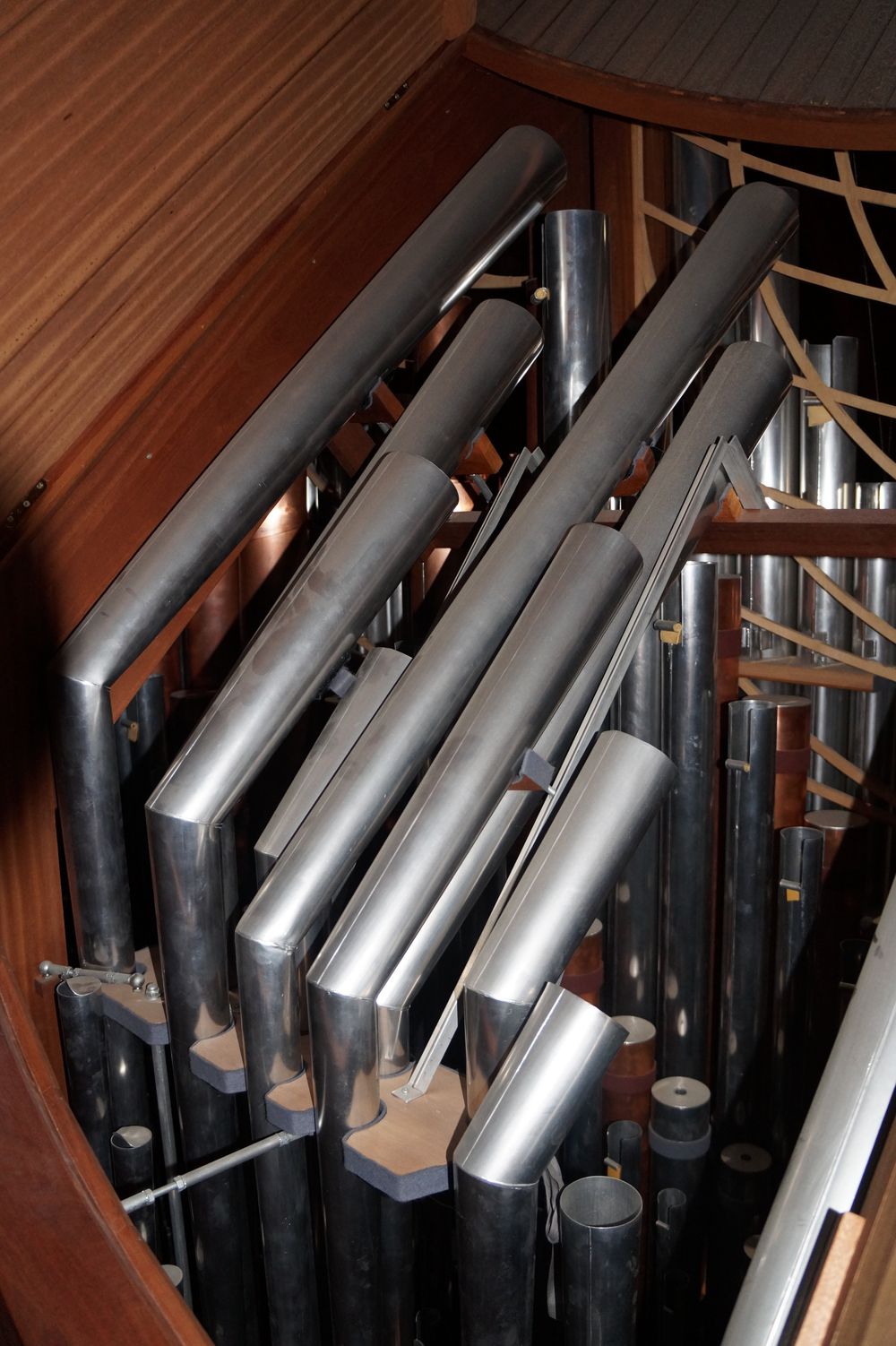
Updated through online information from Ian Pykett. -- Made of oiled solid mahogany with oak accents, the asymmetrical case complements the off-center location of the instrument, and the upward sweeps parallel the arched beams of the contemporary sanctuary. The manual natural keys and white stop-knobs are capped with mammoth tusk, and the sharps and black stop-knob plates are ebony. The pedalboard naturals are oak, and the sharps are ebony. The façade pipes are polished 70% tin. The mechanical key action is made using Swedish pine trackers and aluminum rollers. The sliders for the 27 speaking stops are drawn mechanically via the stop-knobs, but stops may also be drawn via a computer-controlled combination system. The eight General pistons and each of the three sets of six Divisional pistons are set at the console, and the settings may be stored in eight independent memories. 1,673 pipes speak in 30 ranks with fundamental frequencies from 32Hz to 10,546Hz. The pipes of the Hovedværk (Great) and most of the pipes of the Pedal division occupy the upper section of the case, and those of the Svelleværk (Swell) are under expression in the lower section. The wind pressure for the Hovedværk and Svelleværk is 70mm, and that for the Pedal division is 78mm. The organ case was designed by Jørgen Christiansen, and the instrument was installed by Kasper Ketels and Finn Østerberg. Voicing was by Ole Willemoes Høyer assisted by Jan Wohlfart, Michel Budde-Jensen and Marius Mathiesen
Database Manager on October 30th, 2004:
Status Note: There 1997
Database Manager on October 30th, 2004:
In 1976 building. Ded. 16 Nov 1996 by Jonathan Dimmock. Stops may also be drawn by computer-controlled combination system. [Previously had 1975 Wicks, Op. 5545, 2-8rk which was sold to St. Stephen's Episcopal, Elsmere, NY in 1996.]
Webpage Links: Saratoga Springs - New York [Frobenius web site]
Something missing or not quite correct?Add NoteorAdd WebpageorAdd Cross ReferenceorSuggest an Edit