Ernest M. Skinner Company
Opus 282, 1917
St. Philip's Episcopal Church
12 Hodge Street
Wiscasset, ME, US
7 Ranks - 396 Pipes
Something not quite correct?Suggest an Edit
IMAGES


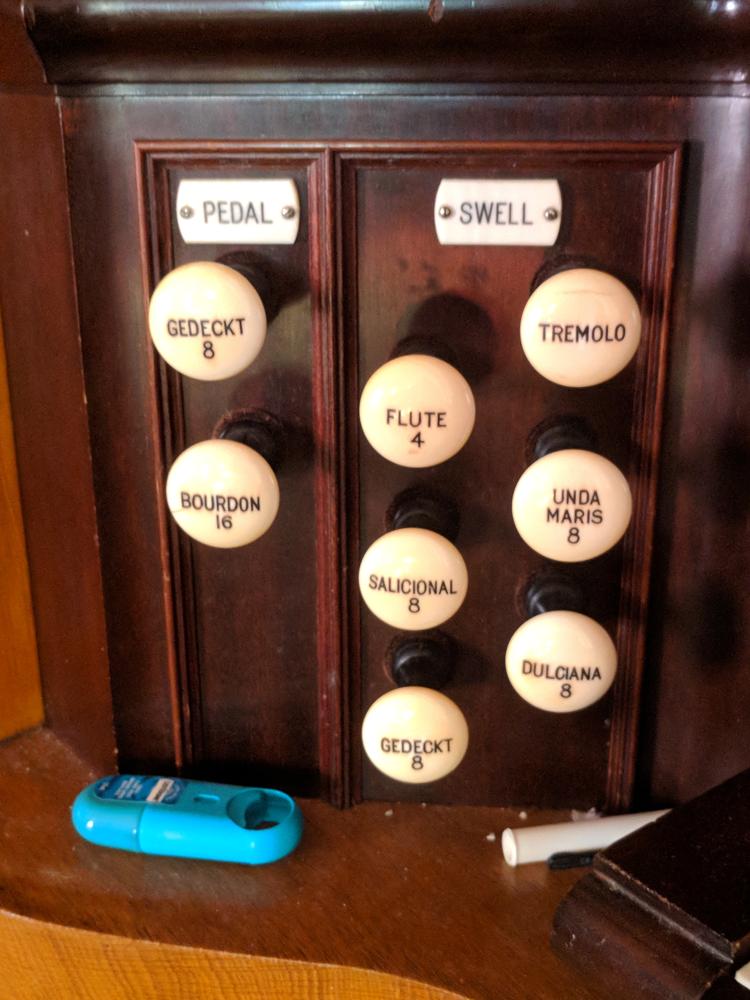
Something missing or not quite correct?Add ImageorSuggest an Edit
STOPLISTS
Something missing or not quite correct?Add Stoplist
CONSOLES
Builder: Unknown
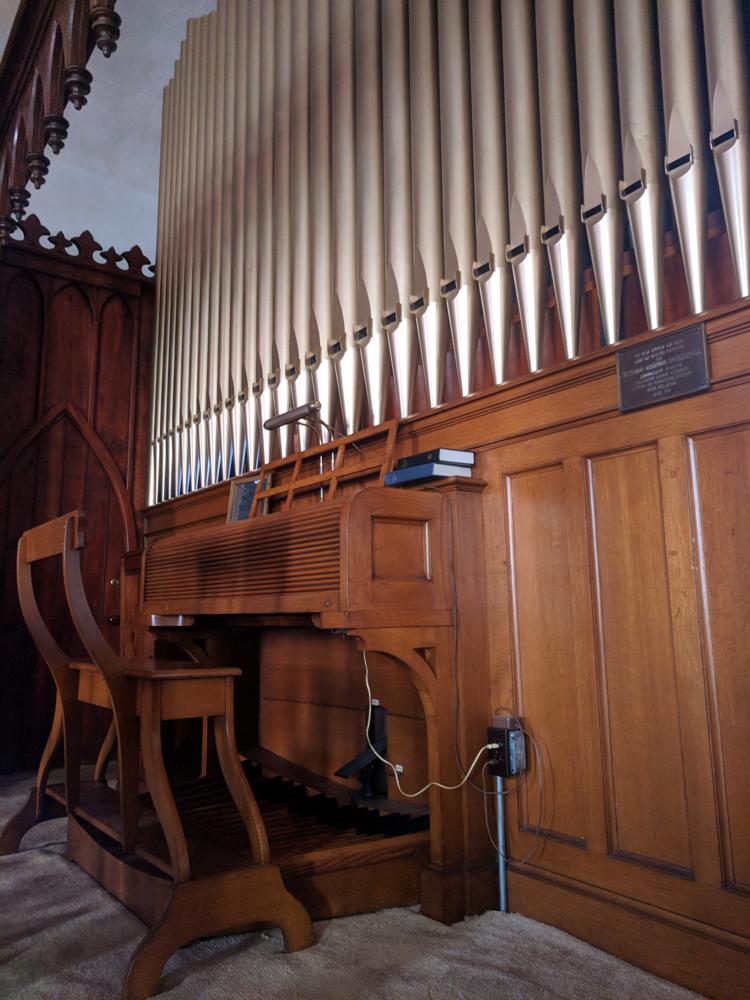
Position: Keydesk Attached, Manuals Set Into Case
Design: Traditional With Roll Top
Pedalboard Type: Concave Radiating (Not Meeting AGO Standards)
Features:
2 Manuals (61 Notes)32 Note Pedal7 Stops11 RegistersElectrical Key ActionElectrical Stop ActionCombination Thumb Piston(s)Coupler Toe Piston(s)Stop Layout: Drawknobs in Vertical Rows on Angled Jambs
Expression Type: Balanced Expression Shoes/Pedals (Details Unknown)
Combination Action: Blind Action
Control System: Unknown or N/A
Something missing or not quite correct?Add ConsoleorSuggest an Edit
DETAILS
This instrument is: Extant and Playable in this location
Updated by James Swist, who has heard or played the organ.
\r\nThe \"firm in Boston\" is the Spencer Organ Co. There is no Crescendo pedal.
Database Manager on September 15th, 2011:
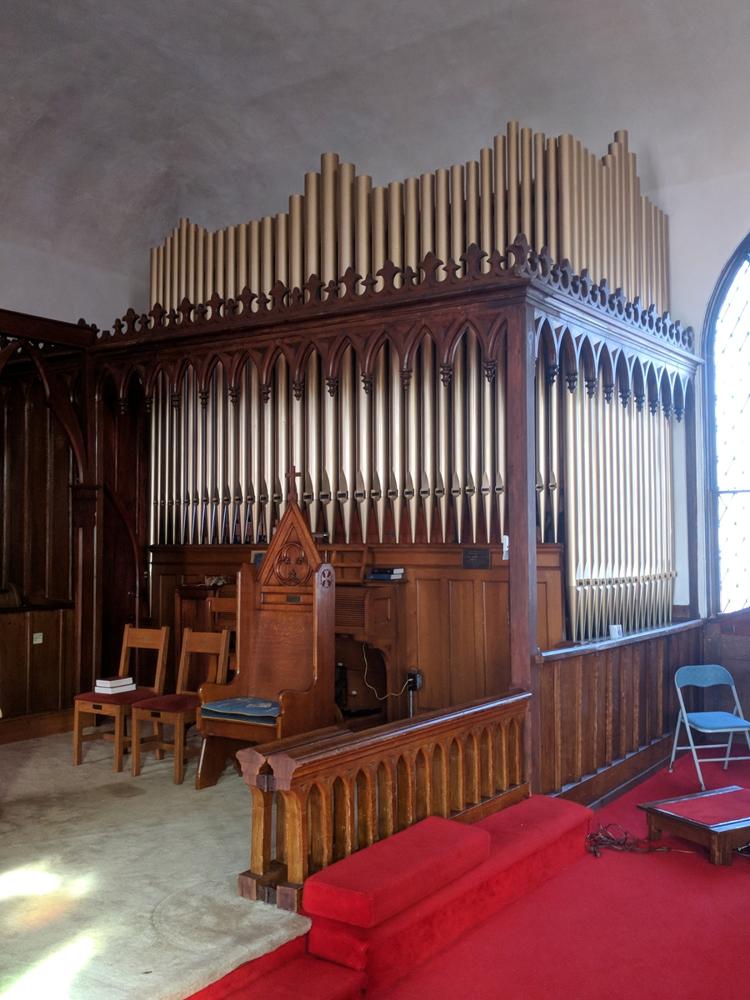
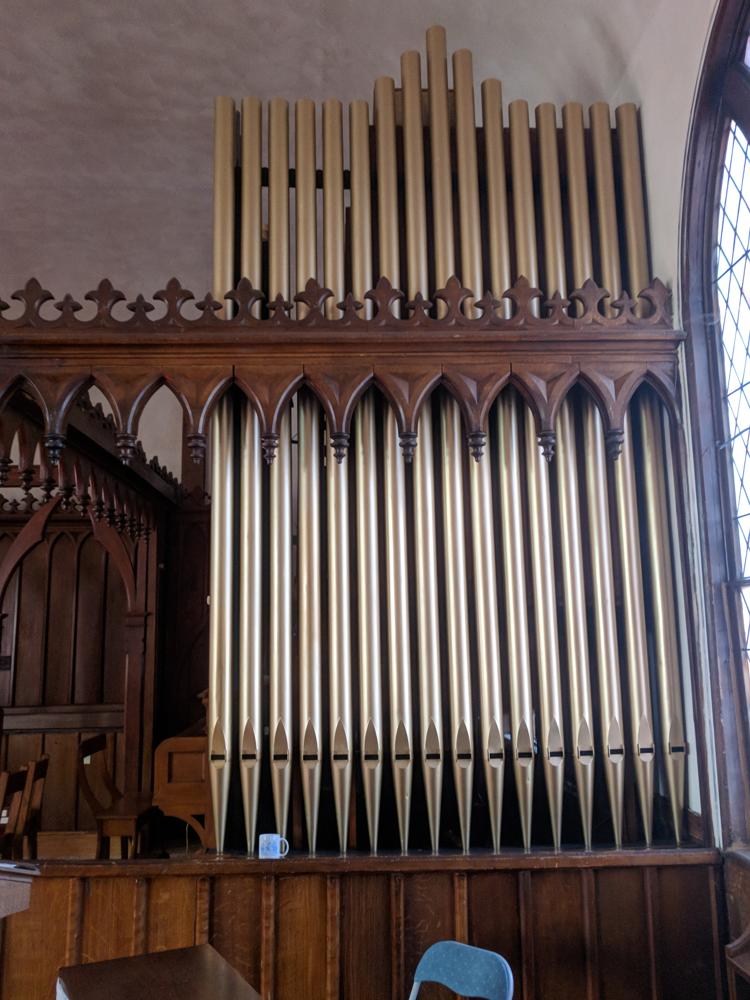
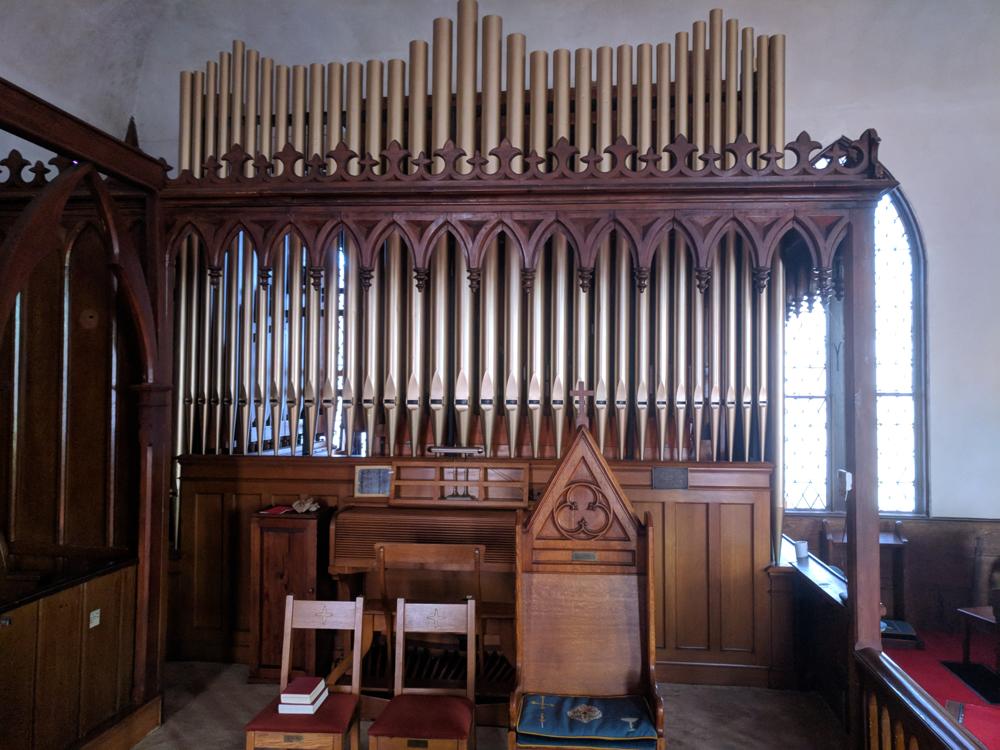
Updated through online information from Michael Smith. -- The parish is very proud of the instrument and understands its value. I'm told some renovation work was done relatively recently by "a firm in Boston", name not known. At some point (perhaps during that work?) the keytops were apparently replaced with a rather nasty plastic compound. The church is a very pretty small room, somewhat marred from the musical point of view by an abundance of thick carpeting. The instrument has a very nice robust sound and it's surprisingly versatile for such a small instrument. Each manual has three preset buttons below the keys, labeled 1-3, and a preset cancel, labeled '0'. There appears to be no way to change these, and the presets do not operate the stop knobs, so you can't remove a stop from a preset combination once it's on; the preset cancel is your only recourse. Preset cancel also does not cancel any stops you may have manually drawn. According to a plaque on the case, the organ was given as a memorial to a young man killed in 1916 while serving as an ambulance driver during the first world war.
Database Manager on December 23rd, 2005:
Updated through information adapted from E. M. Skinner/Aeolian-Skinner Opus List, by Sand Lawn and Allen Kinzey (Organ Historical Society, 1997), and included here through the kind permission of Sand Lawn:
Extant; unaltered; attached console.
Database Manager on October 30th, 2004:
Status Note: There 2002.
Database Manager on October 30th, 2004:
Restoration and remedial tonal finishing in 2002 by Spence Organ Co.
Webpage Links: Opus 282: St. Philip's Episcopal Church
Something missing or not quite correct?Add NoteorAdd WebpageorAdd Cross ReferenceorSuggest an Edit