Owner
1989
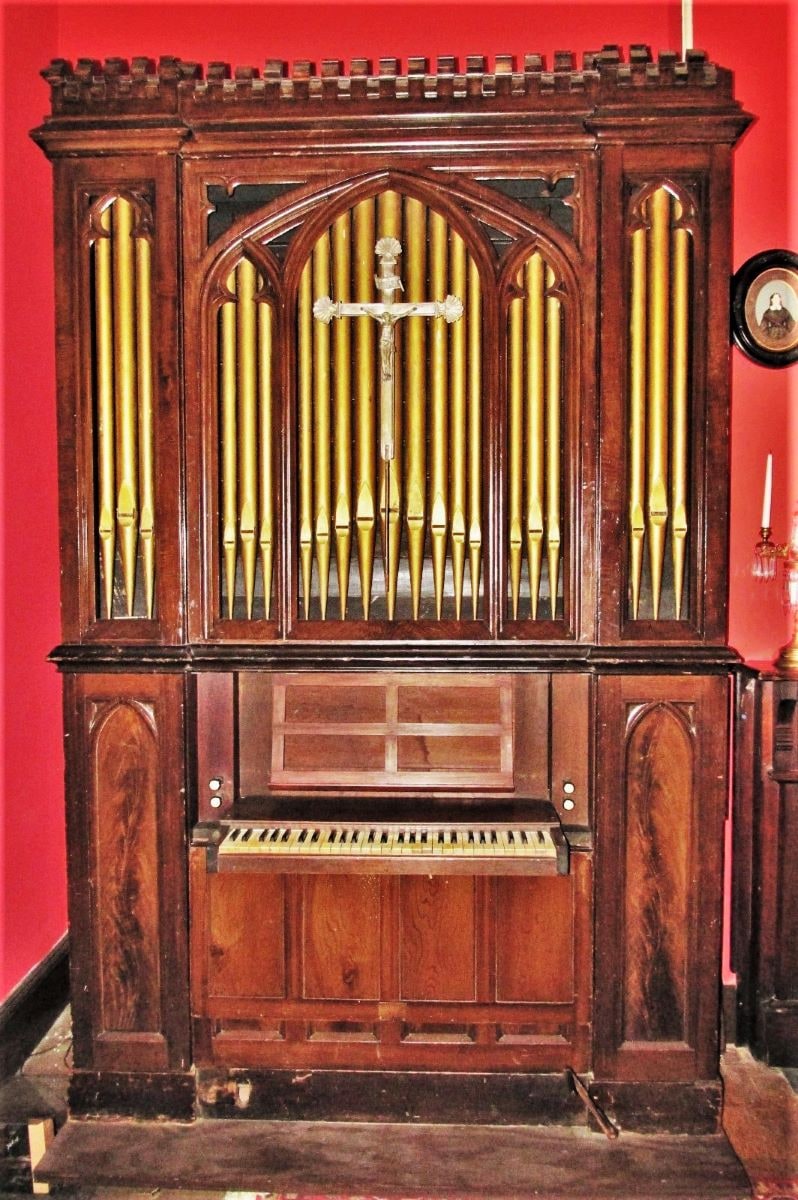
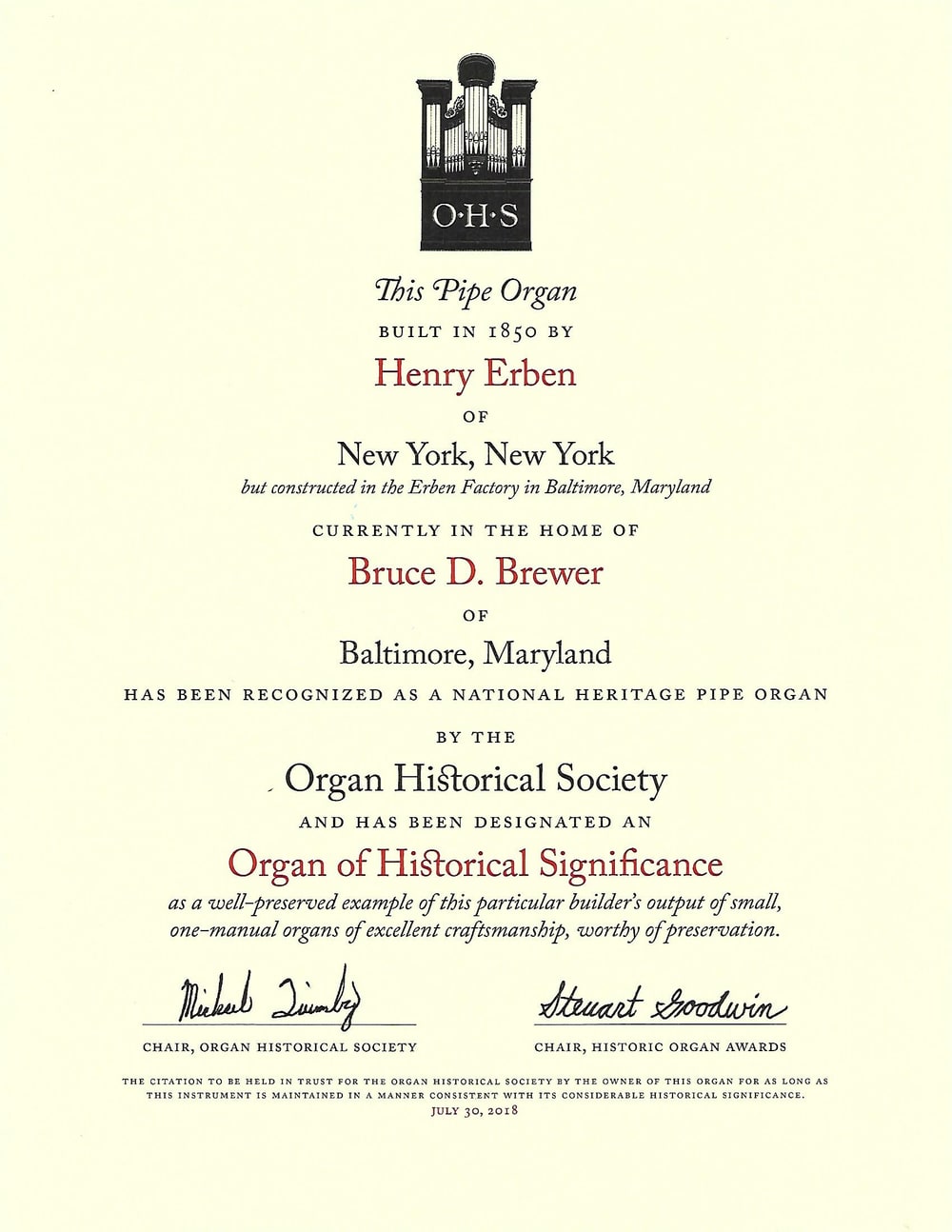
Originally Henry Erben (1850)
Residence: Bruce D. Brewer
Baltimore, MD, US
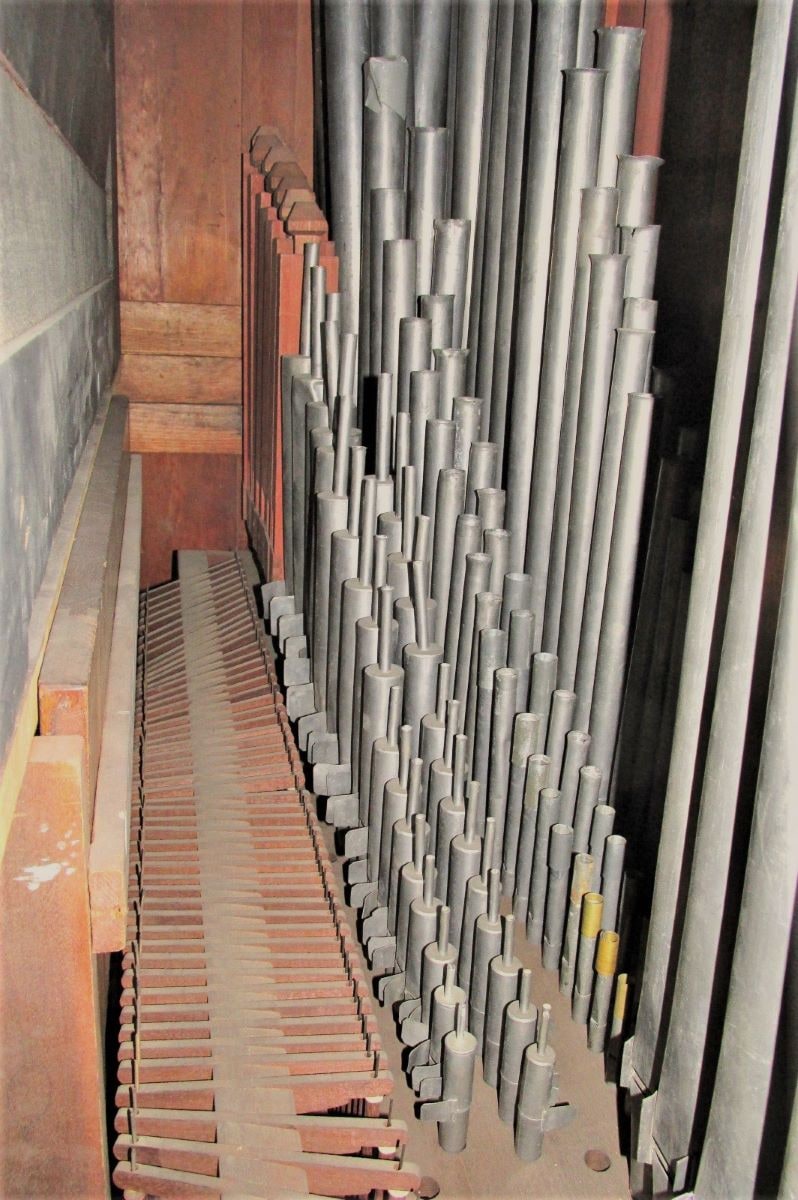
3 Ranks - 140 Pipes - 1 Physical Divisions
Historic Organ Citation Awardee
Something not quite correct?Suggest an Edit
IMAGES
Something missing or not quite correct?Add ImageorSuggest an Edit
STOPLISTS
| Manual (I) | ||
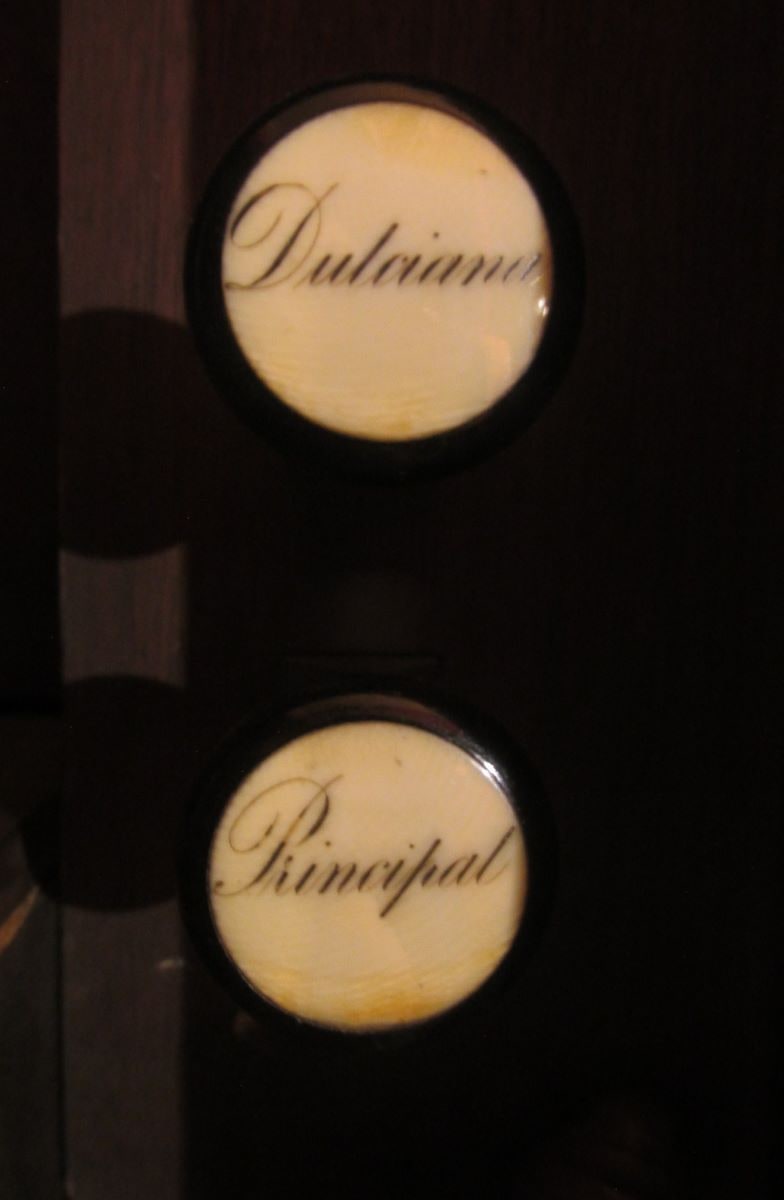
| [8'] Dulciana | 28 | |
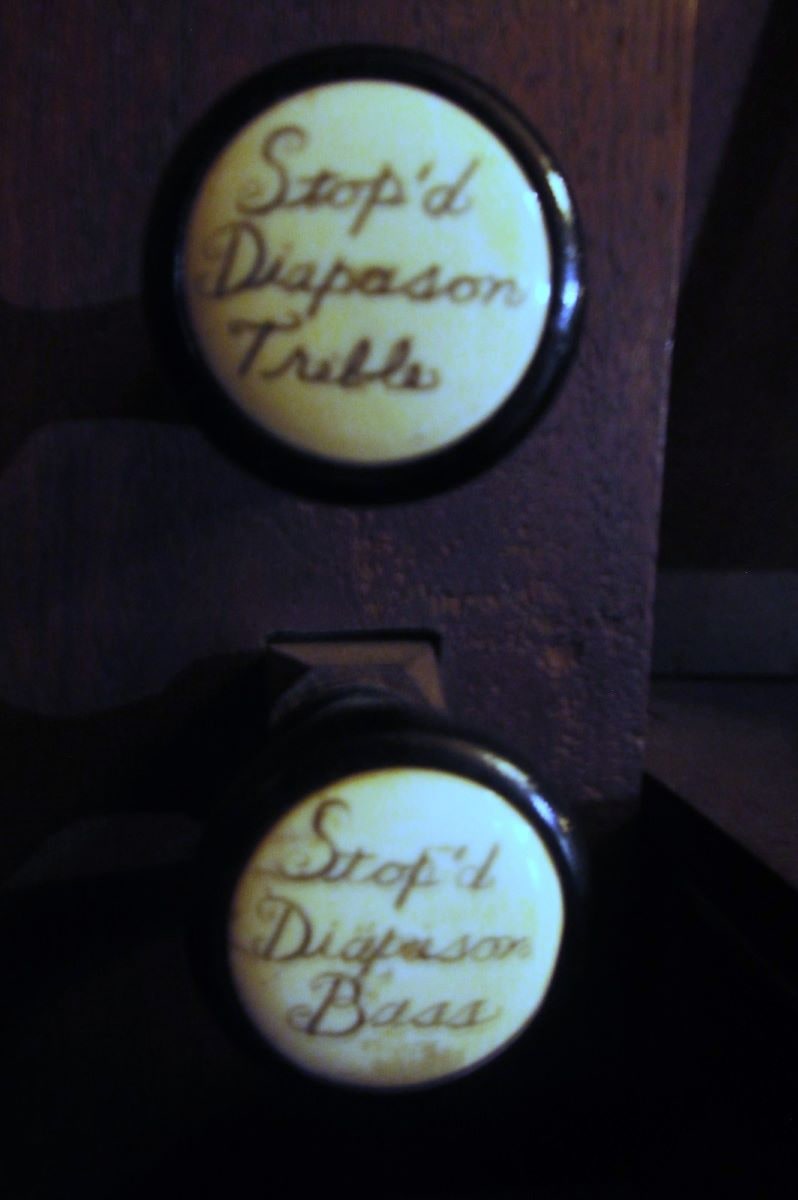
| [8'] Stop’d Diapason Treble | 28 | |
| [8'] Stop'd Diapason Bass | 28 | |
| [4'] Principal | 56 |
Something missing or not quite correct?Add StoplistorSuggest an Edit
CONSOLES
Builder: Henry Erben
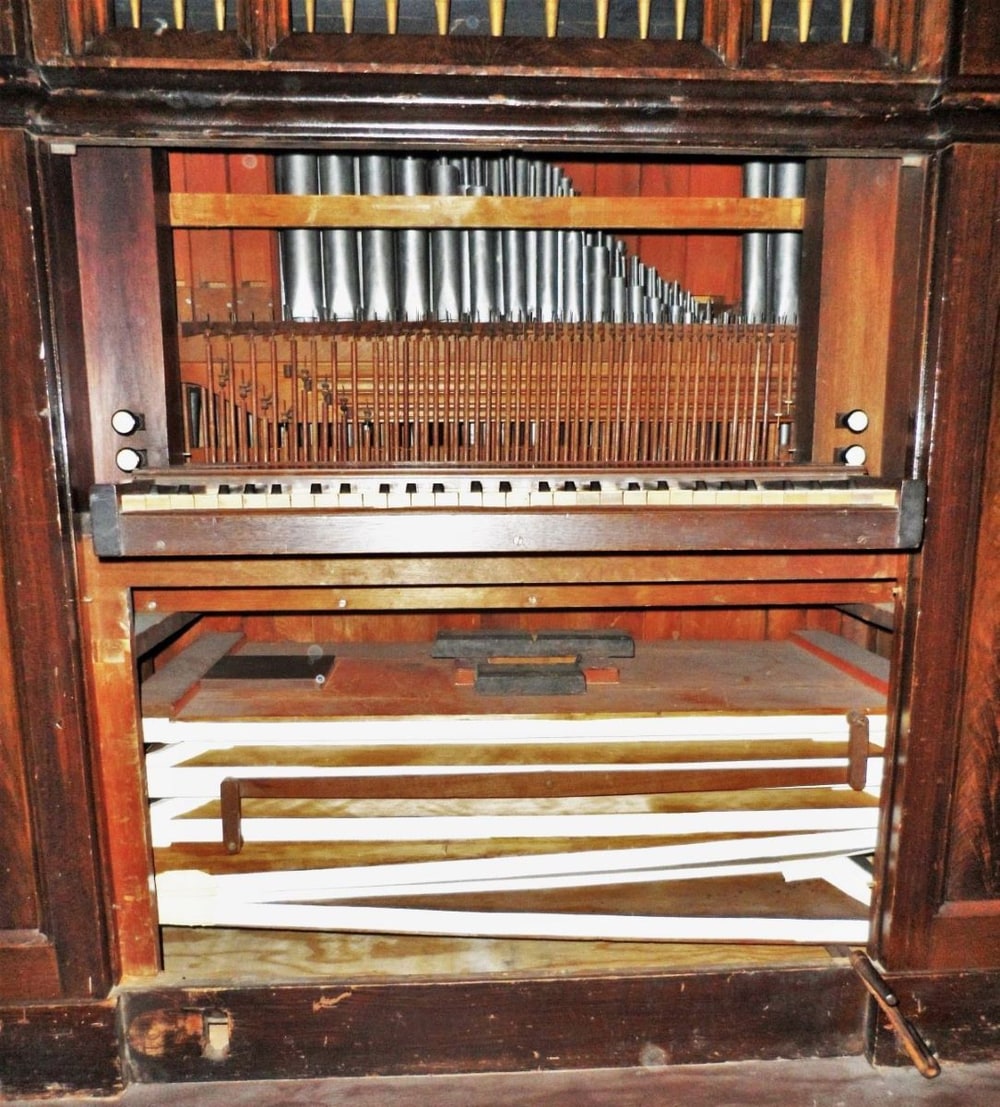
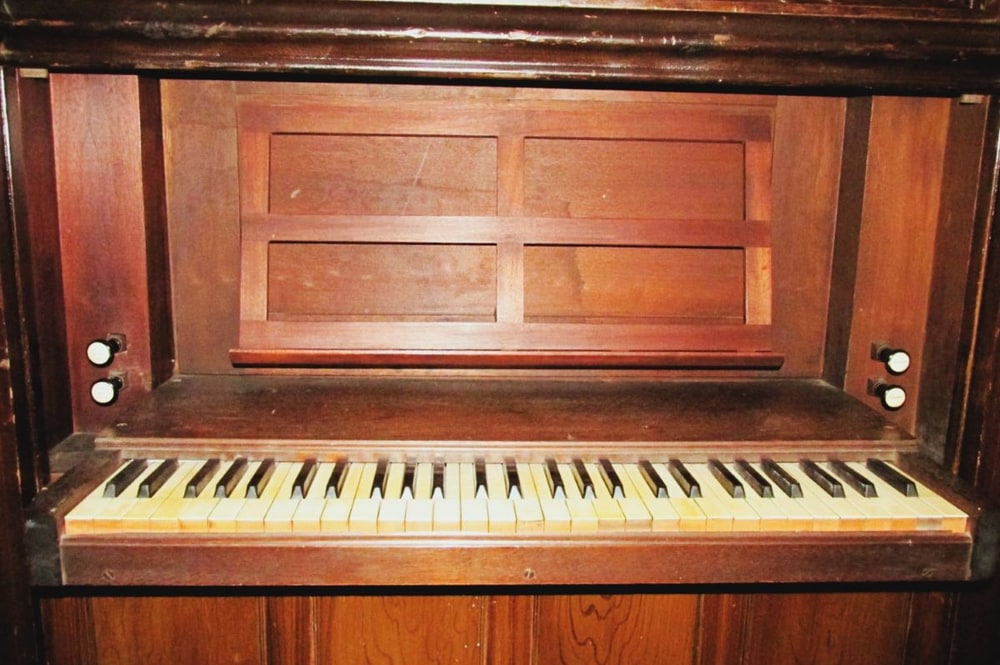
Position: Keydesk Attached, Manuals Set Into Case
Design: Traditional With Hinged Doors That Enclose Keyboards
Pedalboard Type: No Pedalboard
Features:
1 Manuals (56 Notes)No Pedal1 Divisions3 Stops4 RegistersMechanical (Unknown) Key ActionMechanical Stop ActionStop Layout: Drawknobs in Vertical Rows on Flat Jambs
Expression Type: No Enclosed Divisions
Combination Action: None
Control System: Unknown or N/A
Something missing or not quite correct?Add ConsoleorSuggest an Edit
DETAILS
This instrument is: Extant and Playable in this location
Updated through online information from Bruce D. Brewer (October 6, 2026): "The missing left stop jam was re-fabricated to the specifications of the existing right (treble) stop jam. The stop jam consisted of three pieces of walnut wood, joined in a straightened “Z” pattern. One of the joints was doweled and glued, with the other being screwed together as evidenced in the configuration for the remaining treble stop jam. The missing stop-shanks were constructed out of walnut to match the treble side. The stop knobs themselves were turned out of walnut and ebonized to match the existing treble knobs by the Holz Furniture Shop of Smithsburg, Maryland. The ivory engraved inserts were made by Marvin M. Cohen, a scrimshander in Rockville, Maryland. Using one of the existing stop faces as a pattern, and given the proper nomenclature, re-created the two missing stop faces in script to match as closely as possible, the treble stop script. Research of Erben instruments showed that on one organ from the 1870’s, the nomenclature read “stopped diapason”, and an 1868 instrument bore the inscription “Stopt (with a superscript “t” above the final ”p”) and one 1845 instrument which read “Stop’t diapason”. The 1845 nomenclature was selected for use because of the age approximation of the two instruments."
Paul R. Marchesano on June 5th, 2023:
Information from Bruce D. Brewer, Application for Historic Organ Certification:
Historical profile of the organ:
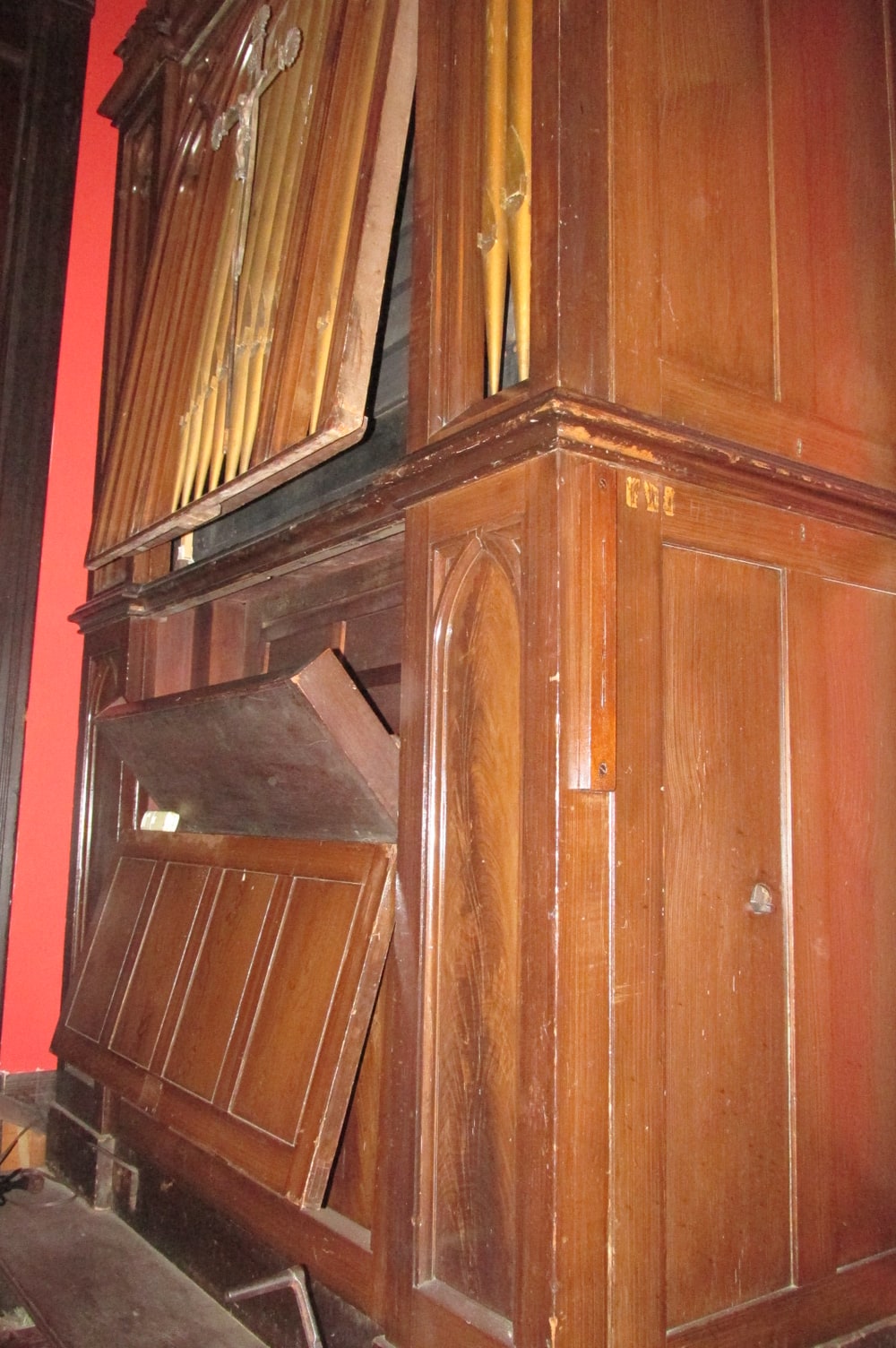
- Fabricated in Baltimore MD in the Eutaw Street factory in 1850.
- Installed, and dedicated in St. Mary’s Roman Catholic church in Rockville Maryland, 1853.
- Undetermined time, became the property of P.H. Frohman, and was in storage in the crypts of Washington Cathedral. (Frohman was primary architect of the Washington Cathedral from 1921 until his death in 1972.
- Brewer purchases the organ on 07/09/78, and installs the playing organ in his home in Rockville, MD. That same year.
- December 1989, Organ is relocated to current residence in Baltimore Maryland.
- This instrument has been the venue of several “Organ Crawls” by the Organ Historical Society, and both the Local and National Chapters of the American Guild of Organists in Mr. Brewer's Rockville and Baltimore Maryland homes.
Database Manager on July 24th, 2005:
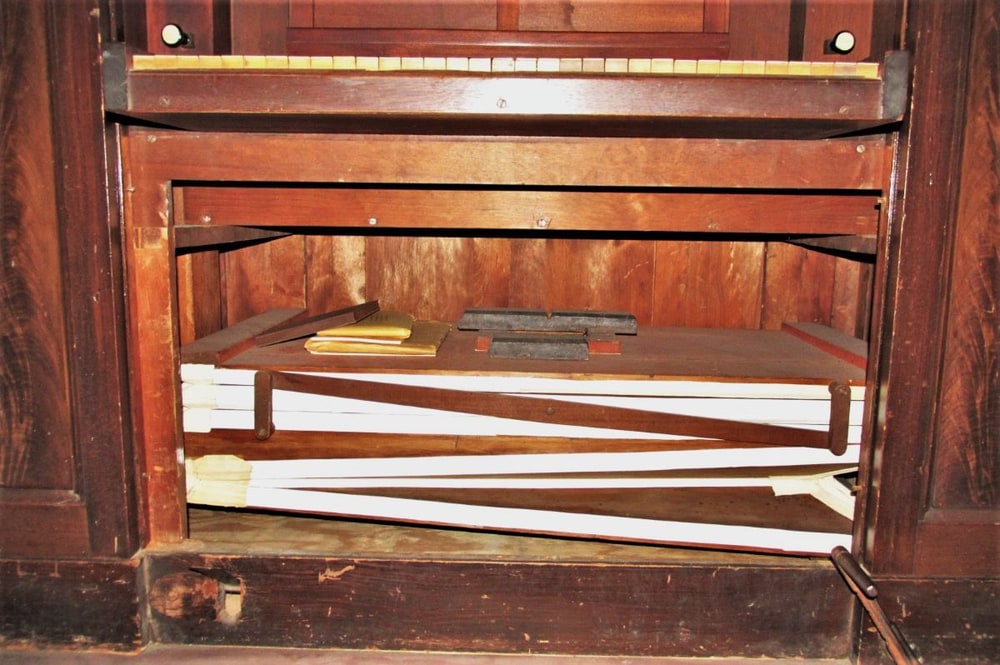
On-line update from Bruce D. Brewer -- The instrument has 2 1/2 ranks of pipes, the chimney flute and the Dulciana share a common bass, and the 4' Principal is full compass. The organ retains the original foot-pumped winding system.
Database Manager on July 24th, 2005:
From Bruce D. Brewer: 56 notes.
Database Manager on October 30th, 2004:
Status Note: There 1999
Database Manager on October 30th, 2004:
Formerly at St. Mary's R. C., Rockville, MD.
Related Instrument Entries: Henry Erben (1850) , Relocated byOwner (1978)
Something missing or not quite correct?Add NoteorAdd WebpageorAdd Cross ReferenceorSuggest an Edit