Estey Organ Co.
Opus 1211, 1914
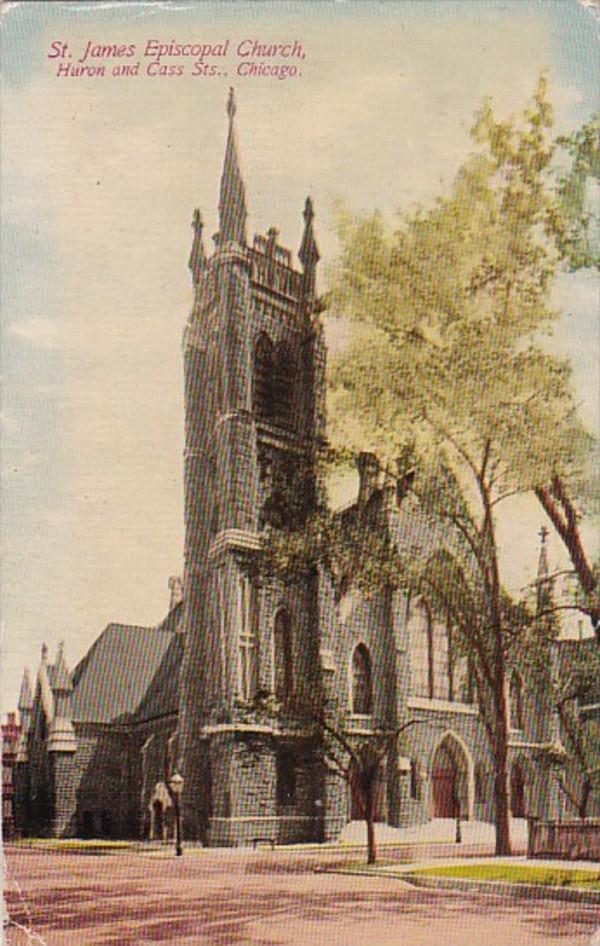
St. James Episcopal Church
Chicago, IL, US
Something not quite correct?Suggest an Edit
🤝 Instrument entries in Illinois sponsored by:
We are grateful for the generous support of our sponsors, who make it possible for us to continue our mission of preserving and promoting the rich history of pipe organs across the globe.

IMAGES
Something missing or not quite correct?Add ImageorSuggest an Edit
STOPLISTS
No stoplist details are available. If you have stoplists, please consider sharing them with us.
Something missing?Add Stoplist
CONSOLES
Builder: Unknown
Position: Keydesk Attached, Manuals Set Into Case
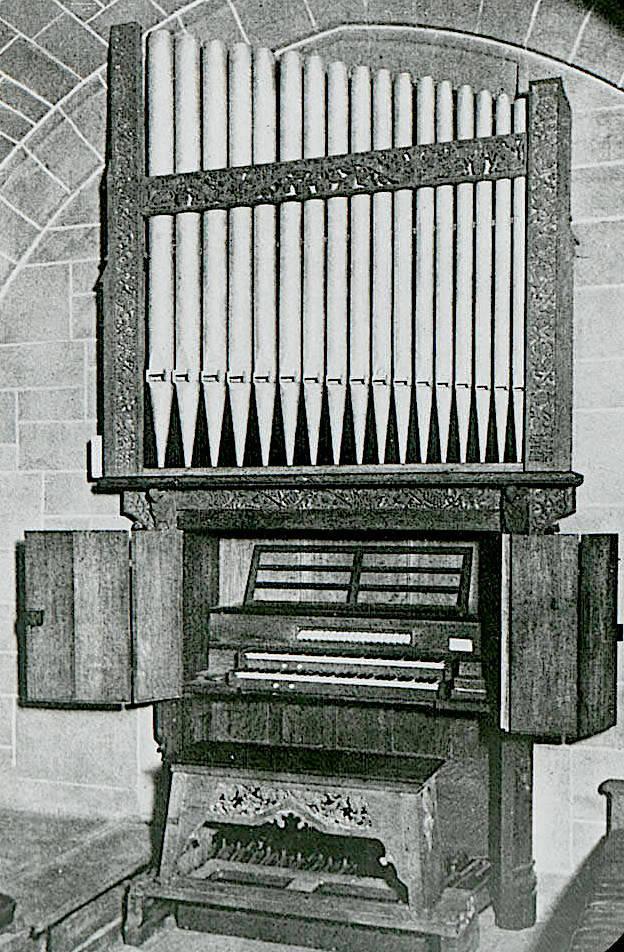
Design: Traditional With Hinged Doors That Enclose Keyboards
Pedalboard Type: Unknown
Features:
2 ManualsStop Layout: Unknown
Expression Type: Unknown
Combination Action: Unknown
Control System: Unknown or N/A
Something missing or not quite correct?Add ConsoleorSuggest an Edit
DETAILS
This instrument is: Not Extant and Not Playable in this location
Updated through online information from T. Daniel Hancock. -- In The Stopt Diapason, June 1982, Friesen reports "F.R. Webber, in an article on Chicago organs in the January 1954 issue of The Diapason, page 23, wrote: 'In it is a two-manual organ with a recessed console, cupboard doors, and a richly carved case by Irving & Casson. Even the organ bench is a museum piece. I am surprised that this beautiful example of early twentieth century wood carving has never been discovered.'" . . . "The organ was located in a right (south) transept of the chapel, somewhat set back. Most sources confirm the two manuals, although a couple think it was one manual. There was probably a pedal. Some sources think it was a tracker, others that it was some form of pneumatic action. The small organ apparently had very few ranks, perhaps just three: an 8' flute, an 8' string, and a 4' flute, was mildly voiced and had a nice sound. It was rarely used." . . . "The organ succombed to being dried out by a heating system duct near it (one source says dampness of the below-ground chapel) and was unplayable by the early 1960's. It was discarded in the late 1960's when the transept was made into a sacristy for the chapel. A reed organ currently serves the chapel."
Database Manager on September 7th, 2007:
Identified by James R. Stettner through information from the Estey Opus List, published in The Boston Organ Club newsletter, 1973-1979.
Something missing or not quite correct?Add NoteorAdd WebpageorAdd Cross ReferenceorSuggest an Edit