Modified byRobert I. Coulter - Organbuilder
2009
Originally Visser-Rowland Associates (Opus 107, 1995)
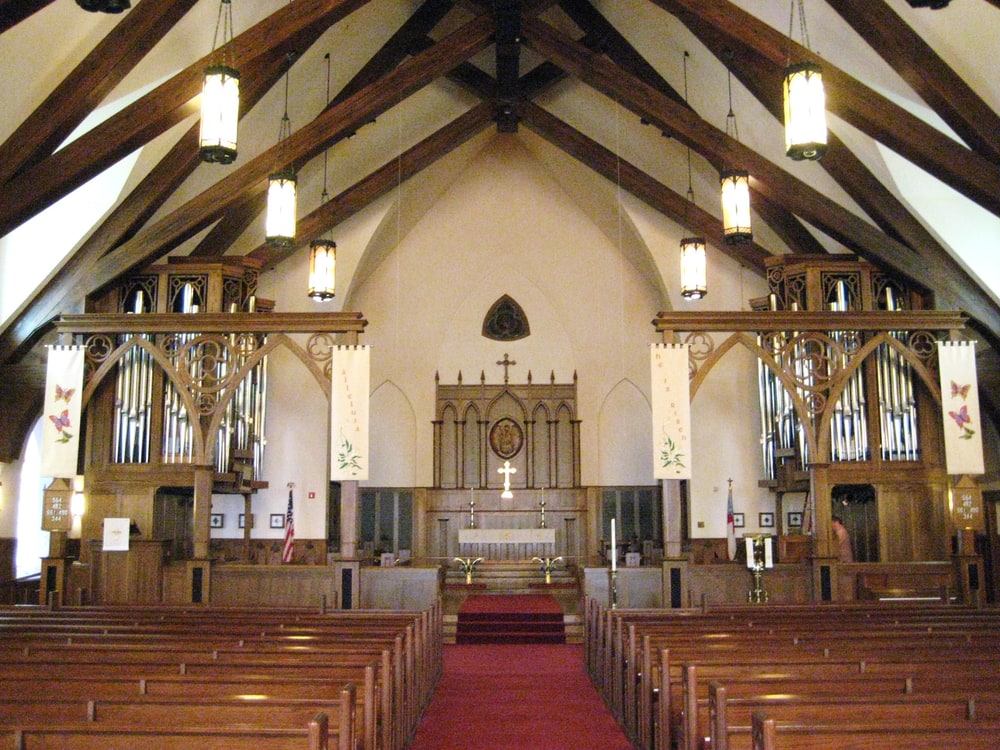
Holy Trinity Episcopal Church
100 Northeast First Street
Gainesville, FL, US
52 Ranks - 2,737 Pipes
Something not quite correct?Suggest an Edit
This instrument has multiple revisions:
IMAGES
Something missing or not quite correct?Add ImageorSuggest an Edit
STOPLISTS
| Hoofdwek (II) | ||
| 16' | Bourdon | 41 |
| 8' | Praestant | 58 |
| 8' | Roerfluit | 58 |
| 4' | Octaaf | 58 |
| 4' | Nachthoorn | 58 |
| 2 2⁄3' | Kwint | 58 |
| 2' | Octaaf | 58 |
| II | Sesquialter | 116 |
| V | Mixtuur | 290 |
| 8' | Trompet | 58 |
| Zwelwerk (III - Expressive) | ||
| 8' | Gemshorn | 58 |
| 8' | Holpijp | 58 |
| 8' | Salicionaal | 58 |
| 8' | Celeste | 58 |
| 4' | Praestant | 58 |
| 4' | Koppelfluit | 58 |
| 2' | Woudfluit | 58 |
| V | Scherp | 290 |
| 16' | Fagot | 58 |
| 8' | Trompette | 58 |
| 4' | Klaroen | 58 |
| Tremulant |
| Rugwerk (I) | ||
| 8' | Praestant | 58 |
| 8' | Gedekt | 58 |
| 4' | Octaaf | 58 |
| 4' | Spitsfluit | 58 |
| 2 2⁄3' | Nasard | 58 |
| 2' | Superoctaaf | 58 |
| 1 3⁄5' | Terts | 58 |
| III | Kleinmixtuur | 174 |
| 8' | Kromhoorn | 58 |
| Tremulant |
| Pedaal | ||
| 32' | Subbas | 12 Gedekt |
| 16' | Praestant | 32 |
| 16' | Gedektbas | 32 |
| 8' | Ockaafbas | 32 |
| 8' | Gedekt | 12 Gedekt |
| 4' | Koraalbas | 32 |
| IV | Mixtuur | 128 |
| 16' | Bazuin | 32 |
| 8' | Trompet | 32 |
| 4' | Schalmei | 32 |
Pipe counts extrapolated from builder's list desriptions
Open In New TabSomething missing or not quite correct?Add StoplistorSuggest an Edit
CONSOLES
Builder: Visser-Rowland Associates
Position: Detached, Reversed Keydesk (Mechanical Action)
Design: Traditional Without Cover
Pedalboard Type: Concave Radiating (Meeting AGO Standards)
Features:
3 Manuals (58 Notes)32 Note Pedal40 StopsMechanical (Unknown) Key ActionElectrical Stop ActionCombination Thumb Piston(s)Combination Toe Piston(s)Sforzando Thumb Piston(s)Sforzando Toe Piston(s)Stop Layout: Unknown
Expression Type: Balanced Expression Shoes/Pedals (Meeting AGO Standards)
Combination Action: Computerized/Digital
Control System: Unknown or N/A
Something missing or not quite correct?Add ConsoleorSuggest an Edit
DETAILS
This instrument is: Extant and Playable in this location
from the builder's website:
In May of 2009, we were honored to enter into a collaboration with John Pritchard Organbuilder to begin a phased tonal redesign and revoicing of the Visser - Rowland organ at Holy Trinity Episcopal Church in Gainesville, Florida.
This instrument was installed in 1994 after a devastating fire destroyed the sanctuary. This organ is very much in the Dutch tradition of most Visser - Rowland instruments. Through working with organist/choirmaster John Lowe, he and Mr Pritchard devised the first steps in making this instrument more easily meet the Anglican traditions of the music ministry at Holy Trinity.
We were brought to Gainesville to participate in the voicing, tonal finishing, and to provide further insight for future steps in this phased process. Among the first items addressed was the substitution of the Hoofdwerk (Great) 2' Woudfluit (Waldflute) with the Zwelwerk (Swell) 2' Octaff (Octave). The Rugwerk (Positiv) 8' Kromhoorn (Krumhorn) was also significantly softened to serve as a more useful solo stop. The Zwelwerk V Sherp (Scharf) was regulated, tuned, and had some of the highest pitched ranks muted to better blend with the Zwelwerk Chorus and reeds.
Database Manager on May 22nd, 2016:
This entry describes alterations to an existing organ.
Identified by John Igoe, using information from this web site: http://coulterorgans.com/projects/.
Something missing or not quite correct?Add NoteorAdd WebpageorAdd Cross ReferenceorSuggest an Edit