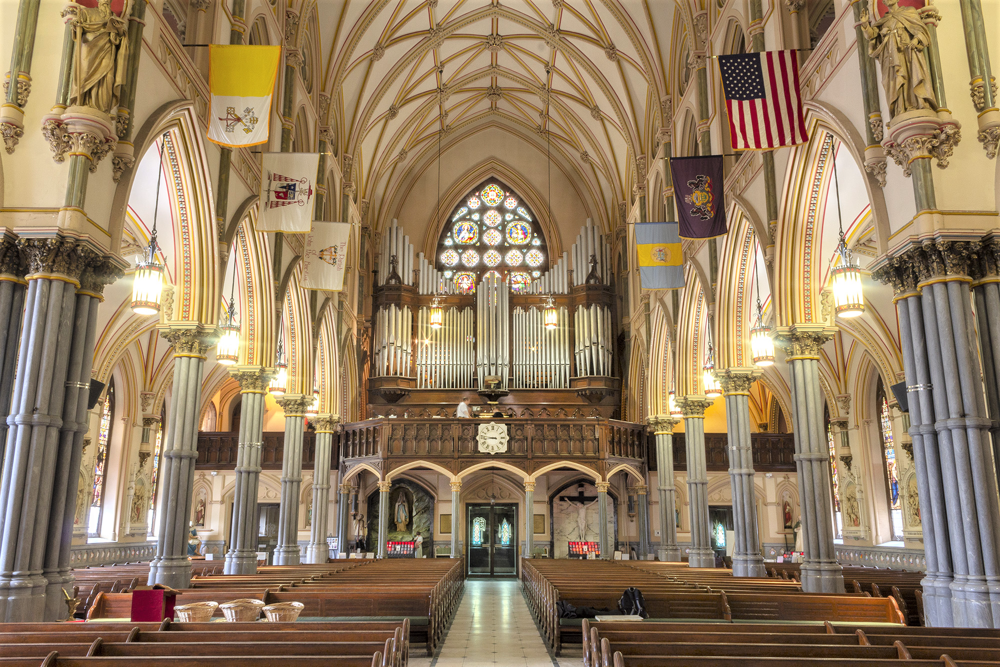
Austin Organ Co.
Opus 167, 1906
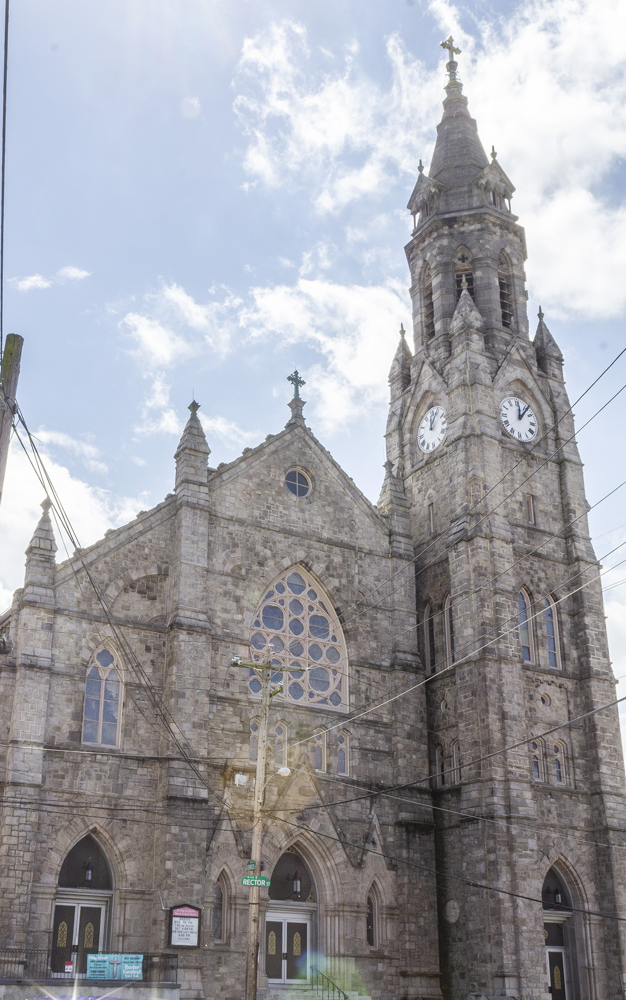
St. John the Baptist Catholic Church
146 Rector Street
Philadelphia (Manayunk), PA, US
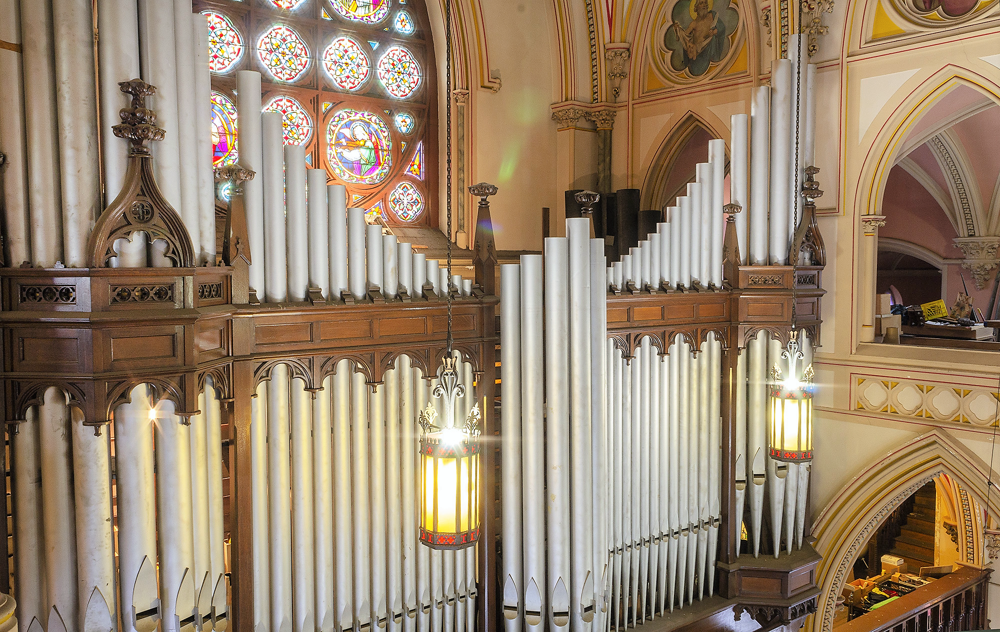
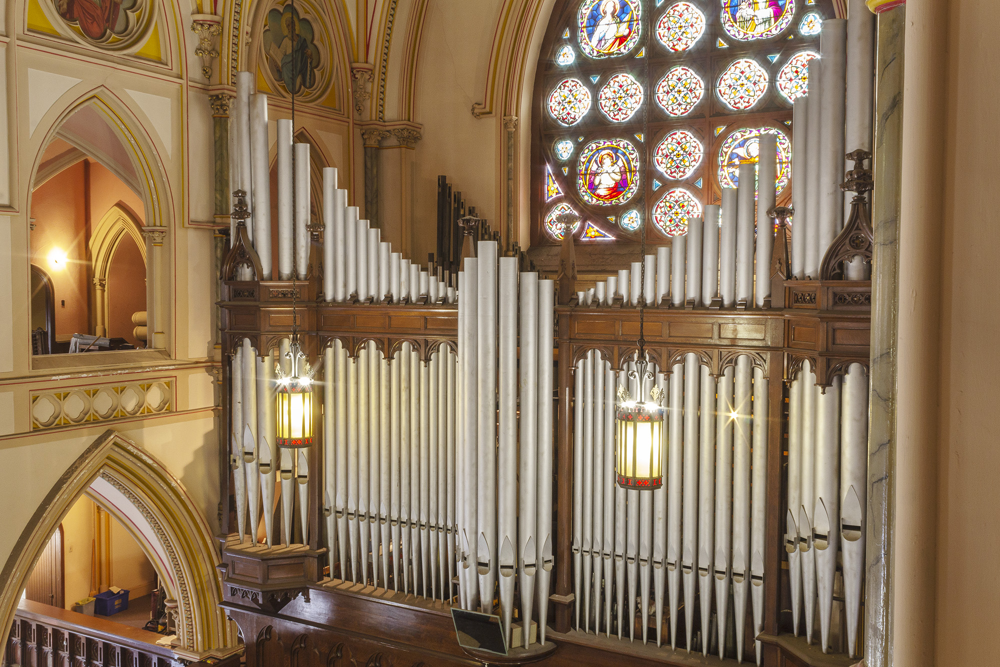
37 Ranks - 2,529 Pipes
EXPLORE IMAGESVIEW STOPLISTSomething not quite correct?Suggest an Edit
🤝 Instrument entries in Pennsylvania sponsored by:
We are grateful for the generous support of our sponsors, who make it possible for us to continue our mission of preserving and promoting the rich history of pipe organs across the globe.

IMAGES
Something missing or not quite correct?Add ImageorSuggest an Edit
STOPLISTS
| Choir (I - Expressive) | ||
| 8' | Geigen Diapason | 73 |
| 8' | Dulciana | 73 |
| 8' | Concert Flute | 73 |
| 4' | Flute d'Amour | 73 |
| 2' | Concert Piccolo | 61 |
| 8' | Clarinet | 71 |
| Tremolo | ||
| 16' | Choir to Choir | |
| Choir Unison Off | ||
| 4' | Choir to Choir | |
| 16' | Swell to Choir | |
| 8' | Swell to Choir | |
| 4' | Swell to Choir | |
| 8' | Solo to Choir |
| Great (II) | ||
| 16' | Double Diapason | 49 |
| 8' | Open Diapason | 61 |
| 8' | Clarabella | 61 |
| 8' | Viola d'Amour | 61 |
| 4' | Octave | 61 |
| 4' | Harmonic Flute | 61 |
| 16' | Choir to Great | |
| 8' | Choir to Great | |
| 4' | Choir to Great | |
| 16' | Swell to Great | |
| 8' | Swell to Great | |
| 4' | Swell to Great | |
| 8' | Solo to Great | |
| 4' | Solo to Great |
| Swell (III - Expressive) | ||
| 16' | Bourdon | 73 |
| 8' | Diapason Phonon | 73 |
| 8' | Viole d'Orchestre | 71 |
| 8' | Viole Celeste | 73 |
| 8' | Rohr Floete | 73 |
| 4' | Violina | 73 |
| 4' | Flauto Traverso | 73 |
| 2' | Flautino | 61 |
| 16' | Contra Posaune | 73 |
| 8' | Cornopean | 73 |
| 8' | Oboe | 73 |
| 8' | Vox Humana | 73 |
| Tremolo | ||
| 16' | Swell to Swell | |
| Swell Unison Off | ||
| 4' | Swell to Swell |
| Solo (IV - Expressive) | ||
| 8' | Grand Diapason | 73 |
| 8' | Flauto Major | 17 |
| 8' | Gross Gamba | 73 |
| 8' | Harmonic Tuba | 71 |
| 16' | Solo to Solo | |
| 4' | Solo to Solo |
| Echo (Expressive) | ||
| 16' | Contra Viole | 73 |
| 8' | Horn Diapason | 73 |
| 8' | Viole Atheria | 73 |
| 8' | Vox Angelica | 73 |
| 8' | Gedeckt | 73 |
| 4' | Violina | 73 |
| 8' | Vox Humana | 73 |
| Tremolo | ||
| 8' | Solo to Echo |
| Pedal | ||
| 32' | Magnaton | 12 |
| 16' | Open Diapason | 32 |
| 16' | Violone | 32 |
| 16' | Bourdon | 32 |
| 16' | Lieblich Gedeckt | SW |
| 8' | Gross Floete | 12 |
| 8' | Flauto Dolce | 12 |
| 16' | Bombarde | 12 SO |
| 16' | Chancel Contra Viole | Echo |
| 8' | Great to Pedal | |
| 8' | Swell to Pedal | |
| 4' | Swell to Pedal | |
| 8' | Choir to Pedal |
4 pistons to great, 6 to swell, 6 to choir and echo, 3 to solo.
Originally Written/Published: 1906
Something missing or not quite correct?Add StoplistorSuggest an Edit
CONSOLES
Builder: Austin Organ Co.
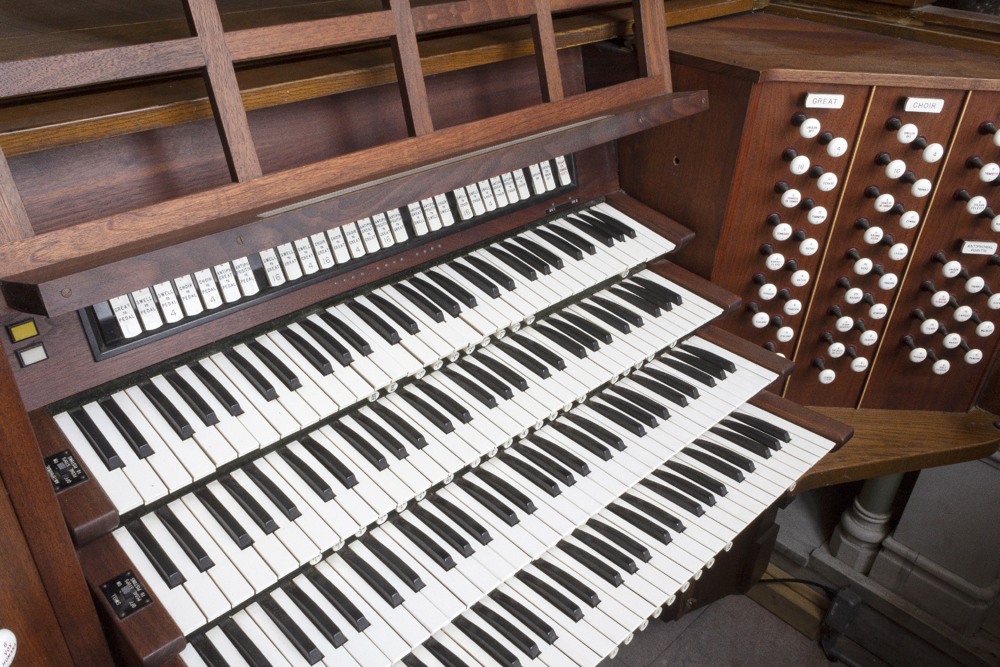
Position: Console in Fixed Position, Center
Design: Traditional With Roll Top
Pedalboard Type: Concave Radiating (Details Unknown)
Features:
4 Manuals (61 Notes)32 Note Pedal6 Divisions45 RegistersElectrical Key ActionElectrical Stop ActionCrescendoCombination Thumb Piston(s)Combination Toe Piston(s)Sforzando Thumb Piston(s)Sforzando Toe Piston(s)Stop Layout: Drawknobs in Vertical Rows on Angled Jambs
Expression Type: Balanced Expression Shoes/Pedals (Meeting AGO Standards)
Combination Action: Adjustable Combination Pistons
Control System: Unknown or N/A
Something missing or not quite correct?Add ConsoleorSuggest an Edit
DETAILS
This instrument is: ExtantandPlayable in this location
Designed by Robert Hope-Jones. Nave divisions built 1906 with tubular pneumatic stop action, electric key action, and mechanical swell pedals. Prepared-for echo division installed behind altar in 1925 using original swell vox humana, with a quintadena replacing it in the swell. A set of 25 chimes was added in the choir box but playing on the solo, and the tremolos were converted to electric. the console appears to date from around this time. The draw stop console pictured is not and was never attached to the organ. It was donated to the church for use as a secondary floor console, but was never connected and passed on to another church.
In 1980, tonal changes were made to fit the style of the day, resulting in alteration to the original pipework. The echo chest and wind system were replaced. In 2007-8, local volunteers were able to reconstruct the original tonality using secondhand pipework from local Austin organs dated between 1910-1925. Many of them are of the same scales as the originals. The altered and/or damaged original pipework is stored in the triforium. The organ sits in very poor shape with many dead notes & stops, air leaks and cyphers. It is a very important historic organ deserving of preservation of the highest degree.
Colin O'Malley on June 17th, 2023:
I just played this instrument the other day for the first time. It is in horrific shape. The echo division is silent. Within the working divisions (GT, SW, CH, Solo, Ped) There are more ranks that don't work than ones that do. And within the ranks that do work, there are numerous dead notes, ciphers, speech issues, etc. It was a really sad sight to see and hear, and unfortunately the parish does not have the resources to do anything about it.
Database Manager on June 26th, 2008:
Updated through online information from Brian McLaughlin.
Database Manager on June 22nd, 2007:
Updated through online information from Michael Berman. -- Instrument altered by Schultz and Associates in 1980s, alterations being reversed beginning in 2006, continuing into 2007. Total number of ranks will likely return to original, and at present, fewer stops are playing as restoration continues by organ technicians volunteering time to save the organ.
Database Manager on December 21st, 2004:
Information identifying this instrument from the Austin Organs, Inc. web site, accessed December 20, 2004: http://www.austinorgans.com/organ-research.htm.
Something missing or not quite correct?Add NoteorAdd WebpageorAdd Cross ReferenceorSuggest an Edit